
Executive Summary
In modern egg production, light is a management tool, not just a utility. Peer-reviewed studies show that specialized poultry lighting can extend laying cycles by up to 8 weeks, improve bone development in pullets, and reduce flock stress by 30%. This article explains the science behind these benefits and provides a practical guide to selecting the right lighting system for your cage hen house.
1. Introduction: Why Light Matters More Than You Think
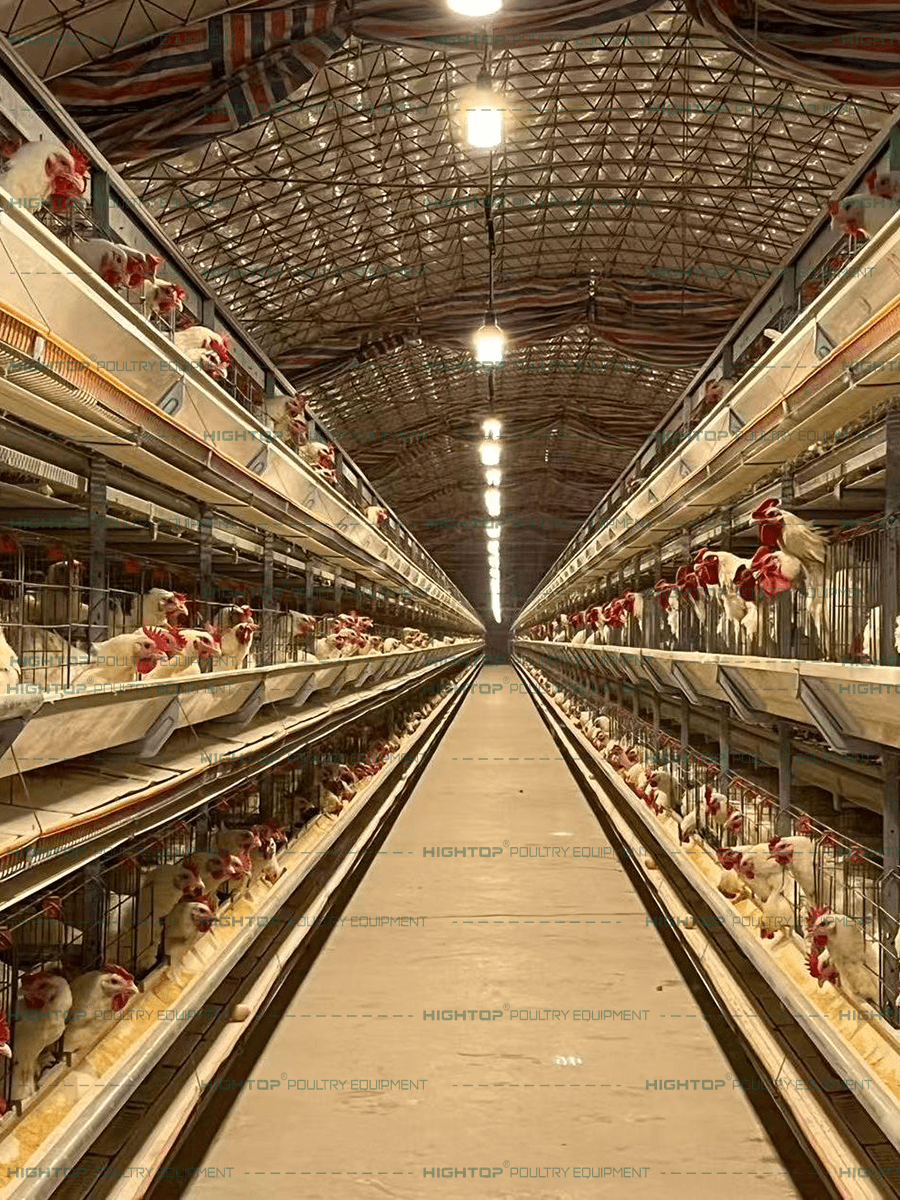
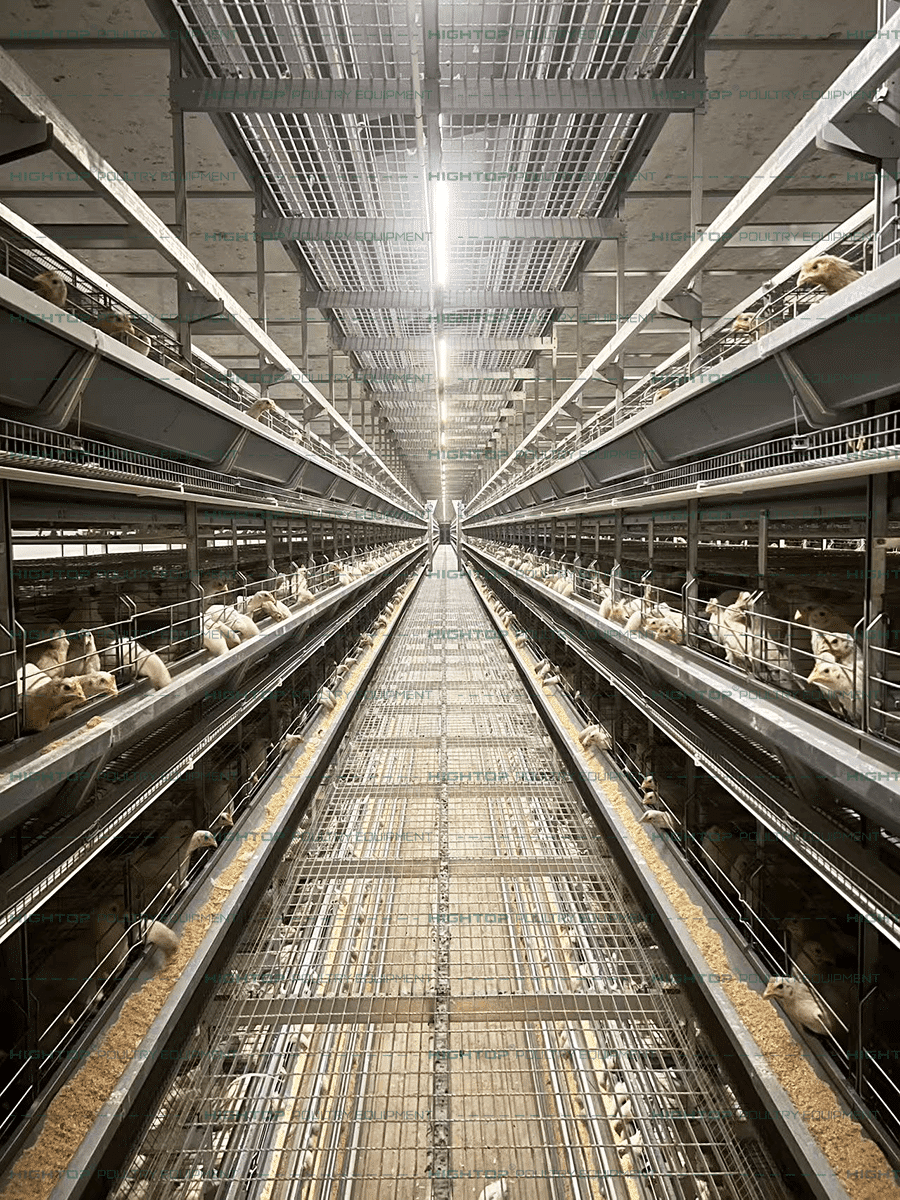
In the controlled environment of a modern cage hen house, light does more than help farmers see. It acts as the invisible hand that guides bird biology, behavior, and your farm’s profitability.
Yet many farmers treat the light bulb as a simple utility. This is a missed opportunity.
Modern LED technology has transformed poultry management. By understanding photoperiods and light spectrum, you can:
- Reduce aggression and cannibalism by up to 40% (Source: Journal of Applied Poultry Research, 2021).
- Improve feed conversion ratios by 5-8%.
- Significantly extend laying cycles.
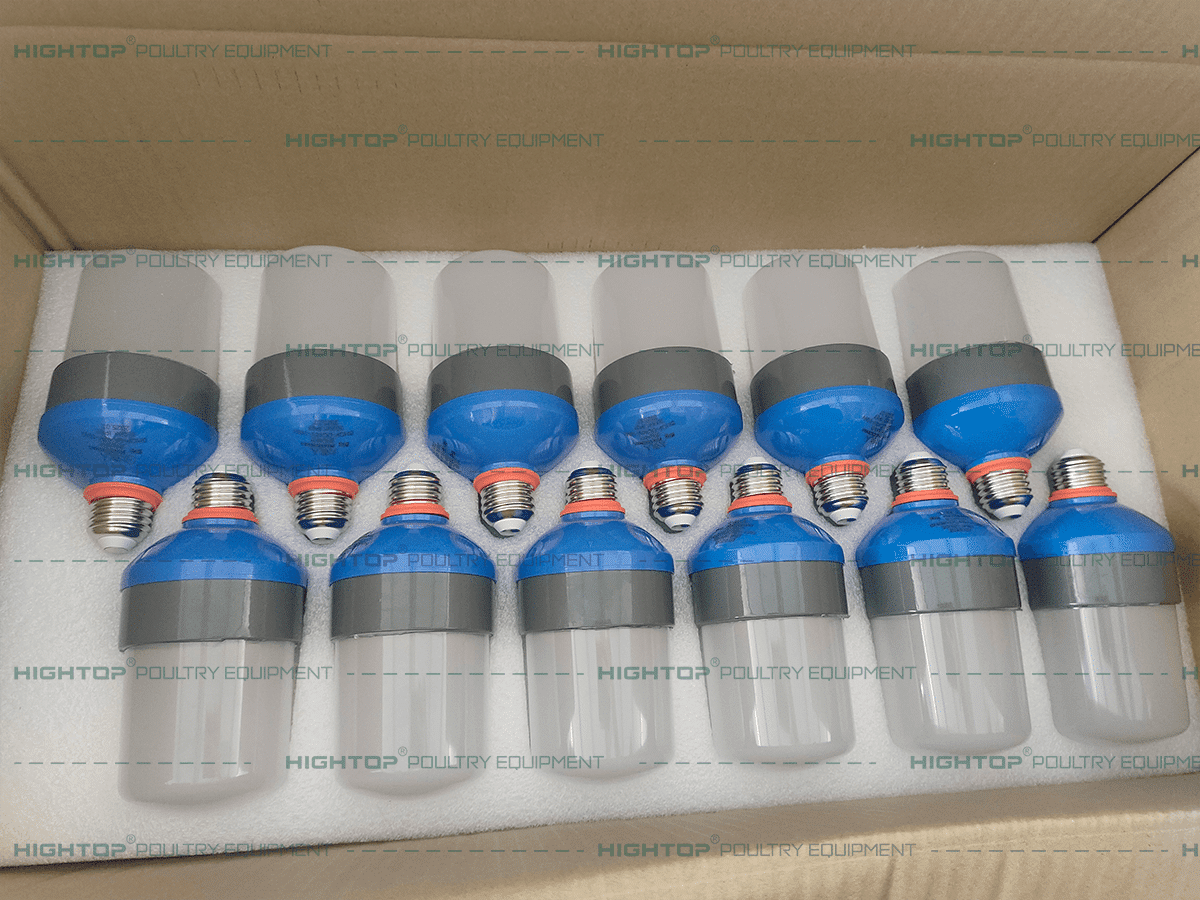
However, hardware store bulbs cannot deliver these results. They flicker, lack the correct spectrum, and fail quickly in harsh farm conditions. To unlock the full potential of your flock, you need a purpose-built solution like the HIGHTOP brand poultry lighting system.
2. The Science of Profit: How Light Boosts Your Bottom Line
What separates a good farm from a great one? Often, it is how well you manage two factors: persistency of lay and flock structural integrity.
Genetics and feed provide the foundation, but the lighting program is the environmental trigger that unlocks their full potential.
A. Extending the Laying Cycle (The “Long-Life” Hen)
Every farmer knows that egg production will eventually plateau and begin to decline. But photobiology research shows that you can influence the rate of decline.
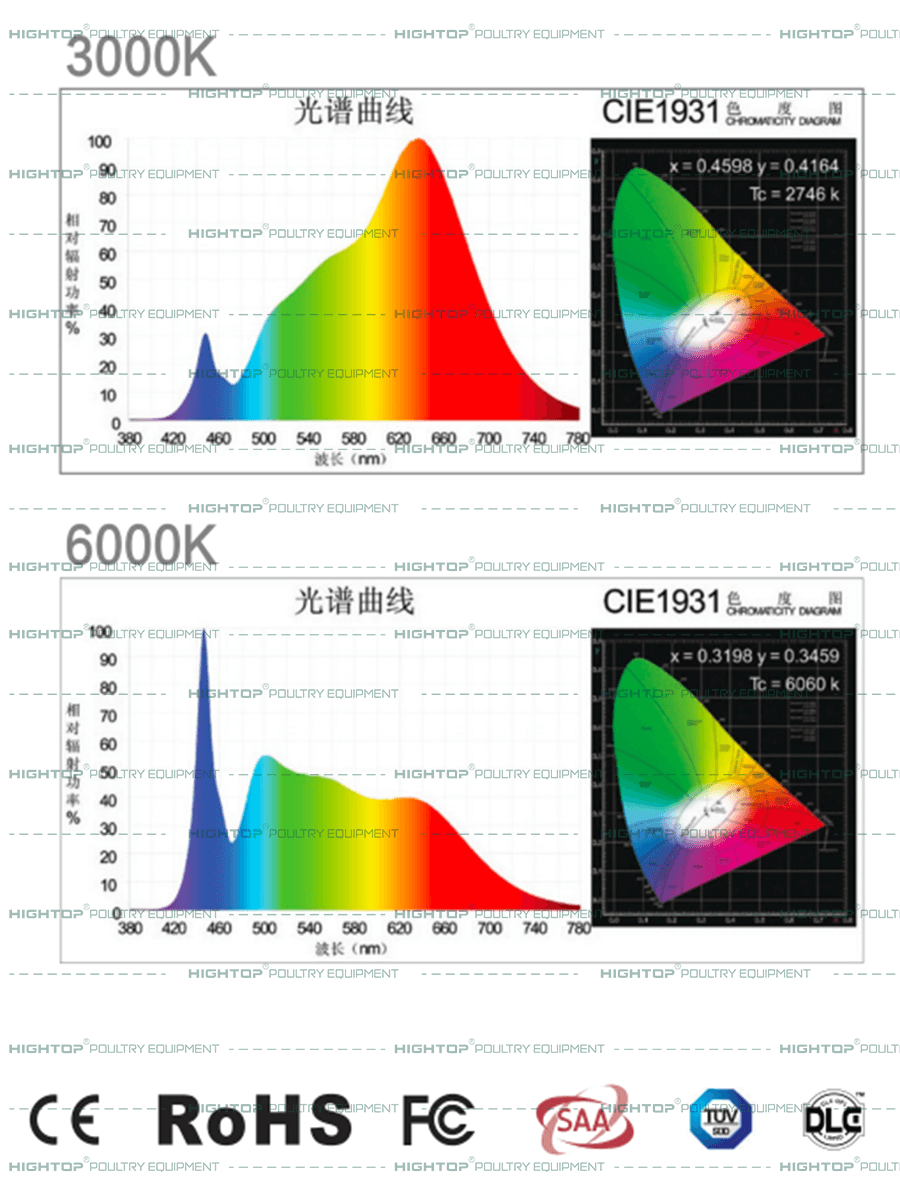
The Mechanism: Longer wavelengths (Red light, 620-700nm) penetrate the skull and stimulate the hypothalamus more effectively than other colors. This triggers the release of Gonadotropin-Releasing Hormone (GnRH), which controls ovulation.
The Economic Impact:
- By delivering the correct intensity and duration of red-spectrum light during the laying phase, you signal the hen’s reproductive system to “stay active.”
- A species-specific lighting program helps delay the onset of natural molt by 4-6 weeks, meaning hens spend more of their life producing eggs.
- Result: Farmers using optimized lighting report a more persistent laying curve, adding 8-12 weeks of additional production to the standard 80-week cycle.
B. Building Stronger Pullets (The Foundation of Production)
You cannot sustain a long laying cycle without a strong frame. Pullets that enter the lay house with underdeveloped bones suffer from calcium depletion, leading to poor shell quality and premature culling.
The Early-Life Solution: The science of rearing-phase lighting pays dividends later.
Blue Spectrum (450-495nm): During the first 16 weeks, specific blue wavelengths have a calming effect, reducing stress hormones by 25%. A calm pullet converts feed to structural growth instead of burning calories through stress.
Green Spectrum (495-570nm): Green light promotes the proliferation of satellite cells in skeletal muscle, leading to 15% better muscle development (Source: Poultry Science Journal, 2020).
The Result: By using a poultry-specific spectrum during the pullet phase, you build birds with robust skeletons. When they transition to the layer house, they have the physical reserves to channel calcium into eggshells day after day. This means:
- Fewer floor eggs (reduction of up to 20%).
- Reduced mortality from fractures (down by 35%).
- More saleable Grade-A eggs per hen produced.
3. How to Select the Right Fixture
Not all lights are created equal. Using the wrong fixture can actively harm your flock.
The Risks of Off-the-Shelf Bulbs
- Flicker: Standard bulbs often strobe at 50-60Hz. Birds perceive this as a distress signal, increasing stress hormones, reduce the egg production rate.
- Spectrum: They lack the specific wavelengths needed to trigger hormonal responses.
- Durability: The hen house environment is corrosive (ammonia) and requires frequent high-pressure washing. Standard bulbs fail within 3-6 months in these conditions.
Technical Specifications You Must Look For
- IP Rating: Electronics must be sealed against water and ammonia corrosion. (Look for IP65 or higher).
- Dimming Capability: The fixture must dim smoothly from 1-100% to simulate sunrise/sunset, preventing panic and pile-ups.
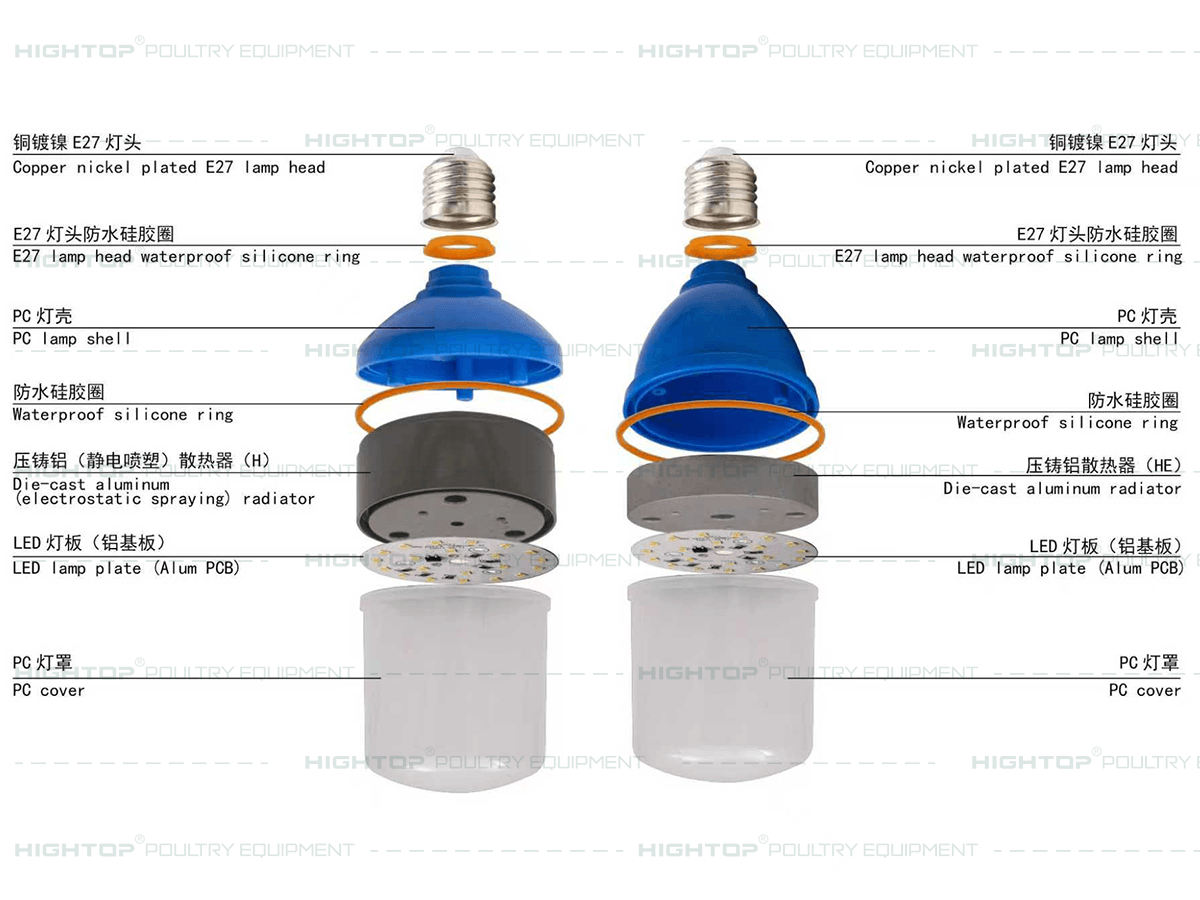
- Material Quality: Choose high-strength, anti-yellowing materials that maintain light output for years.
4. The HIGHTOP Solution: Next-Generation Poultry Lighting
At HIGHTOP, we don’t just sell lights; we engineer photobiology. Our fixtures are built from the ground up to solve the challenges of commercial egg production.
A. Stress-Free Environment with Simulated Sunrise/Sunset
Chickens thrive on routine. Sudden darkness causes “pile-ups,” leading to injury and mortality.
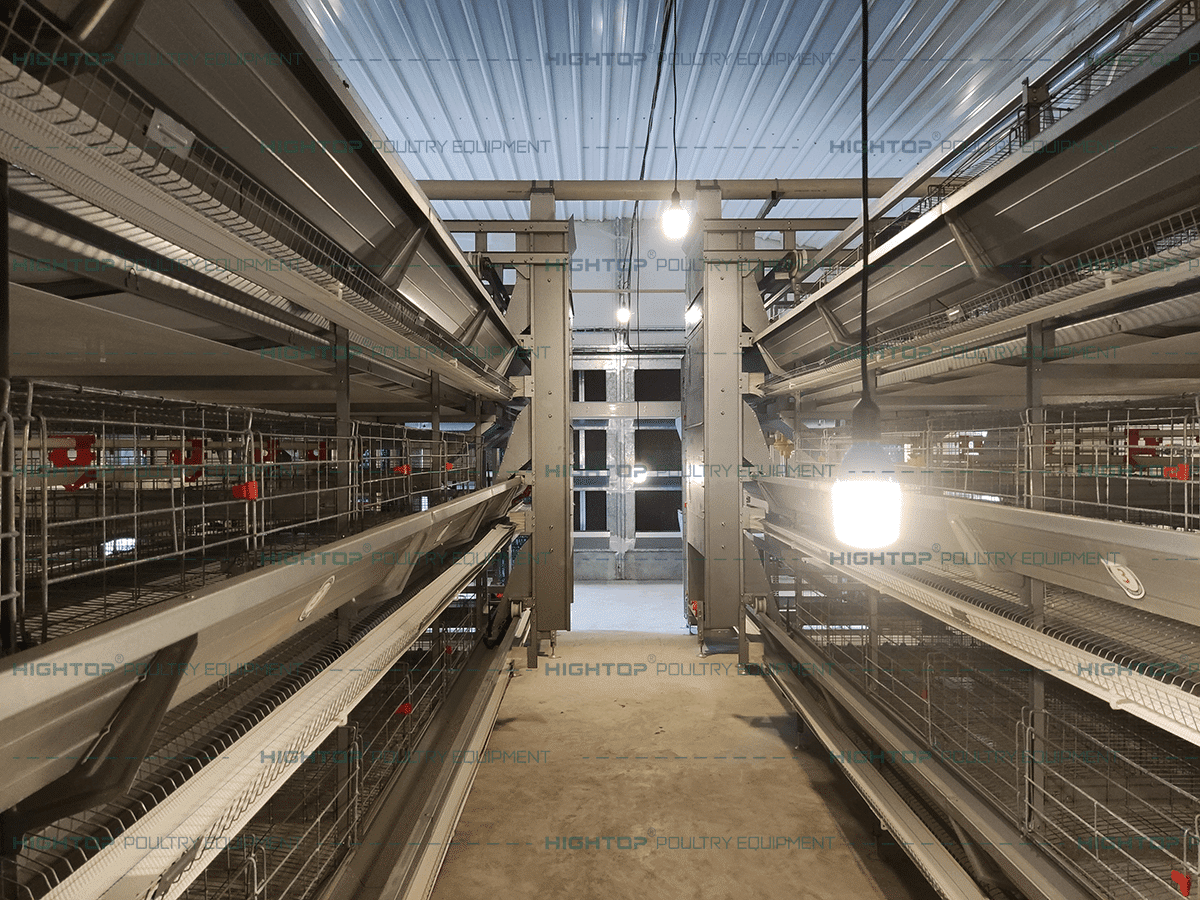
HIGHTOP: Our system features a simulated sunrise and sunset function. Lights gradually change intensity over 15-30 minute periods, allowing hens to find feeders and drinker calmly. Field trials show this reduces stress-related behaviors by 40%.
B. Unmatched Durability for Chicken House Environments
- IP67 Waterproof Rating: HIGHTOP lights are fully dust-tight and withstand temporary immersion in 0.5 meter of water for 1 hour. They survive daily misting and high-pressure cleaning (up to 100 bar) without failure.
- V0 Fire Rating: Safety is non-negotiable. Our lights meet the stringent V0 flame retardancy rating, self-extinguishing within 10 seconds if exposed to fire.
C. Engineered for Longevity and Light Quality
- High-Strength PC Lens: We use aerospace-grade Polycarbonate (PC) lamp shades. Unlike glass or acrylic, PC resists breakage from impact (IK08 impact rating). Dropped from 1 meter high and was completely undamaged.
- 92%+ Light Transmittance: Maximum lumen output for your hens means better visibility and fewer dark spots.
D. Absolute Safety and Visual Comfort
- DC48V Safe Power: While many systems use high DC power (220V or 96V), which is prone to fire or electrical leakage, HIGHTOP operates on DC48V (low voltage) . When you use a high-pressure water gun to clean the chicken house, This is safe for staff working in wet conditions and eliminates shock risk.
- Zero Flicker Technology: Our DC drivers ensure flicker-free, stable light (>200Hz output, imperceptible to birds). A calm visual environment means calm birds and better feed conversion.
E. Poultry-Specific Spectrum
We don’t use generic white LEDs.
HIGHTOP Advantage: We utilize veterinary-developed, poultry-specific spectrum tuning developed in collaboration with the Asian Poultry Science Association. Our lights combine optimal wavelengths to:
- Stimulate reproductive hormones for peak egg production.
- Neutral light effectively increases egg production rate and improves egg quality.
- Improve feed conversion rates by up to 7%.
5. The Economic ROI (Return on Investment)
Investing in HIGHTOP quality pays for itself. Here is the financial logic:
- Energy Savings: LEDs use 80% less energy than incandescent bulbs. Switching 100 bulbs from 60W to 15W saves approximately $2,500 annually (based on $0.12/kWh).
- Maintenance Savings: With a lifespan exceeding 50,000 hours (5+ years continuous operation) and corrosion-resistant housing, you eliminate the labor cost of replacing bulbs mid-cycle.
- Production Gains: An optimized spectrum pushes the peak of lay higher and sustains it longer, resulting in 5-8% more Grade-A eggs per hen.
| Feature | Standard Bulb | HIGHTOP Poultry Light |
| Dimming | On/Off (Sudden Stress) | Simulated Sunrise/Sunset |
| Waterproofing | None (IP20) | IP67 (Submersible) |
| Safety | High Voltage AC | DC48V (Safe Touch) |
| Longevity | Fades/Yellows Quickly | 5-Year <10% Yellowing Rate |
| Spectrum | Generic White | 2700-6000k Poultry-Specific |
The information in this article is supported by:
1. Lewis, P.D. & Morris, T.R. (2020). “Poultry Lighting: The Science and Practice.” CAB International.
2. Journal of Applied Poultry Research (2021). “Effects of Red Spectrum on Layer Performance,” Vol. 30(2).
3. Poultry Science Journal (2020). “Green Light and Muscle Development in Pullets,” Vol. 99(4).
4. World’s Poultry Science Association (2022). “Lighting Guidelines for Commercial Layers.”
6. Conclusion
Lighting is the most underutilized management tool in poultry. It actively manages your flock’s biology to extend laying cycles and build stronger pullets. Don’t let cheap fixtures cost you eggs, stress your flock, or create safety hazards.
Upgrade to the durability, safety, and scientific design of HIGHTOP.
Ready to illuminate your profits?
Contact our specialists today for a free lighting layout designed specifically for your cage system and flock size. Our team includes certified poultry lighting consultants with collective experience across 500+ commercial farms.