
Temperature, humidity, and air speed—these three factors collectively determine a chicken’s “apparent temperature,” directly impacting their feed intake, growth, and health, and ultimately, the farm’s profitability. In summer cooling systems, the cooling pad is the most critical component. Today, let’s delve into: Why are cooling pads so important? And how do you choose the one best suited for your farm?
1. What is a Cooling Pad?
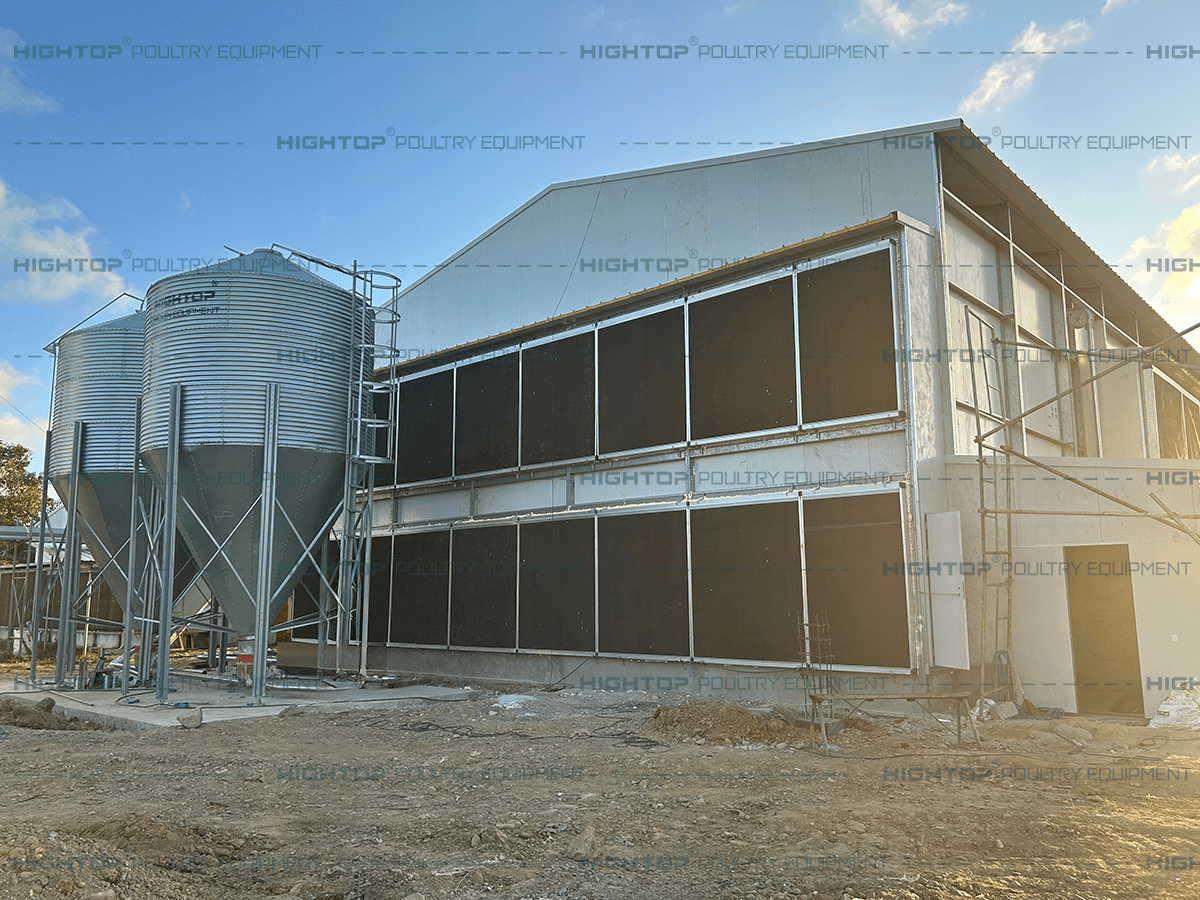
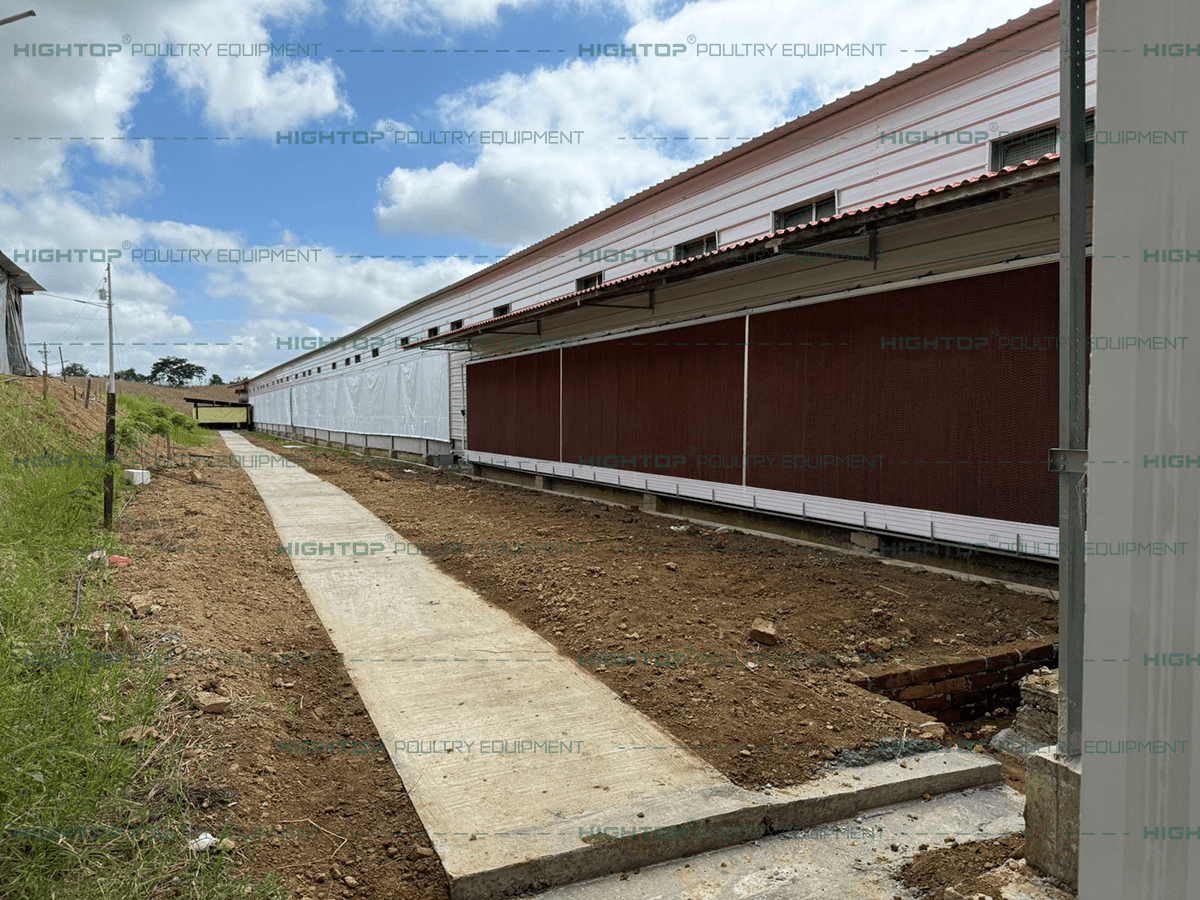
A cooling pad (also known as a wet curtain) is a device used in conjunction with exhaust fans to achieve cooling and humidification in enclosed environments. It is widely used in poultry and livestock farming, greenhouse cultivation, horticulture, and industrial settings.
A complete cooling pad system includes:
Cooling pad medium + Frame + Water distribution pipe + Collection tank + Water pump + Water tank + Piping
2. How Does a Cooling Pad Work?
The working principle can be broken down into four steps:
Step 1: Water Circulation
The water pump activates, sending water from the tank to the distribution pipes at the top of the pad. Water flows evenly from the pipe holes, saturating the entire pad surface. Excess water collects in the bottom tank and returns to the main tank for recirculation.
Step 2: Negative Pressure Creation
Exhaust fans at the opposite end of the house activate, pulling hot, stale air out. This creates negative pressure inside the house, forcing outside air to enter through the cooling pad.
Step 3: Air Passes Through the Pad
Hot outside air is drawn through the honeycomb channels of the moistened pad. During this process, the air comes into full contact with the wet pad surface.
Step 4: Evaporative Cooling
The water absorbs heat from the air and evaporates (turns from liquid to vapor). This evaporation process removes heat energy, lowering the air temperature. The cooled air then enters the chicken house, completing the cooling cycle and providing a comfortable environment for the birds.
3. Types of Cooling Pads
3-1 Structure and Material
Cooling pad media is primarily made from three raw materials: base paper, strength resin (red resin), and adhesive resin (white resin).
High-quality pads use highly absorbent wood pulp paper, a high-quality strength resin, and high-solid adhesive, offering these advantages:
High water absorbency、Good water resistance、Strong mold resistance
Long service life
Structural Characteristics:
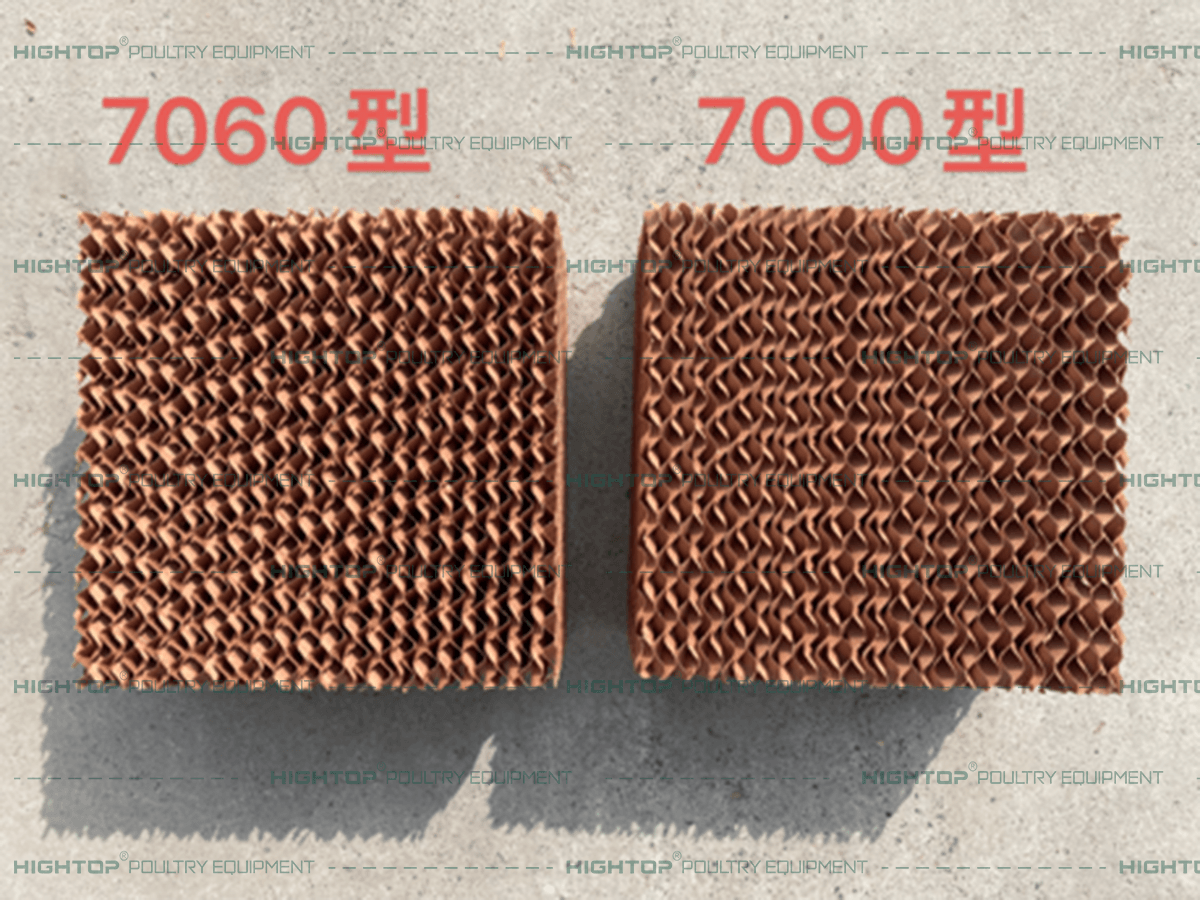
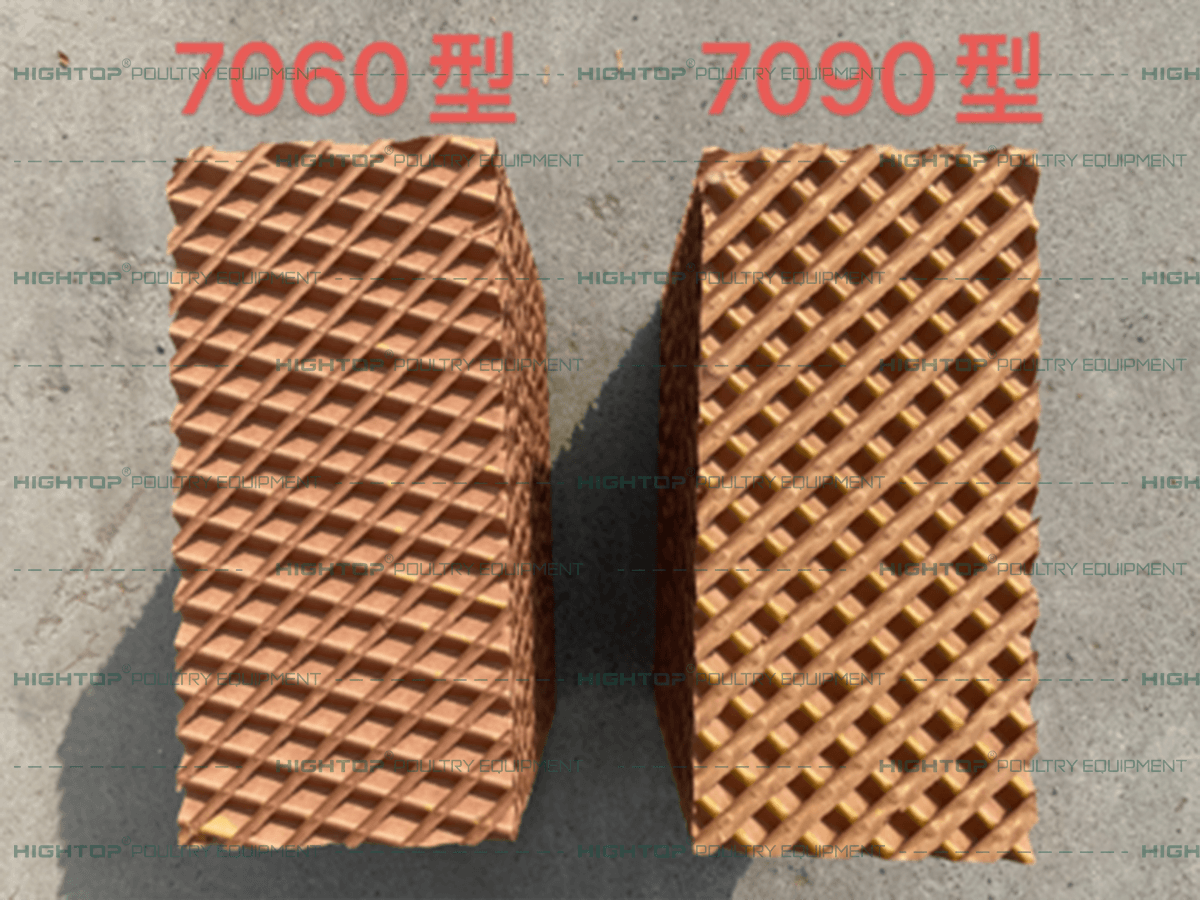
Cooling pads have a honeycomb structure. Common flute heights are 5mm, 6mm, and 7mm. The main flute angle configurations are:
45°×45° cross-corrugated: Found in models like 5090, 6090, 7090.
45°×15° cross-corrugated: Found in models like 7060.
3-2 Common Models in Animal Husbandry
Livestock farms primarily use two models: 7090 and 7060. Both have a 7mm flute height, with the main difference being the flute angle:
|
Model |
Flute Angle | Characteristics | Best Application |
| 7090 |
45°×45° |
Standard model, commonly used | General use in most climates |
| 7060 | 45°×15° | Lower airflow resistance, higher air volume, better cooling efficiency |
Hot and humid regions |
4. Why Are Cooling Pads So Important?
4-1 Provides Effective Cooling for Birds in Summer
When the ambient temperature reaches 35°C (95°F), a chicken’s body temperature can quickly rise to 43-44°C (109-111°F) if it cannot dissipate heat effectively. This approaches their physiological limit and can lead to heat exhaustion or death.
The role of the cooling pad: It reduces the temperature of incoming air from 35°C (95°F) to below 28°C (82°F), bringing the birds back into the “safe zone” and preventing losses from heat stress.
4-2 Stabilizes Feed Intake and Accelerates Growth
(1) The higher the temperature, the lower the feed intake. In hot conditions, broiler growth is hindered, reducing harvesting weight and directly impacting profitability. Cooling pads help birds maintain a comfortable body temperature, allowing them to eat normally.
(2) Under the same harvesting weight, optimal temperatures enable birds to eat more and grow faster, shortening the days to harvest. A shorter grow-out period means more flocks per year, increasing overall annual revenue.
4-3 Maintains Stable Egg Production
Higher temperatures cause greater heat stress in layers, leading to a significant drop in egg production. Cooling pads lower the house temperature, helping hens maintain higher production rates and ensuring stable income for the farm.
4-4 Increases Survival Rates
During extreme heat events, prolonged heat stress can be fatal. Cooling pads effectively block extreme outside heat, cooling the air that enters the house and reducing mortality losses, thus protecting the farmer’s investment.
5. How to Choose the Right Cooling Pad for Your Farm
5-1 Select the Model Based on Your Local Climate
|
Climate Type |
Recommended Model | Reason |
| Hot, dry regions |
7090 |
Standard model, good cost-effectiveness, effective cooling. |
| Hot, humid regions | 7060 |
Lower resistance, higher airflow capacity – ideal for humid conditions. |
5-2 Calculate the Required Pad Area
Use the following formula:
Cooling Pad Area (m²) = Total Exhaust Fan Airflow (m³/h) ÷ Air Velocity Through Pad (m/s) ÷ 3600
6. Conclusion
A cooling pad is not just an “accessory” for your farm; it is the heart of your summer environmental control system.
It safeguards bird health, stabilizes feed intake and egg production, shortens grow-out cycles, and improves survival rates — every aspect directly translates into tangible profits for your farm.
Choosing and using the right cooling pad is like getting an “insurance policy” for your farm’s profitability.
With over 20 years of experience in the livestock industry and having provided professional consultation to more than a thousand farms, Hightop is here to help. If you have any questions about selecting the right cooling pad, please feel free to contact us.