


Introduction: Why Disease Prevention Is the #1 Priority for Poultry Farmers
For poultry farmers in Southeast Asia, South America, Africa, the Middle East, and the Caribbean, disease outbreaks are a constant nightmare.
Highly pathogenic avian influenza (HPAI), Newcastle disease, and infectious bursal disease can wipe out an entire flock in days. Beyond the loss of birds, a single disease event can lead to trade bans, months of empty houses, and devastating financial loss.
The question every smart farmer asks is:
“How can I reduce the risk of disease entering my farm – and stop it from spreading if it does?”
The answer starts with the house itself.
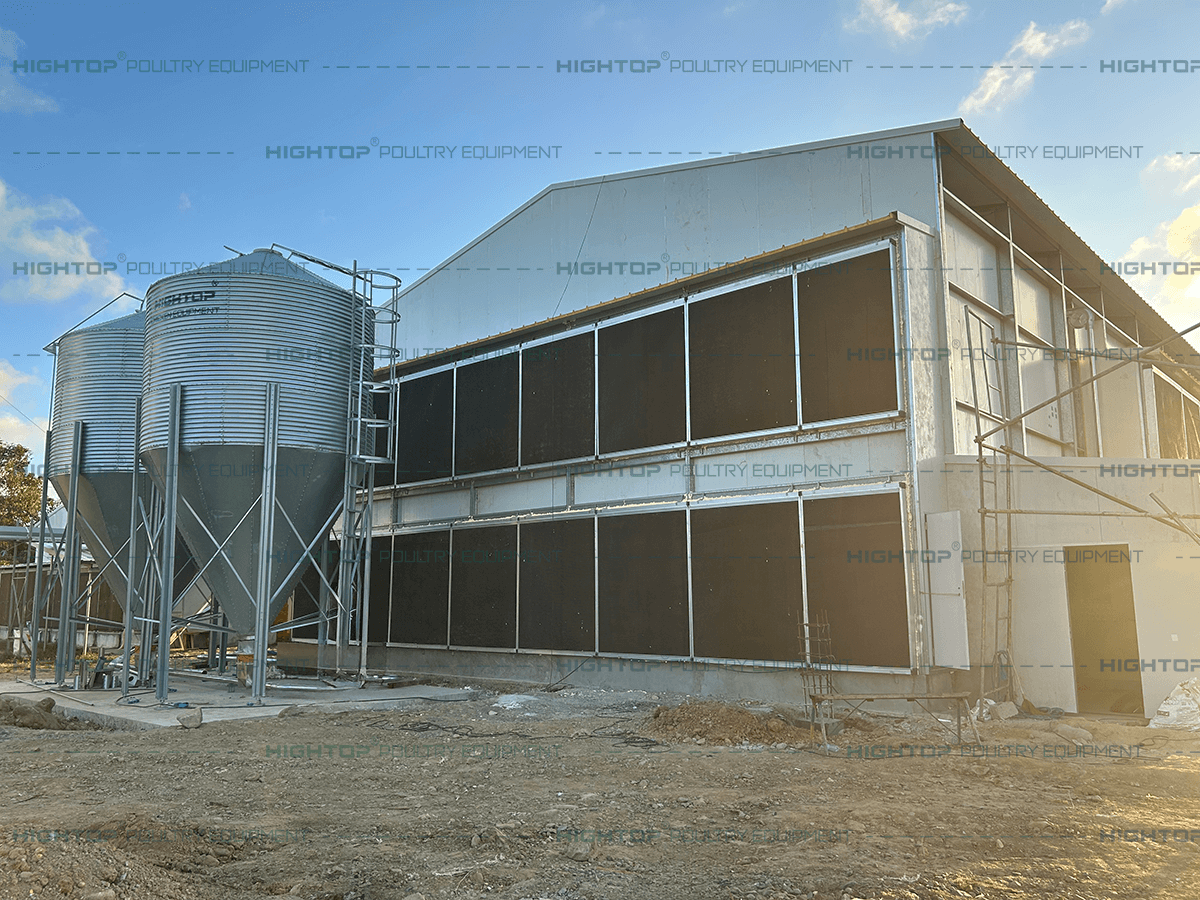
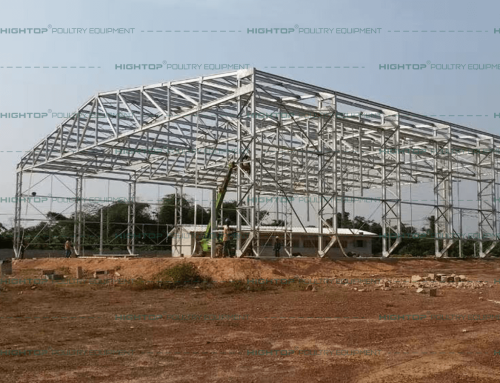
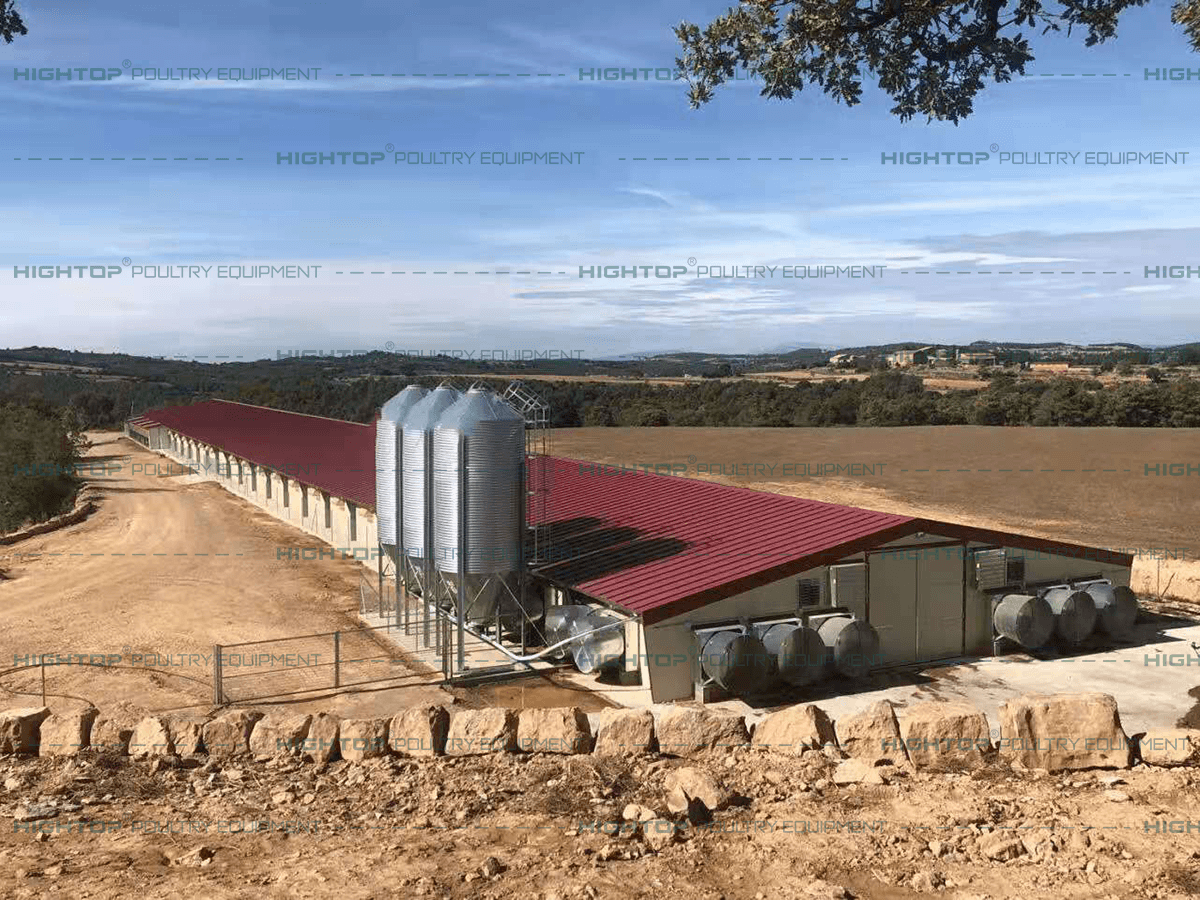
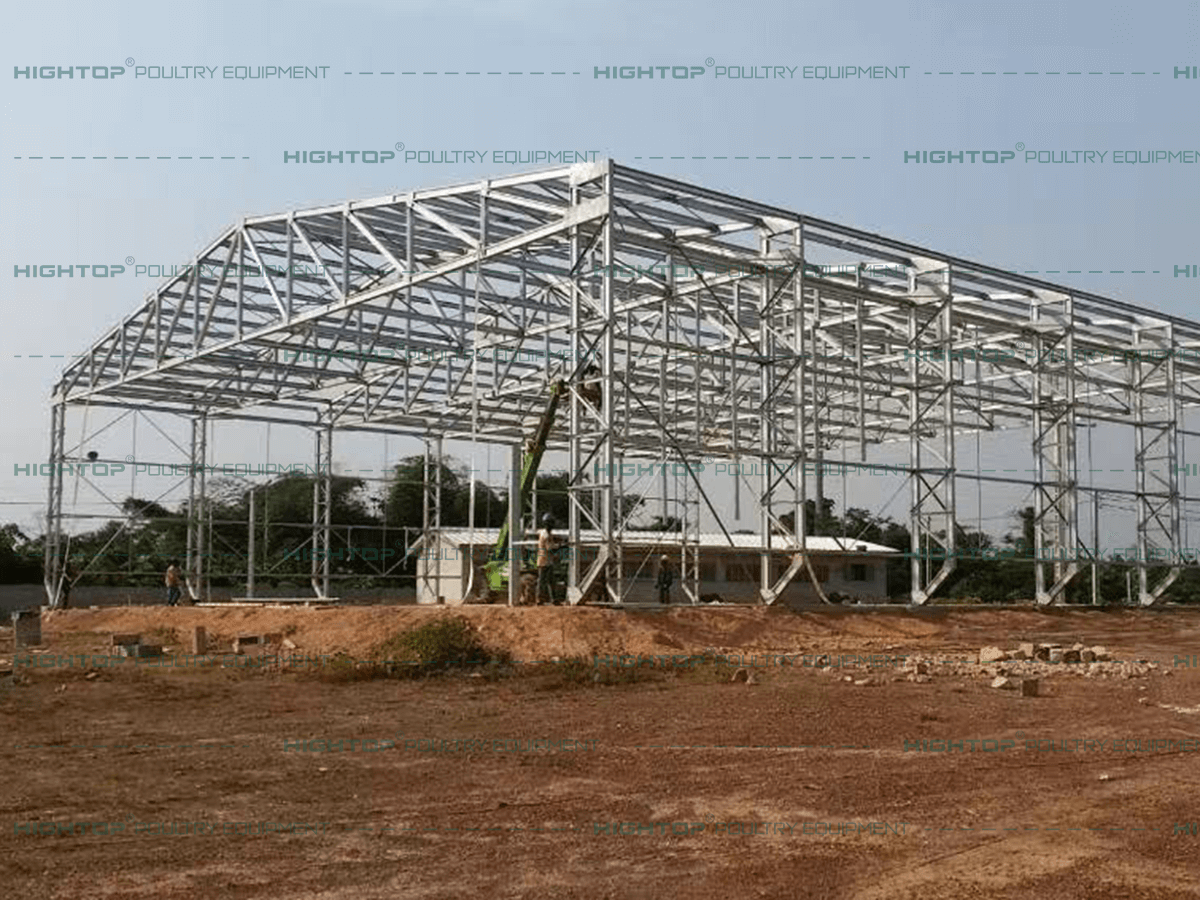
More and more professional farmers are choosing steel structure poultry houses – not just for durability, but as their first line of defense in biosecurity.
What Is Structural Biosecurity – And Why Does It Matter?
Biosecurity is usually thought of as disinfectant footbaths, quarantine procedures, and vaccination.
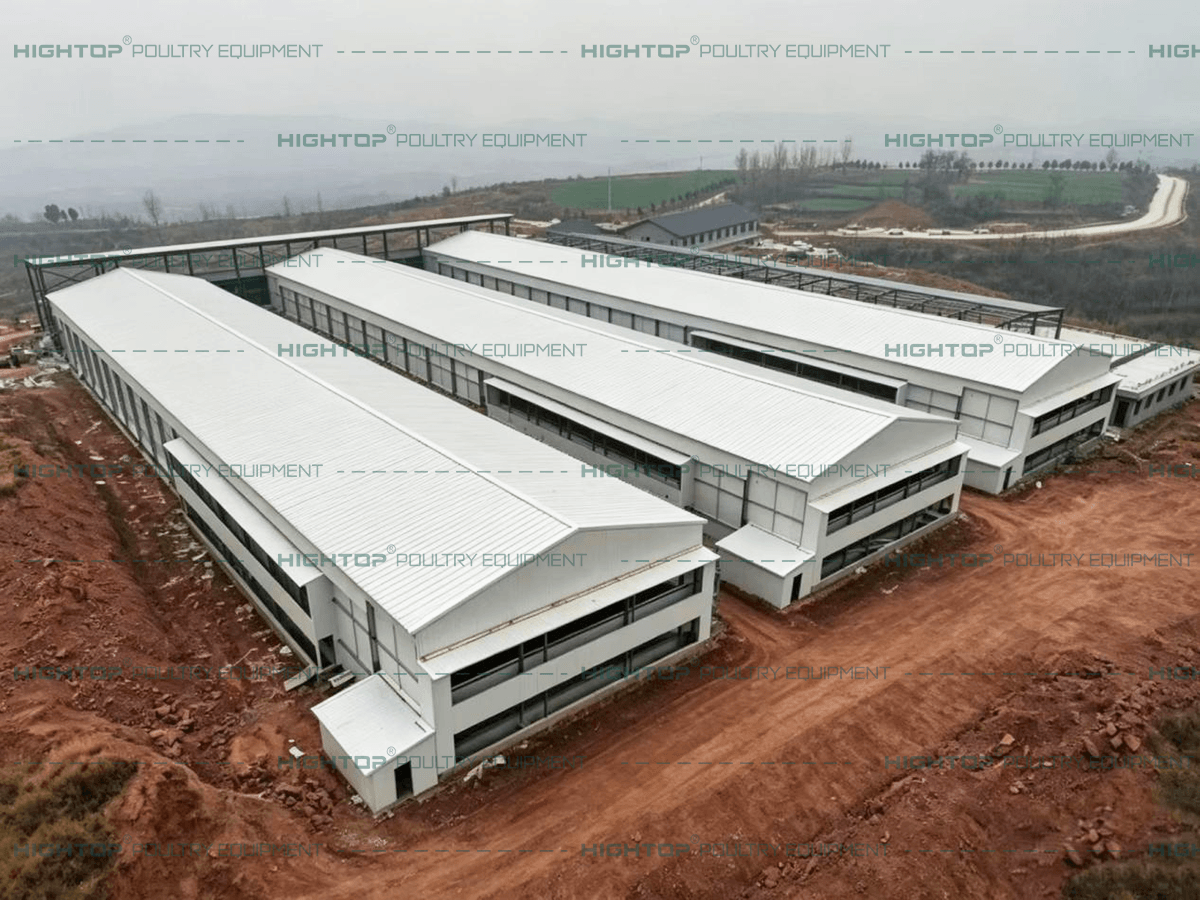
But there is a deeper layer: structural biosecurity – the physical design of the poultry house itself.
A well-designed steel structure poultry house acts as a fortress against pathogens. It eliminates the hidden corners, porous surfaces, and entry points where viruses and bacteria hide, survive, and spread.
In contrast, traditional brick, concrete block, or wood houses often have:
- Cracks and crevices that trap organic matter
- Porous walls that absorb moisture and pathogens
- Gaps that allow rodents, wild birds, and insects to enter
Steel solves all of these problems from day one.
5 Ways a Steel Structure Poultry House Reduces Disease Risk
1. Physical Barrier – Keeping Carriers Out
Wild birds are natural carriers of avian influenza and Newcastle disease. Rodents carry Salmonella and E. coli.
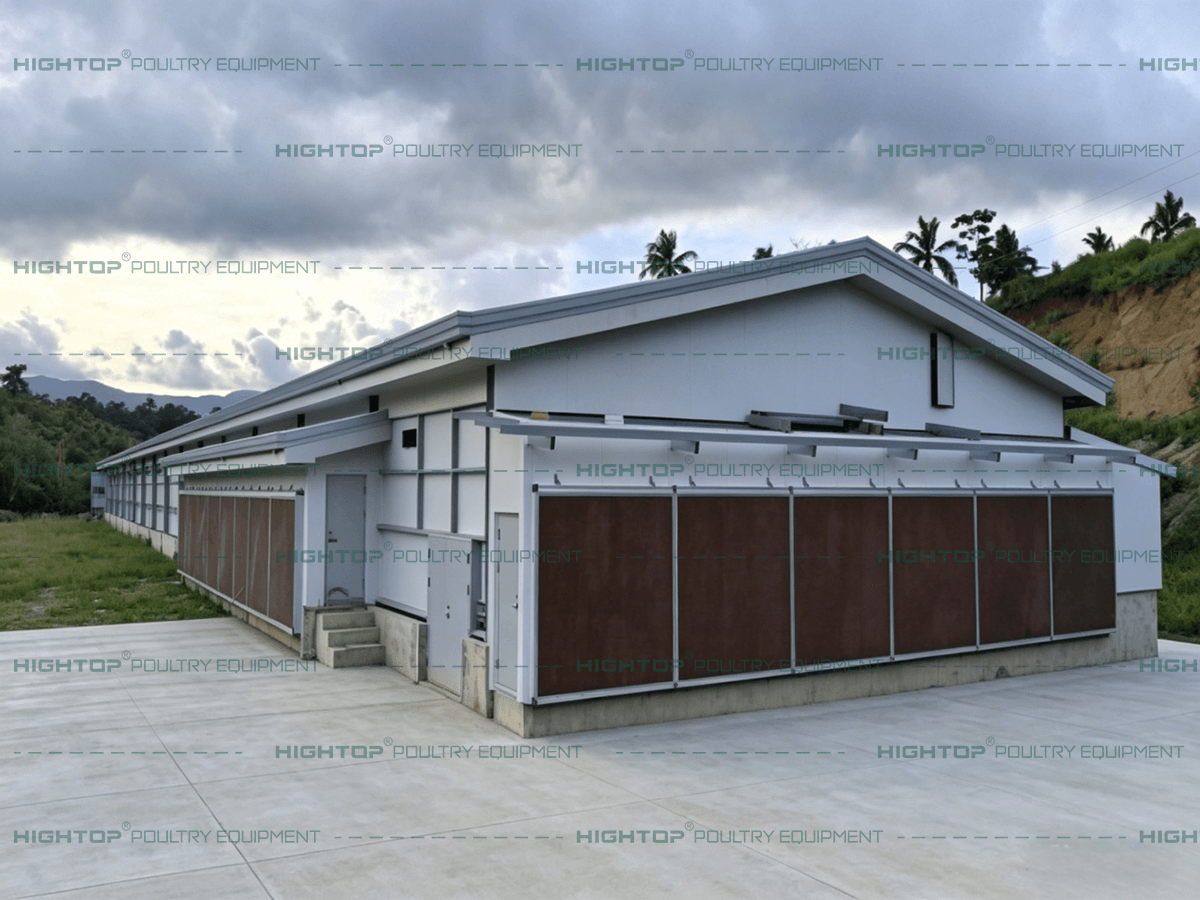
Steel structure houses are designed to be fully enclosed with:
- Anti-bird netting on all ventilation openings
- Sealed eaves and ridge caps with no gaps
- Rodent-proof base plates and smooth steel skirting
No cracks. No holes. No unsealed joints.
This means disease carriers stay outside, where they belong.
2. Smooth, Non-Porous Surfaces – Nothing for Pathogens to Hold Onto
A steel wall is smooth, hard, and non-absorbent.
Compare that to a concrete block or brick wall – its rough surface and mortar joints trap dust, moisture, and organic film. Pathogens can survive for weeks inside those microscopic pores.
With steel:
- High-pressure washing removes 100% of visible dirt
- Disinfectants (peracetic acid, quaternary ammonium, etc.) contact all surfaces evenly
- No hidden biofilms survive between flocks
Result: A truly clean house before the next batch arrives – the foundation of “all-in, all-out” disease control.
3. Precision Environmental Control – Suppressing Pathogens at the Source
Many poultry diseases are triggered or worsened by poor air quality:
- High ammonia damages respiratory tracts, making birds vulnerable to E. coli and CRD
- High humidity promotes fungal growth (aspergillosis) and coccidiosis
- Stagnant air allows airborne viruses to concentrate
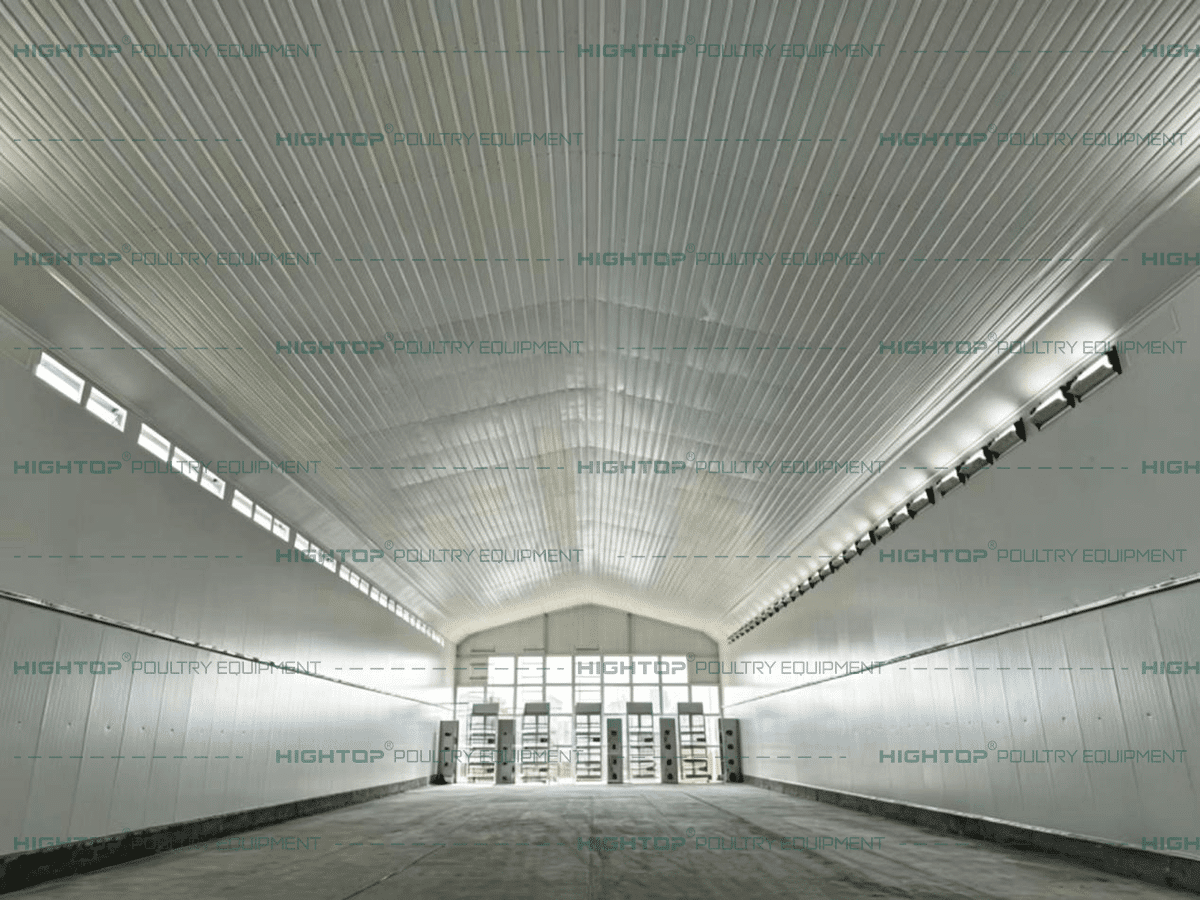
Steel structures allow perfect integration of modern environmental control systems:
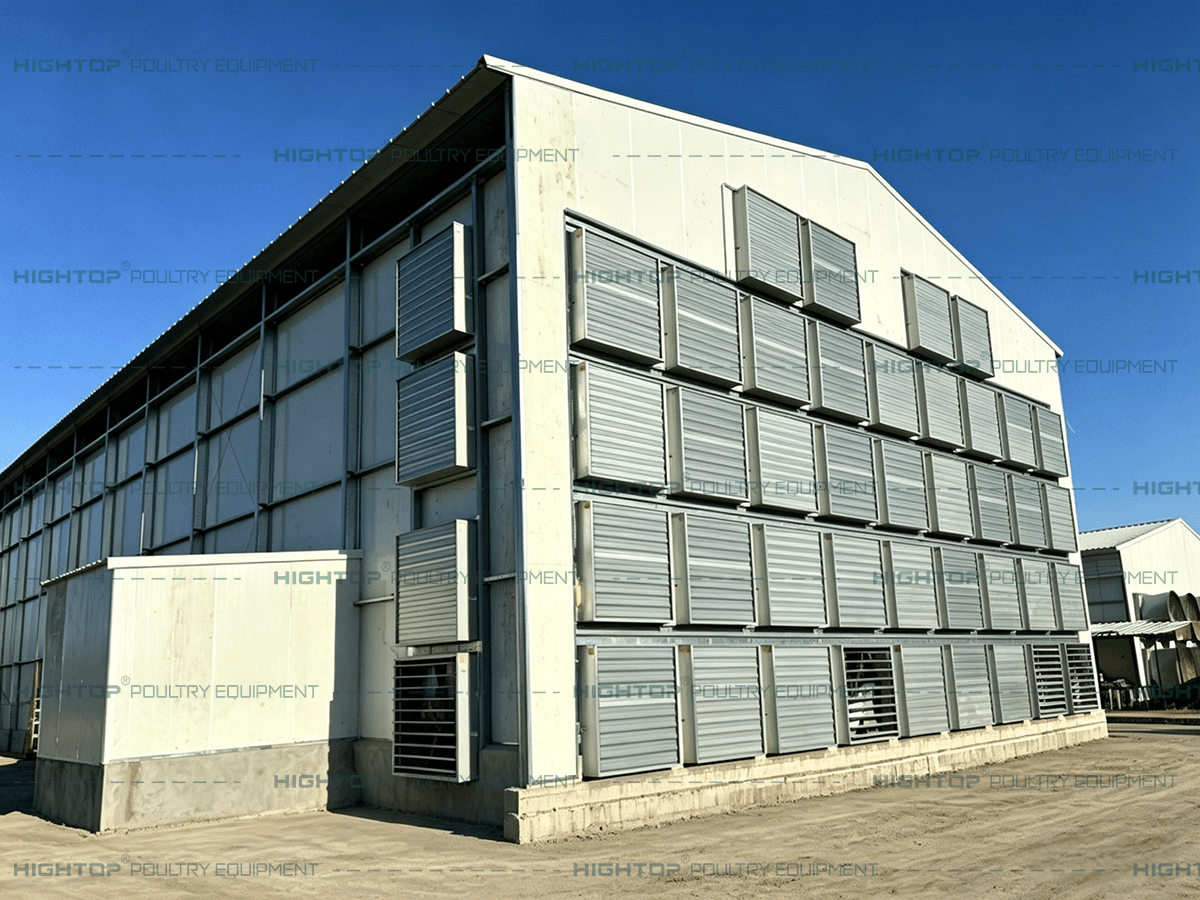
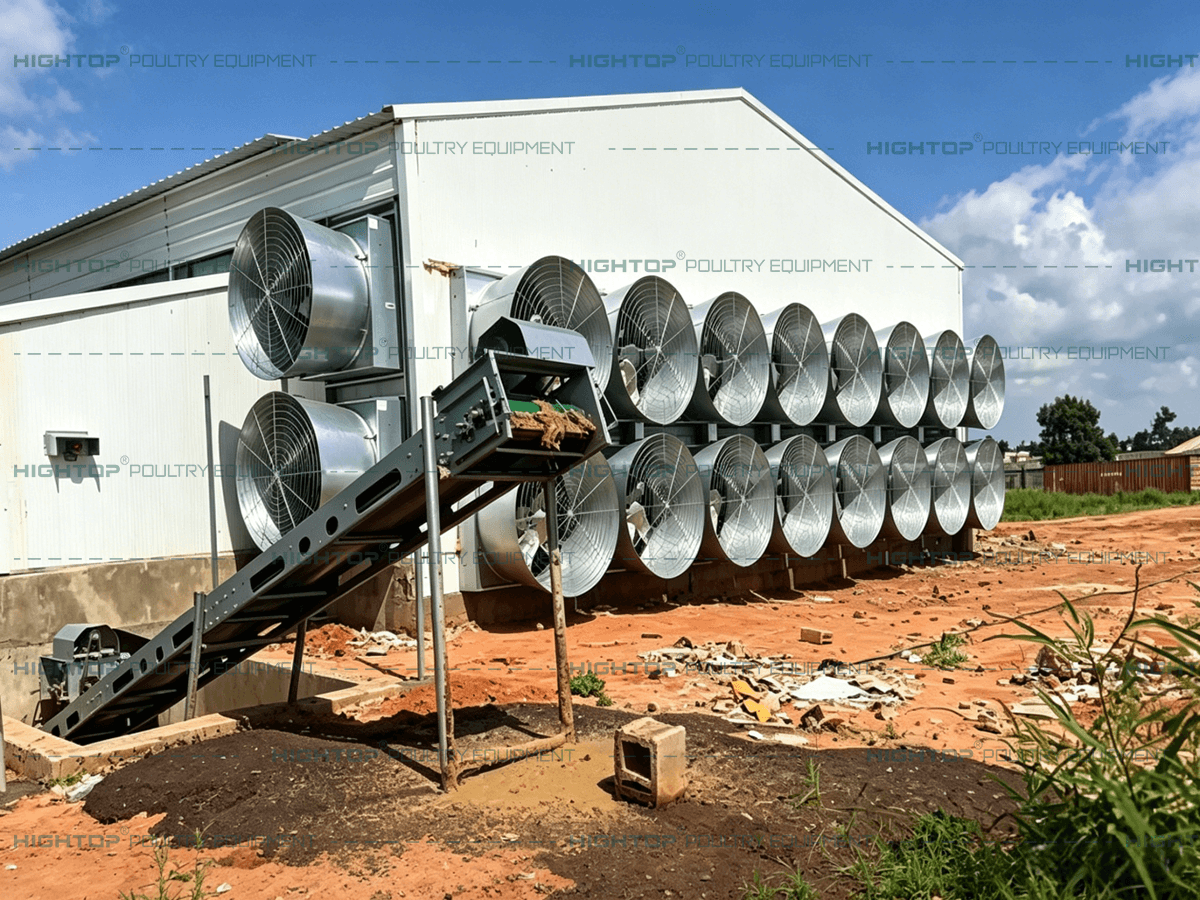
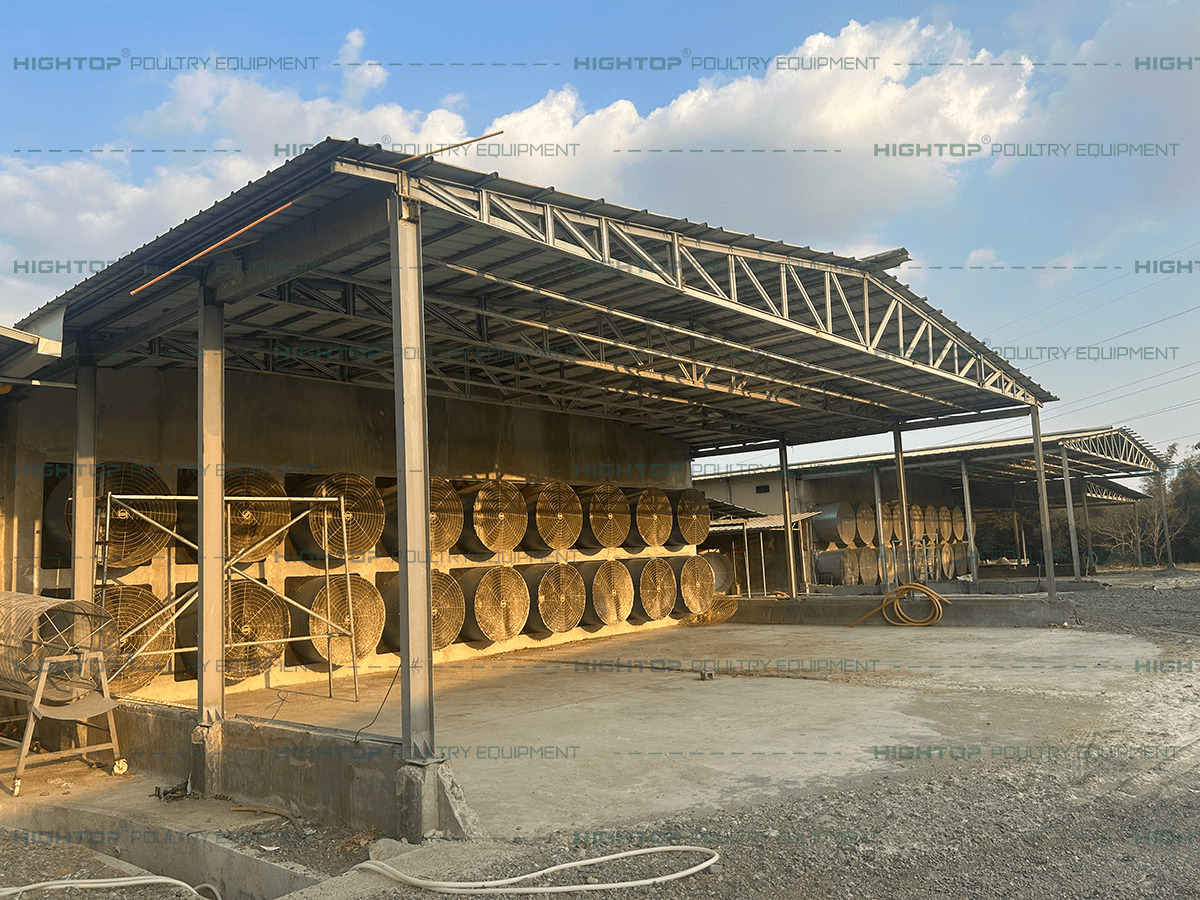
- Tunnel ventilation with negative pressure
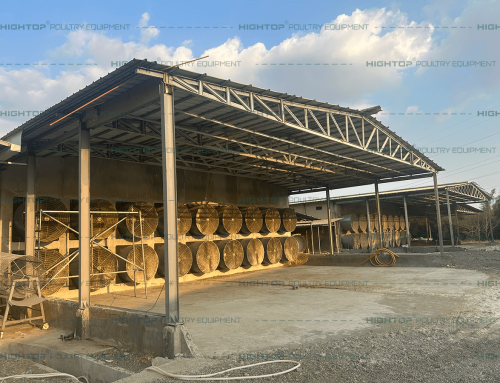
- Cooling pads for hot climates (Southeast Asia, Middle East, Africa)
- Automated inlets and variable-speed fans
A steel house can maintain 22-25°C and 50-60% humidity even when outside is 40°C.
Dry, cool, well-ventilated air = unfriendly environment for pathogens.
4. Instant Manure Removal – Breaking the Infection Chain
Manure is the single largest reservoir of pathogens inside a poultry house.
In traditional houses, manure accumulates under cages or on litter floors, releasing ammonia and harboring Salmonella, Clostridium, and coccidia oocysts.
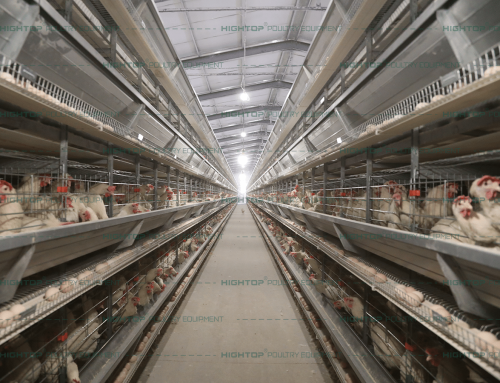
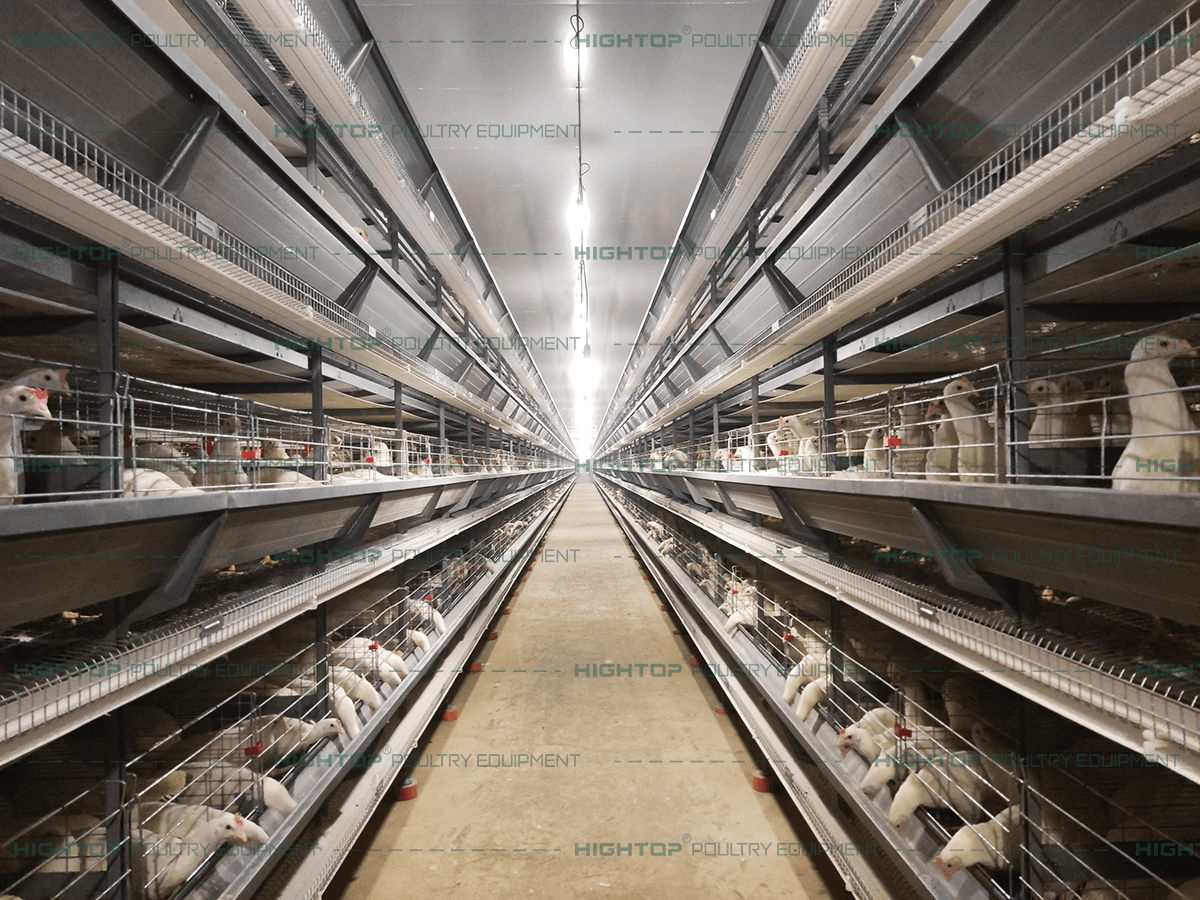
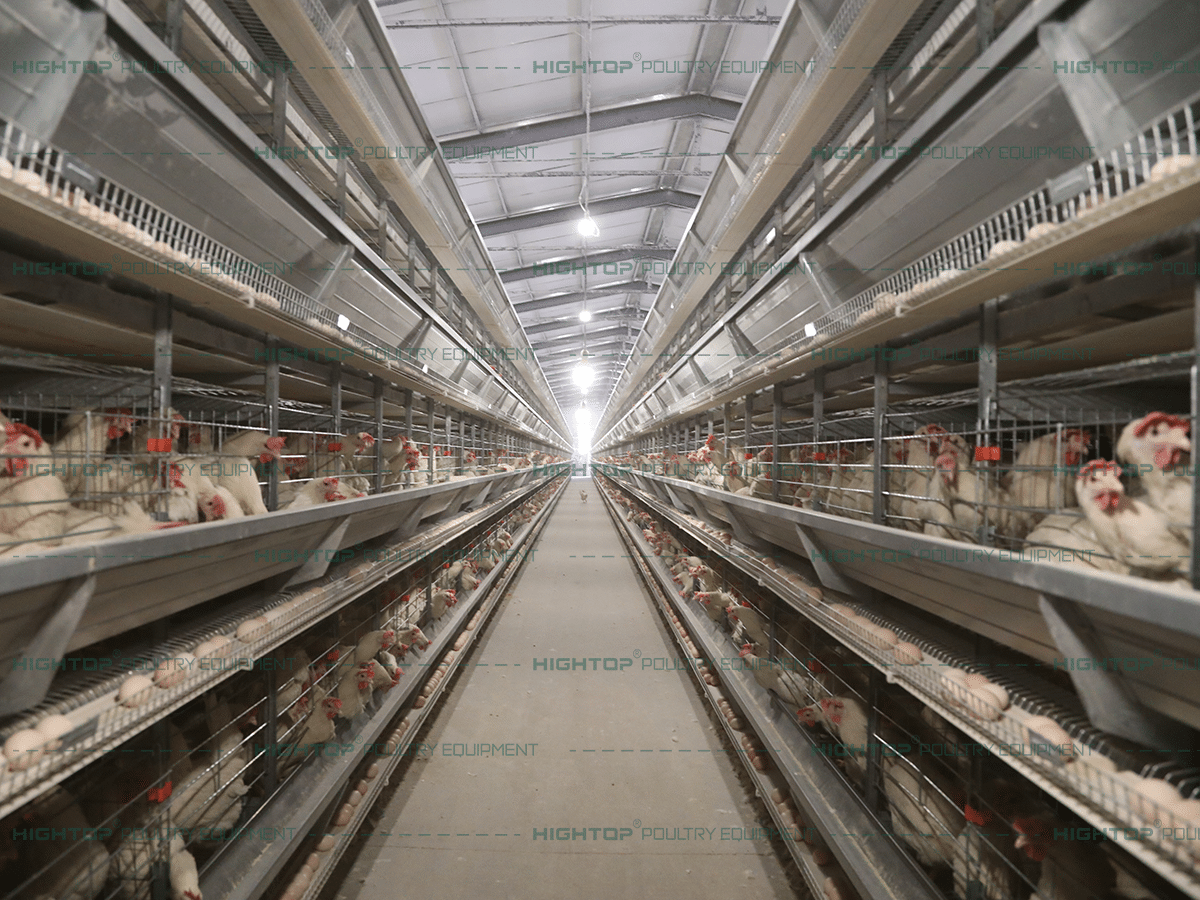
Steel structure houses are designed to work with automatic manure removal systems:
- Belt systems under each cage tier
- Deep-pit scrapers
- Daily or weekly removal to an enclosed collection area
Because steel frames can support heavy automated equipment without sagging or corrosion, manure never stays inside long enough to amplify disease pressure.
5. Logical Farm Zoning – Clean vs. Dirty Never Mix
Disease spreads when “clean” areas (feed storage, bird living area) touch “dirty” areas (manure removal, dead bird disposal).
Steel’s modular design makes it easy to create strict physical separation:
- Clean corridor for feed delivery and staff entry
- Dirty corridor for manure and dead bird removal
- Separate doors, separate routes, no cross-over
This is nearly impossible to retrofit into a traditional brick or wood house. But with a steel structure, it is designed in from the start.
Real-World Example – From Repeated Disease Losses to Stable Production
A medium-sized layer farm in Thailand (30,000 birds) suffered from recurring E. coli respiratory infections every hot season.
The farm used a traditional open-sided brick house with wire mesh. Wild birds entered freely, dust accumulated on rough walls, and high humidity made disinfection ineffective.
After switching to a HIGHTOP steel structure poultry house:
- Fully enclosed with anti-bird netting
- Smooth steel walls – pressure washed and disinfected in 4 hours instead of 2 days
- Tunnel ventilation with cooling pads kept birds comfortable at 28°C even during 38°C outside heat
- Automatic belt manure removal – manure out every 48 hours
Result:
- Respiratory disease incidence dropped by 85%
- Mortality fell from 8% to 2.5% per cycle
- Feed conversion ratio improved from 2.1 to 1.9
- The owner’s comment: “We finally broke the cycle of disease. The steel house was the best investment we ever made for flock health.”
Which Markets Need Steel Structure Biosecurity the Most?
| Region | Key Disease Threat | Why Steel Helps |
| Southeast Asia | Avian influenza, Newcastle | Enclosed design keeps out wild birds; easy disinfection between cycles |
| Middle East & GCC | Respiratory diseases, heat stress | Precision cooling + low dust = stronger bird immunity |
| Africa | Newcastle, Gumboro, Salmonella | Rodent-proof and durable under challenging conditions |
| South America | Highly pathogenic avian influenza (HPAI) | Quick turnaround for “all-in, all-out” after an outbreak |
| Caribbean | Multiple endemic diseases | Low-maintenance, easy to sanitize with limited labor |
Conclusion – Don’t Wait for an Outbreak
Disease prevention is always cheaper than disease cure.
A single outbreak can cost months of production, high mortality, and lost export markets.
By choosing a steel structure poultry house from HIGHTOP Group, you are not just buying a building.
You are buying:
- Physical security against disease carriers
- Hygienic surfaces that can be truly cleaned
- Environmental control that suppresses pathogens
- Manure removal that breaks the infection chain
- Farm zoning that keeps clean and dirty separate
Your customers’ number one reason to buy: Reduce poultry diseases and protect their livelihood.
Ready to build a disease-resistant poultry farm?
Contact HIGHTOP Group today. We provide one-stop solutions – from land and house design, steel structure manufacturing, equipment supply, installation, training, to after-sales support.
Let us help you build a healthier, more profitable future.
About HIGHTOP Group
With over 20 years of experience, HIGHTOP Group is a professional poultry equipment manufacturer.
We serve clients in Southeast Asia, South America, Central America, the Caribbean, Africa, GCC countries, the Middle East, Eastern Slavic countries, the Baltics, and the South Caucasus.
Our steel structure poultry houses are:
- Economical but high-quality
- Designed for local climates (heat, humidity, dust)
- Backed by full installation and training support
Send us an inquiry now for a free biosecurity assessment and house design proposal.
Leave A Comment