
Data-Driven Farming: How Does the Internet of Things (IoT) Enable Precise Monitoring of “Water, Electricity, Feed, Eggs + Environmental Control” in Large-Scale Egg Farms?
It’s a late summer night. You’re asleep, but inside your poultry house, a fan belt suddenly breaks. The temperature rises quickly. In traditional farming, you wouldn’t discover this until the next morning—by then, your flock may already suffer heat stress, reduced egg production, or even mortality.
Now imagine a different scenario.
Before going to bed, you check your phone: all poultry house conditions are normal. If something goes wrong overnight, your system immediately alerts you. You can open an app, assess the situation, and notify your farm manager in real time.
This is not the future—this is IoT-powered poultry farming today.
What Is IoT in Poultry Farming? (Simple Explanation)
The Internet of Things (IoT) acts like a 24/7 intelligent assistant for your farm:
1. Sensors (The “Eyes”)
- Monitor temperature, humidity, ammonia levels
- Track feed levels, water consumption, and electricity usage
2. Network Transmission (The “Nervous System”)
- Sends real-time data to the cloud
- Stores historical farm data for analysis
3. Mobile App or Computer (The “Control Center”)
-
Provides full farm visibility anytime, anywhere
In simple terms:
IoT = Sensors + Network + Mobile Monitoring
What Can IoT Manage in a Poultry Farm?
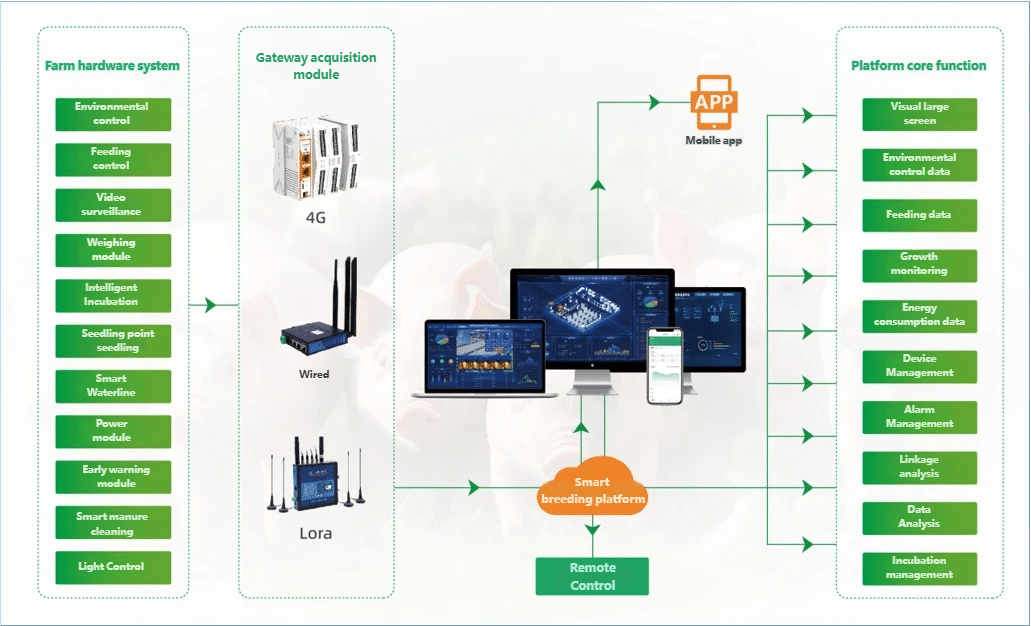
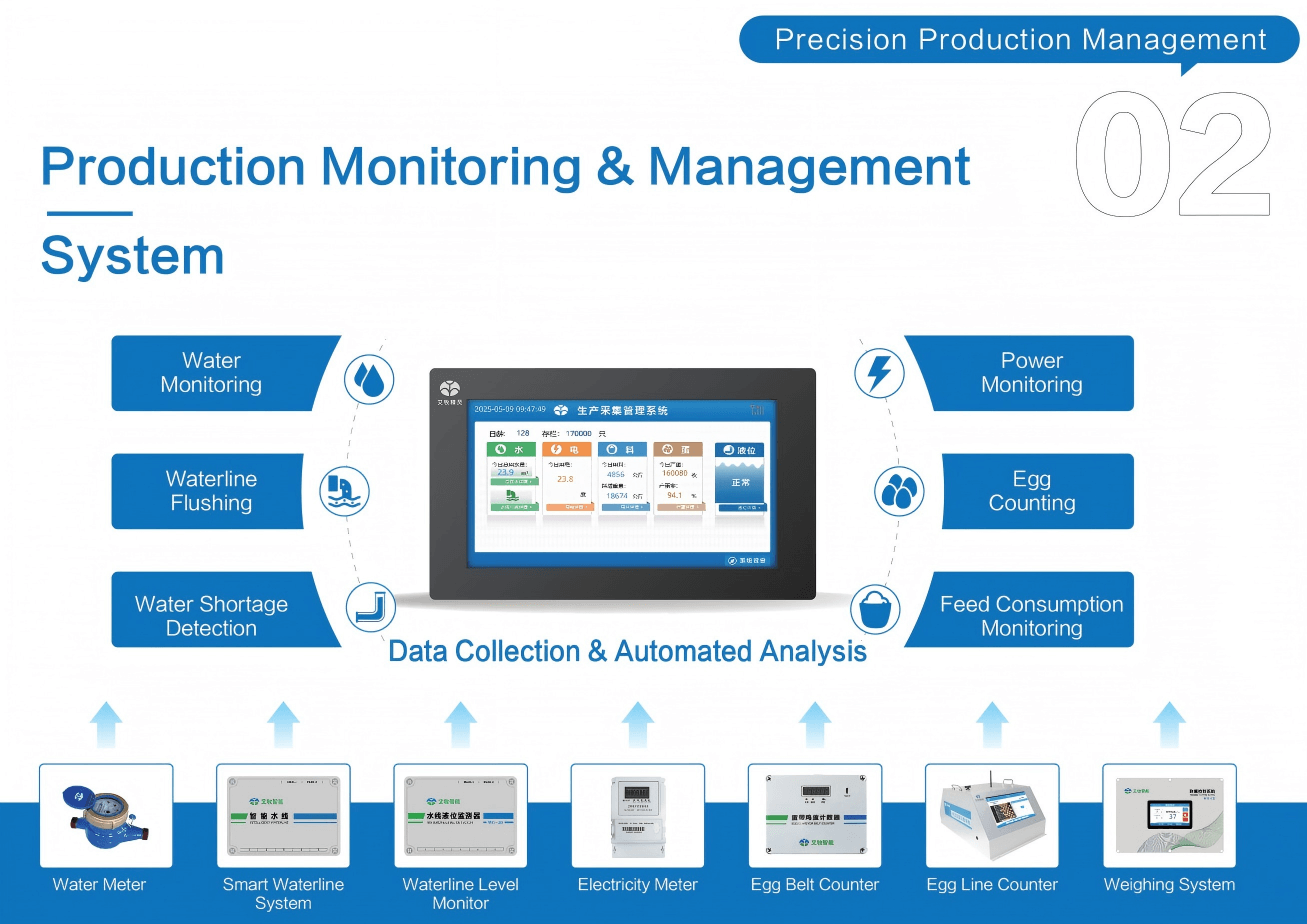
A complete IoT system enables precision farming across five key dimensions:
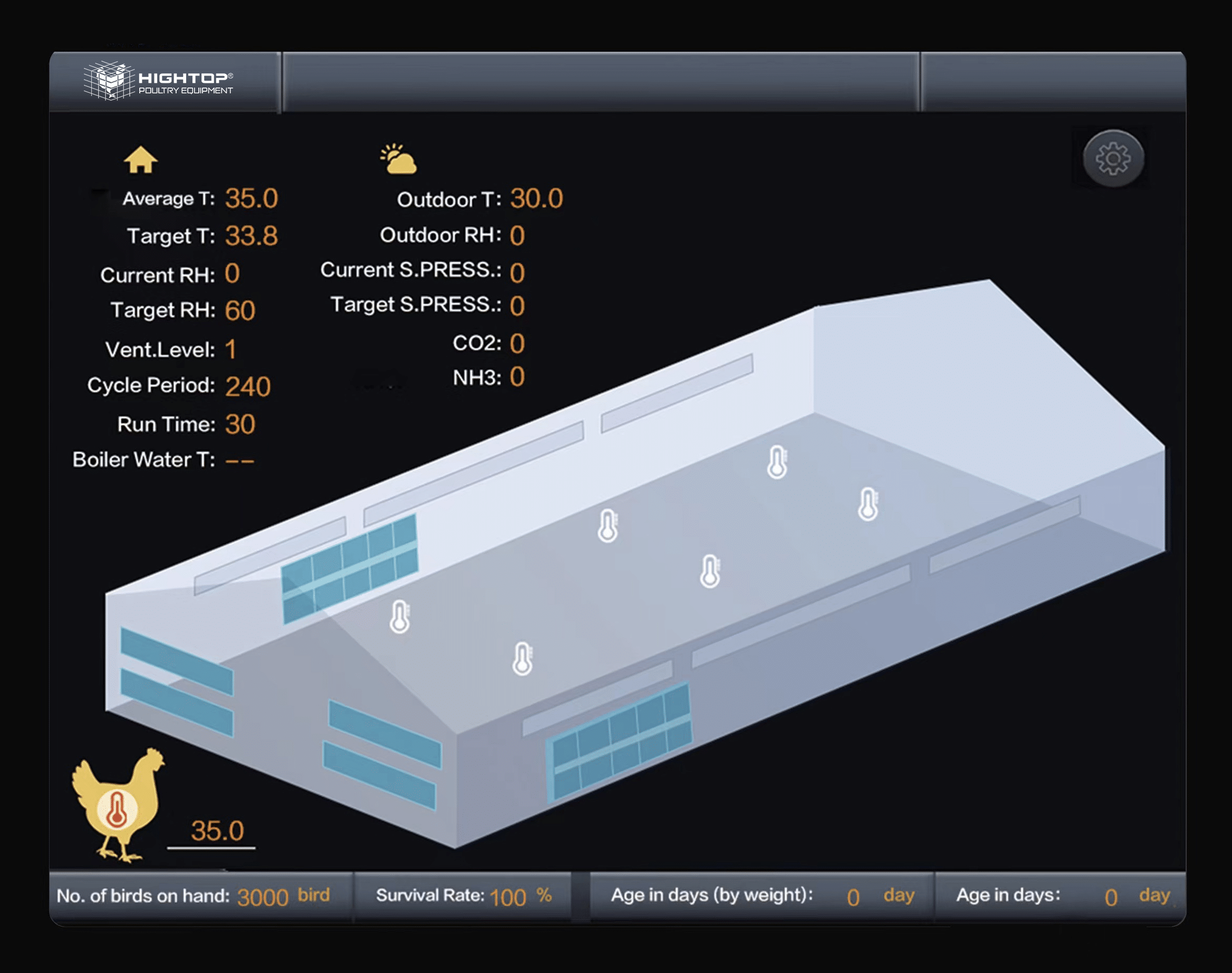
1. Environmental Control: Keep Chickens Comfortable
Maintaining stable environmental conditions is critical for egg production.
With IoT:
- Automatically activates fans when temperature rises
- Increases ventilation when ammonia levels are high
- Sends instant alerts during power failures
Result:
- Reduced heat stress
- Stable egg production
- Improved bird welfare
2. Power Management: Full Visibility of Energy Usage
Electricity costs are a major expense in poultry farming.
IoT helps you:
- Track power consumption by equipment (fans, lights, systems)
- Identify abnormal energy usage
- Optimize energy efficiency
Result:
- Reduced electricity waste
- Lower operational costs
3. Feed Management: Eliminate Waste and Detect Problems Early
Feed accounts for the largest portion of farming costs.
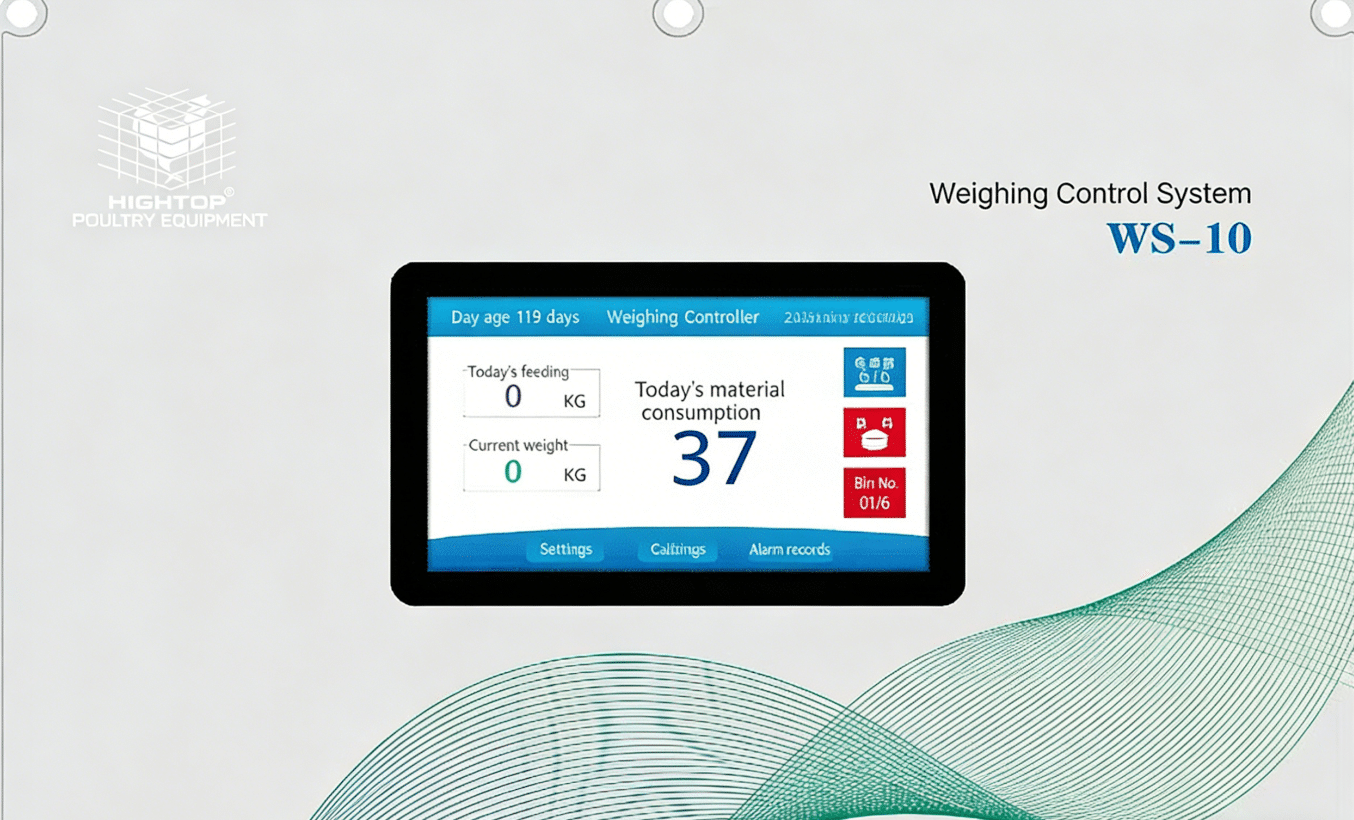
IoT enables:
- Real-time feed silo monitoring
- Automatic alerts when feed drops below 20%
- Early warning if feed intake decreases by more than 5%
Why this matters:
A drop in feed intake is often the first sign of disease.
Result:
- Reduced feed waste
- Early disease detection
- Improved feed conversion
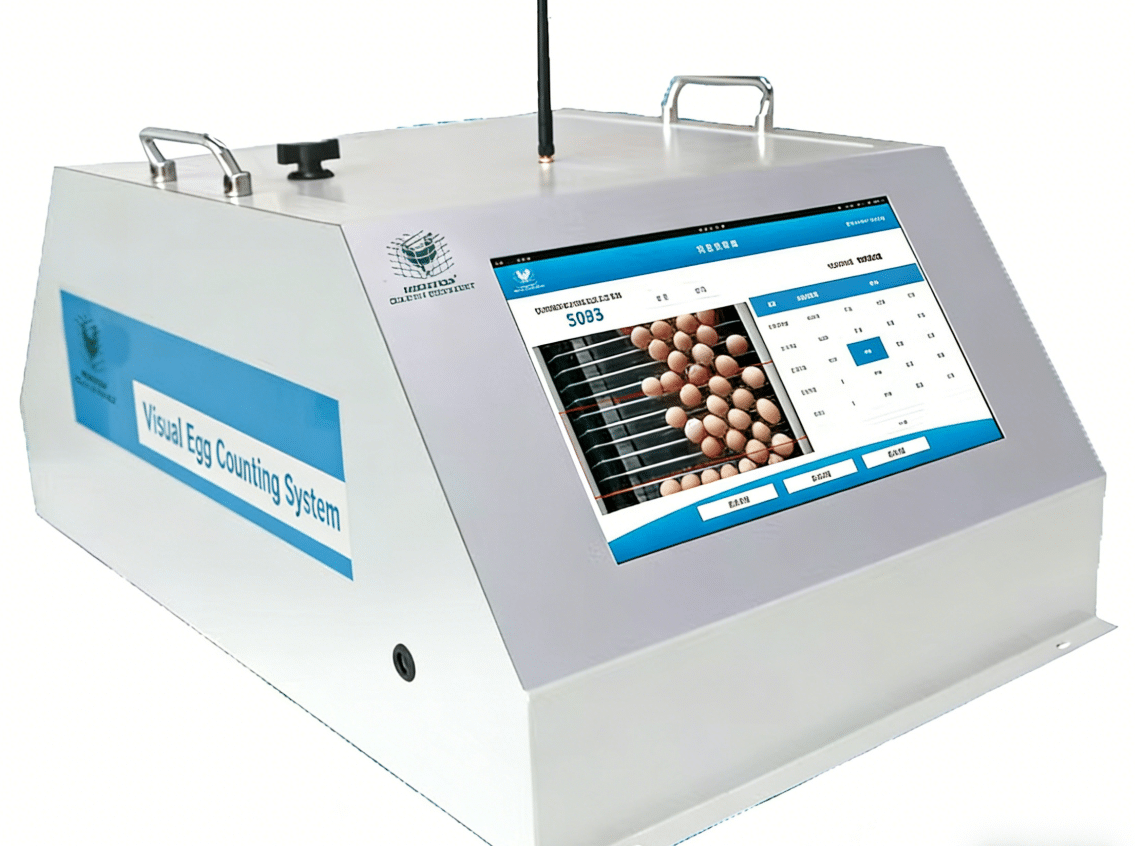
4. Egg Production Monitoring: Data-Driven Decisions
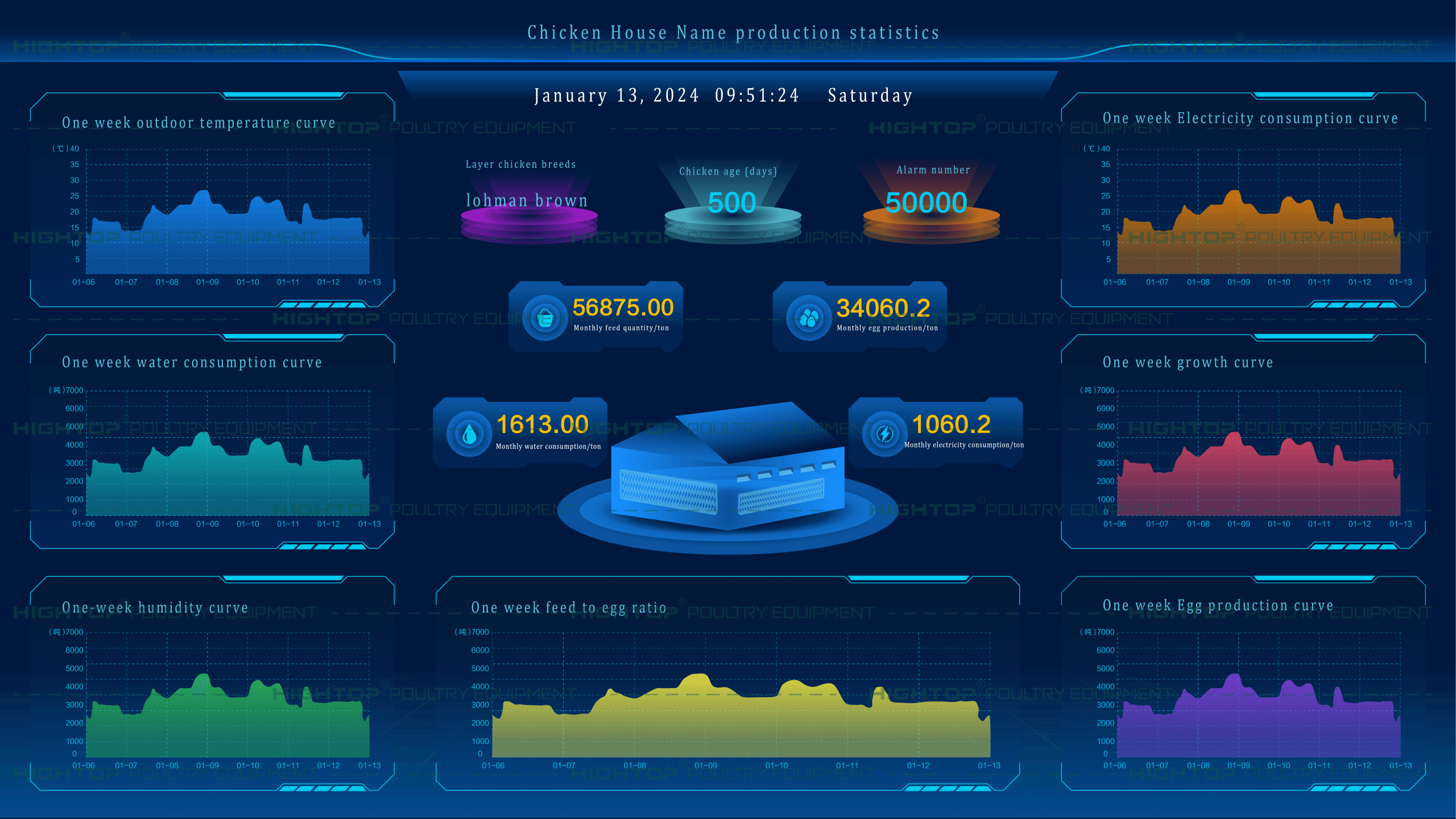
Instead of manual recording, IoT provides:
- Daily egg production reports
- Comparison with previous days
- Performance tracking by poultry house
If production drops:
- System highlights abnormalities
- Historical environmental data helps identify root causes
Result:
- Faster problem-solving
- Higher production consistency
5. Water Management: Prevent Loss and Maintain Hygiene
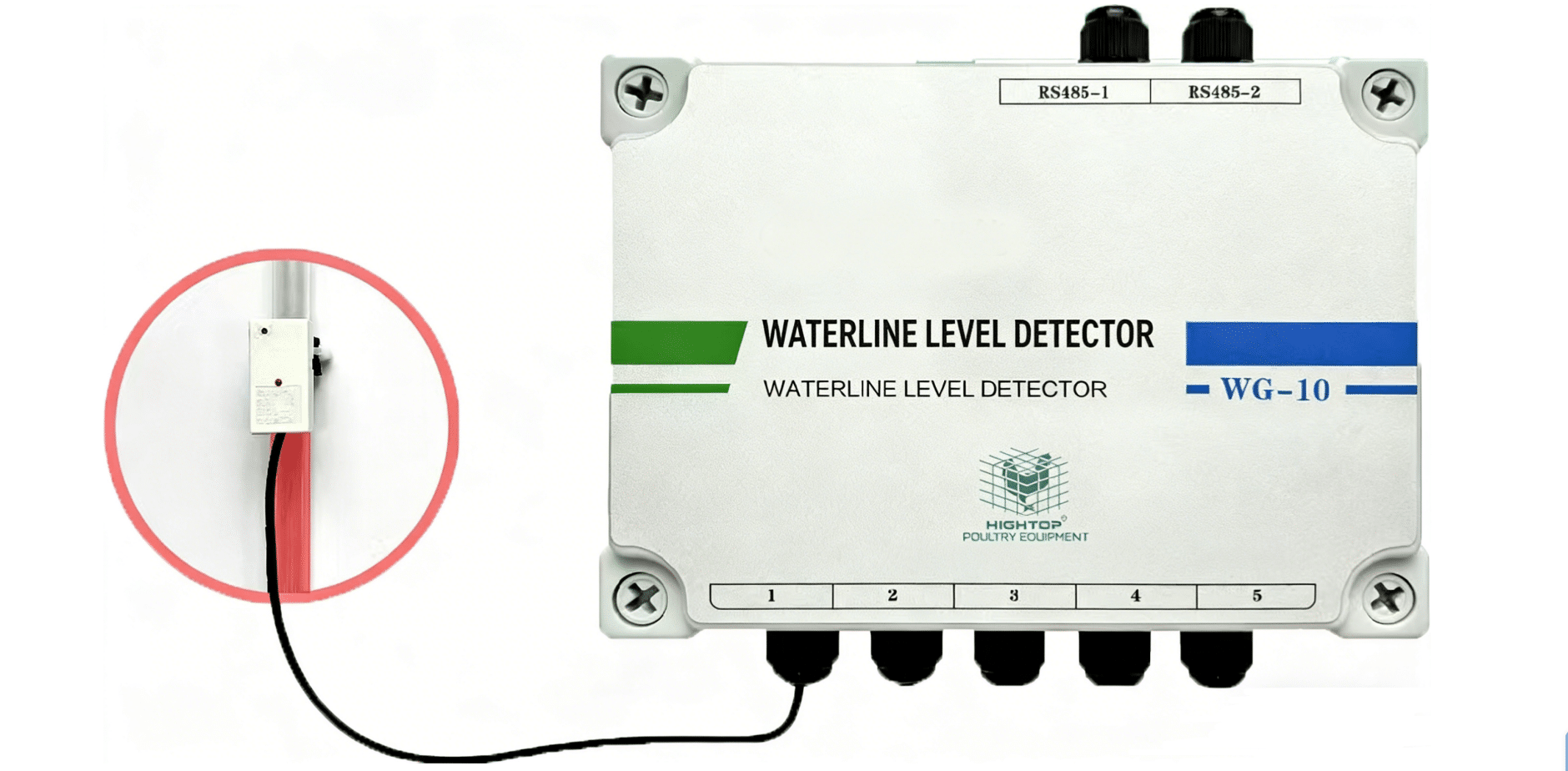
Water usage directly impacts bird health and farm costs.
IoT monitors:
- Real-time water consumption
- Nighttime abnormal flow
- Sudden spikes (e.g., +20%)
Result:
- Early leak detection
- Reduced water waste
- Better environmental control
Real-Life Daily Operation with IoT
Morning (7:00 AM)
- Check app: all conditions normal
- View automatic egg production report
-
-
House A: 92.5%
-
House B: 91.8%
-
Mid-Morning (9:00 AM)
- Review feed consumption trends
- Notice declining intake in House C
- Notify manager for early inspection
Afternoon (3:00 PM)
- Receive alert: rising temperature in House D
- Diagnose cooling system issue
- Take corrective action remotely
Night (10:00 PM)
- Check feed levels and equipment status
- Confirm all systems are stable
Result: Peace of mind and proactive management
Economic Benefits: What ROI Can You Expect?
Economic Benefits: Estimated Annual Savings (USD)
| Management Area | Traditional Problem | IoT Improvement | Annual Savings (USD) |
| Environmental Control | No night monitoring | 24/7 Real-time alerts | $7,278 – $14,556 |
| Energy Use | No cost breakdown | Optimized power usage | $2,911 – $7,278 |
| Feed Management | Manual checks | Precision tracking | $4,367 – $8,734 |
| Labor Efficiency | Manual inspections | Remote management | $4,367 – $7,278 |
| Disease Control | Late detection | Early warning systems | $2,911 – $5,822 |
| Water Management | Undetected leaks | Real-time flow alerts | $1,455 – $2,911 |
| Total Annual Savings | $21,834 – $43,668 |
ROI Analysis Summary
-
Total Estimated Annual Savings: Approximately $21,800 to $43,700.
-
Investment Recovery: Typically achieved within 6 to 12 months, depending on the initial hardware complexity.
-
Strategic Value: Beyond the direct cash savings, the primary “hidden” ROI is risk mitigation. Preventing a single catastrophic ventilation failure (which could kill thousands of birds in hours) can pay for the entire IoT system multiple times over.
Why Farmers Choose Our IoT Poultry System
20+ Years of Industry Experience
- Deep understanding of poultry farming operations
- Solutions based on real farm data
Global Practical Experience
- Systems tested and optimized across multiple farms
- Continuous improvement based on real feedback
Strong Technical Team
- Experts in livestock farming + IoT engineering
- On-site visits, training, and support
International Certifications
- CE, ISO certified
- Trusted supplier for agricultural projects
Data Security Guarantee
- Local data storage available
- Confidentiality agreements supported
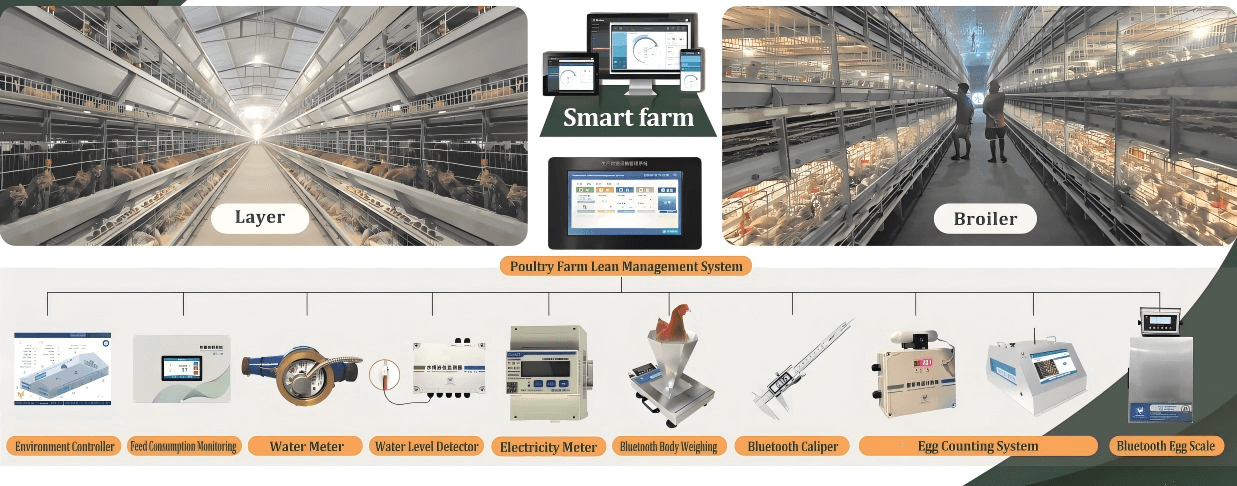
How to Start with IoT in Your Poultry Farm
Step 1: Start Small
Install environmental monitoring and alarm system in one poultry house.
Step 2: Expand Gradually
Add:
- Feed monitoring
- Energy tracking
- Egg production analytics
Step 3: Achieve Full Data-Driven Farming
Use accumulated data to:
- Optimize performance
- Improve decision-making
- Maximize profitability
Conclusion: Upgrade to Smart Poultry Farming Today
IoT is not just a technology upgrade—it is a complete transformation of poultry farm management.
By enabling:
- Real-time monitoring
- Early risk detection
- Data-driven decision-making
IoT helps you:
- Reduce costs
- Increase production efficiency
- Improve flock health
- Maximize long-term profitability
Take Action Now
Start your transition to smart poultry farming today.
Contact us to design a custom IoT solution tailored to your farm.
Let us help you build a more efficient, reliable, and profitable poultry operation.