
Project Overview
In 2024, a broiler farmer from the Philippines was operating a traditional free-range farm with approximately 40,000 birds. The farm was already generating income, but expanding the existing production model presented several challenges.
A larger free-range operation would require more land and labor, while flock inspection, disease control, feeding management and manure handling would become increasingly difficult. The farmer therefore planned a new poultry house that could accommodate more than 100,000 broilers through automated cage production.
After comparing suppliers, visiting an operating HIGHTOP project in the Philippines and inspecting the HIGHTOP factory in China, the customer selected a complete solution consisting of:
- A steel structure poultry house
- A 4-tier H-Type automatic broiler cage system
- Powder-coated pull-out slat harvesting cages
- Automatic feeding and drinking systems
- Automatic manure removal
- Automatic broiler harvesting
- An environmental control system
- Energy-efficient EC ventilation fans
- On-site installation guidance
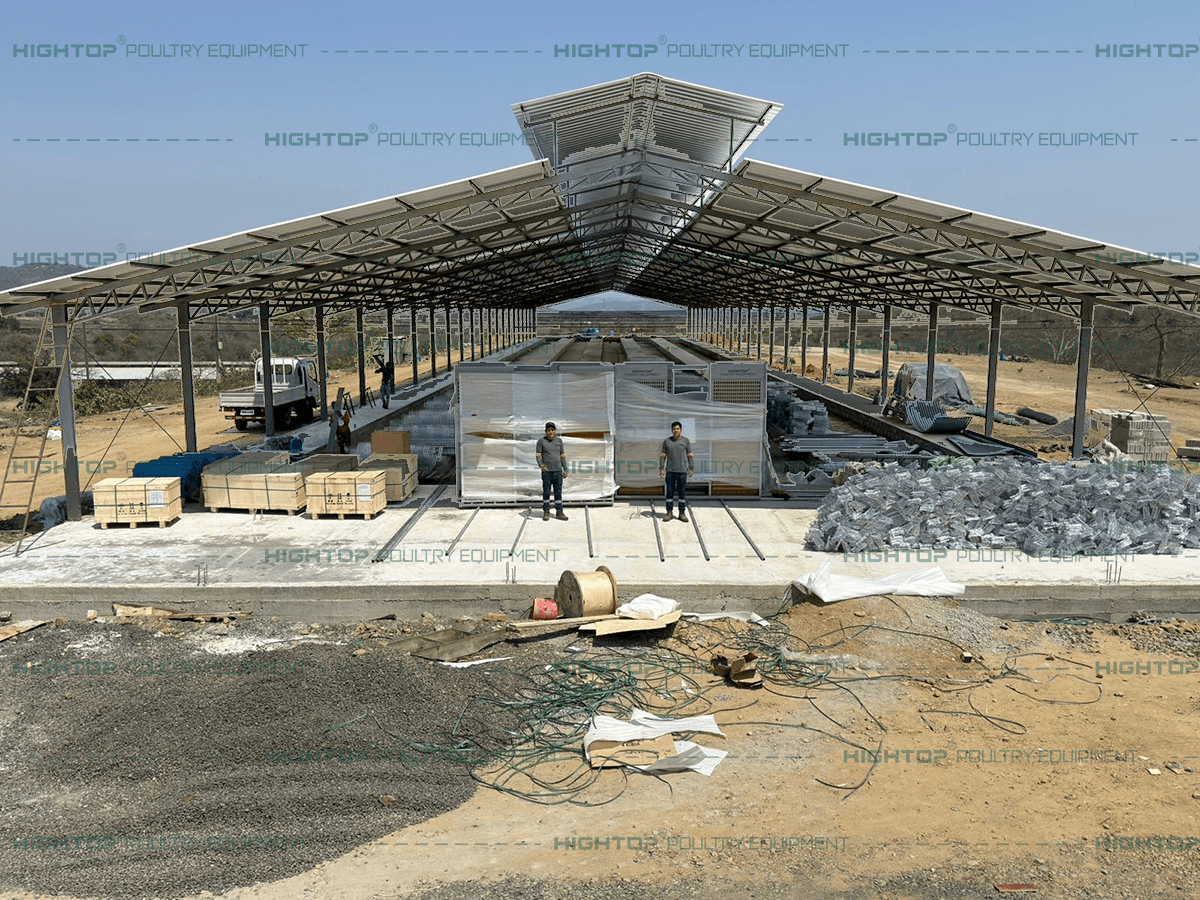
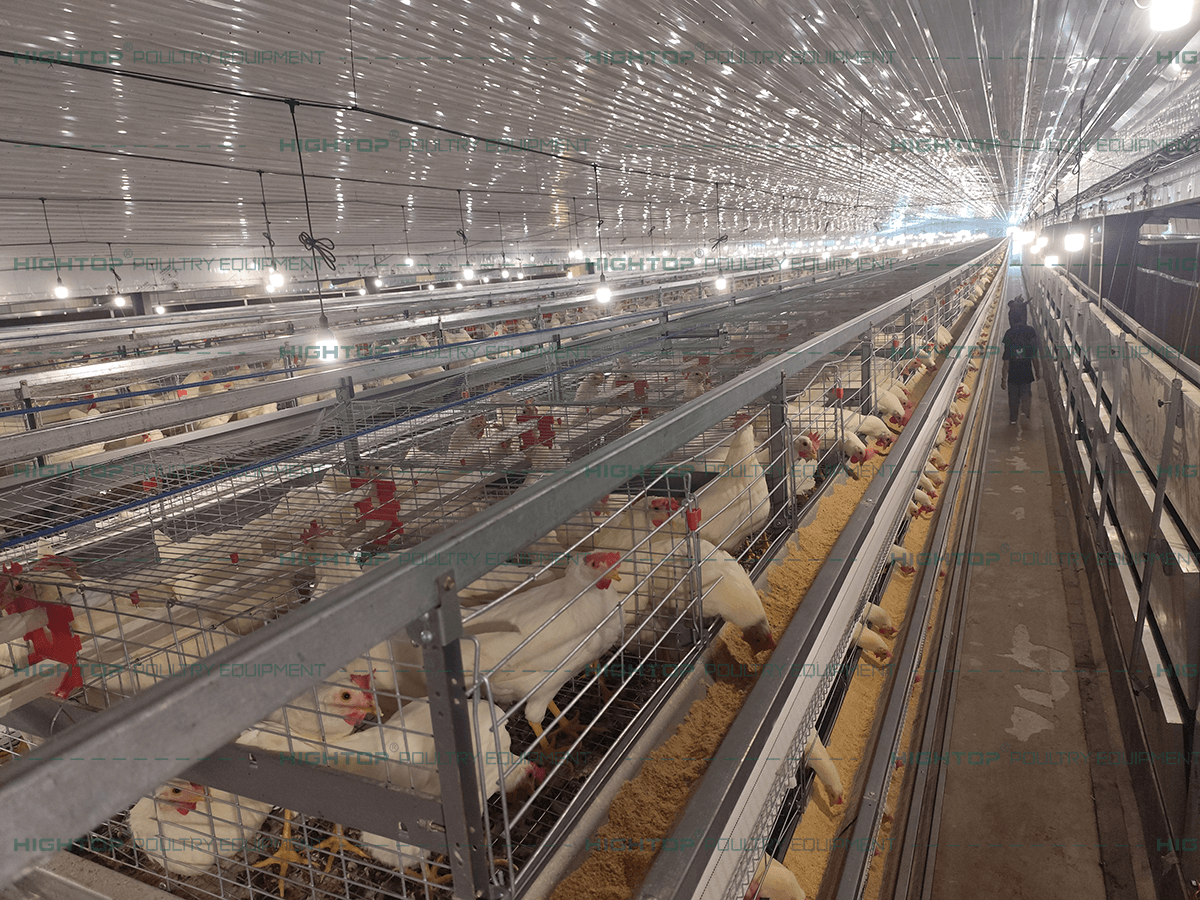
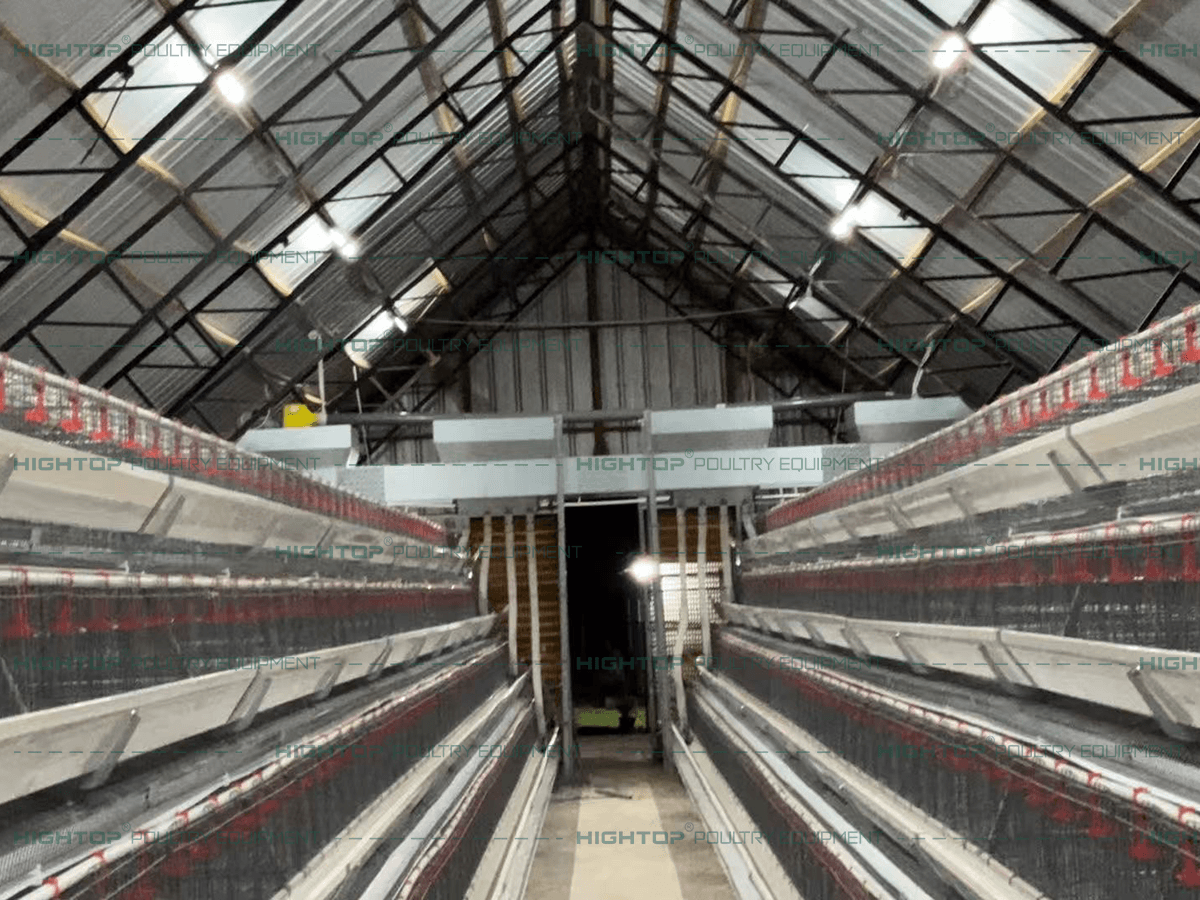
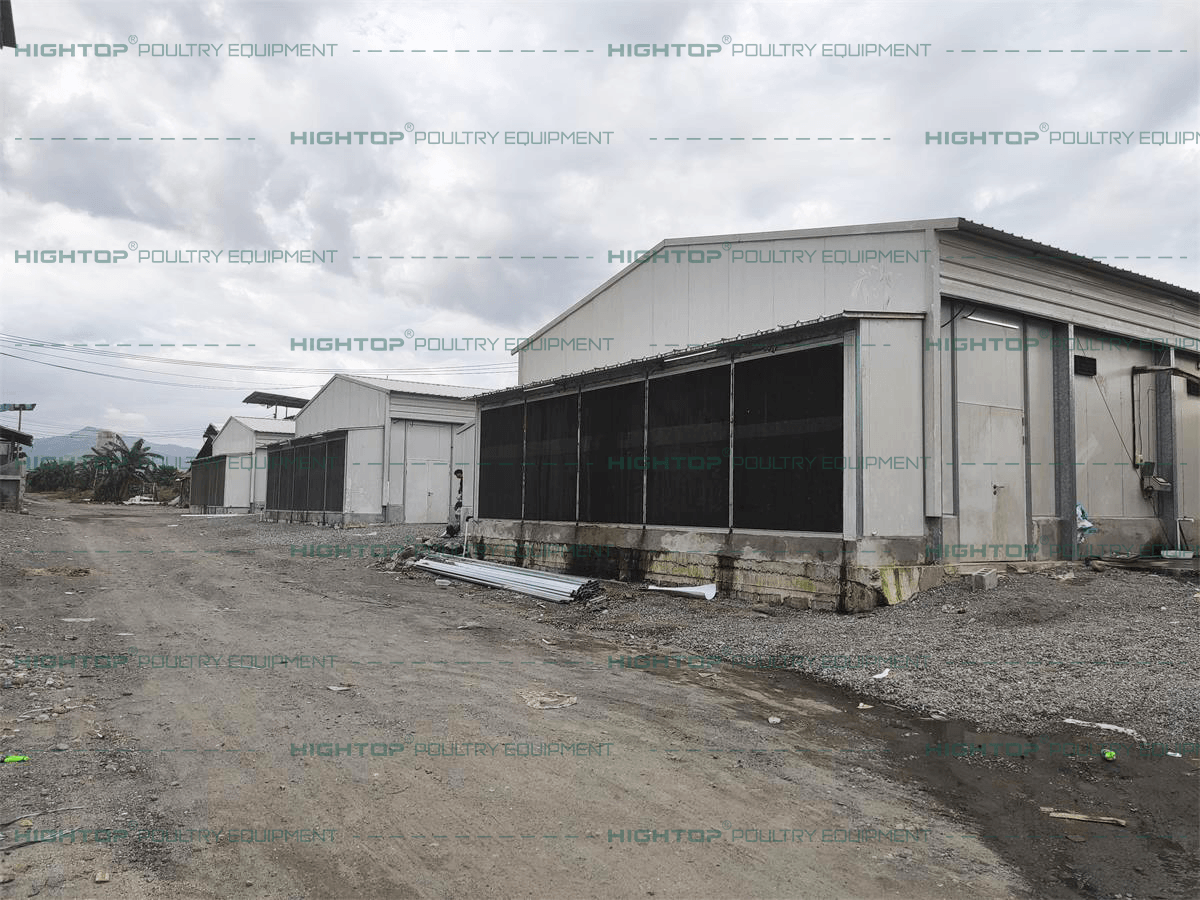
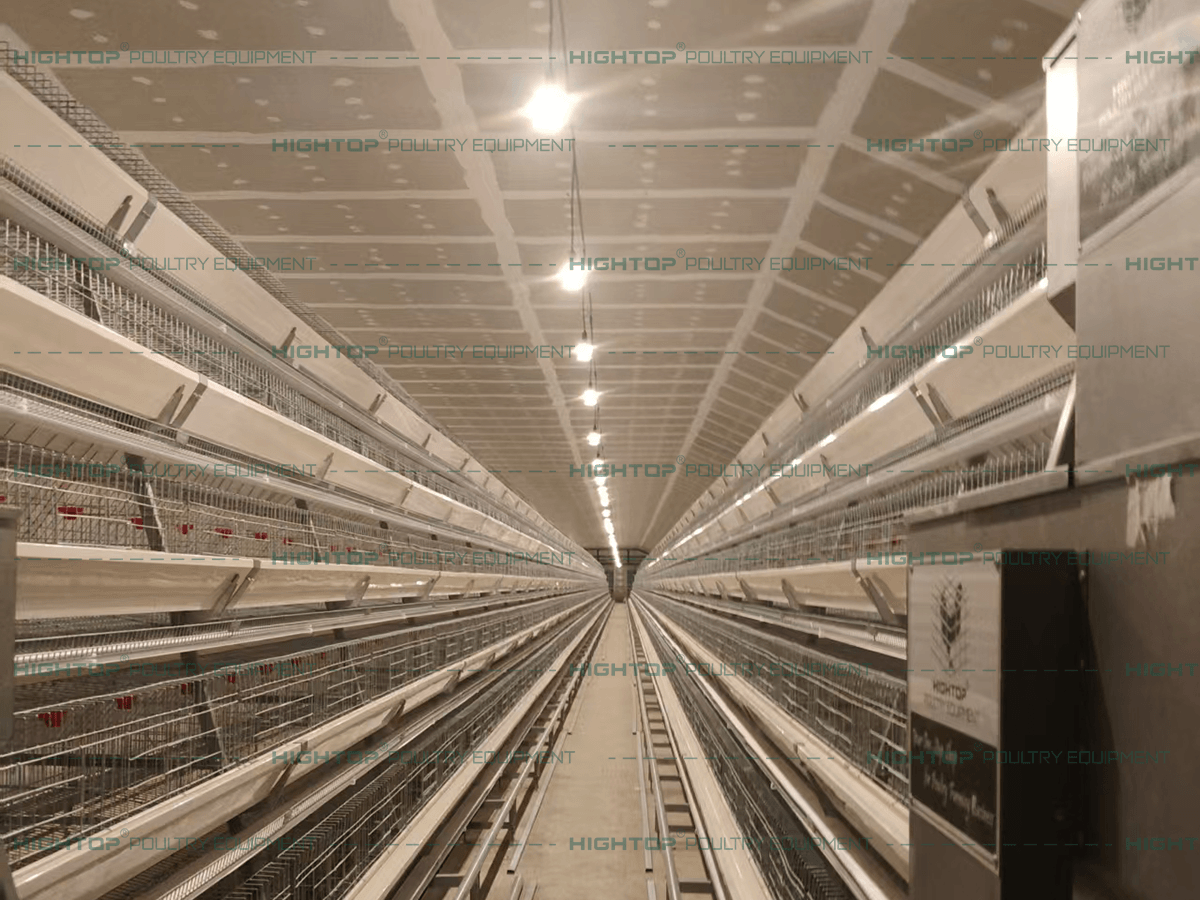
The completed poultry house measures 106 m × 17 m × 4.7 m and contains five rows of 4-tier H-Type broiler cages. With 32 cage sets in each row and 640 broilers in each set, the total designed capacity is 102,400 broilers per house.
Main Project Specifications
| Project Location | Poultry House Size | Cage System | Total Capacity |
|---|---|---|---|
| Philippines | 106 m × 17 m × 4.7 m | 4-tier H-Type automatic broiler cage | 102,400 broilers per house |
| Cage Layout | Cage Sets | Capacity per Set | Broiler Weight |
| 5 rows × 4 tiers | 32 sets per row, 160 sets in total | 640 broilers | ≤1.8 kg per bird |
| Cage Set Size | Capacity per Rearing Unit | Stocking Density | Average Area per Bird |
| 3 m × 1.8 m × 0.5 m | 160 broilers | 55 kg/m² | 337.5 cm² |
| Power Supply | Motor Brand | House Eave Height | Eave-to-Ridge Height |
| Three-phase, 220 V, 60 Hz | Wanxin | 4.7 m | 1.5 m |
The project capacity is calculated as follows:
160 cage sets × 640 broilers per set = 102,400 broilers
From Initial Contact to a Confirmed Project
HIGHTOP first met the customer at Farmer Summit 2024. At that time, the farmer was gathering information, comparing quotations and evaluating different production systems for his planned expansion.
Our team introduced the pull-out slat harvesting cage and answered his questions about stocking capacity, cage construction, ventilation, feeding and broiler harvesting.
The customer did not place an order immediately. Instead, he continued evaluating HIGHTOP’s products, technical responses and completed projects.
The key turning point came in July 2025, when HIGHTOP invited him to visit an operating pull-out slat broiler cage project in the Philippines.
This allowed the farmer to see the equipment working under actual tropical farm conditions. He inspected the cage structure, retractable floor system, feeding and drinking equipment, manure removal and ventilation performance. He also spoke with the farm team about daily operation and maintenance.
The visit gave him something that a quotation or promotional brochure could not provide: direct evidence of how the equipment operated with birds inside the house.
Poultry House and Equipment Layout
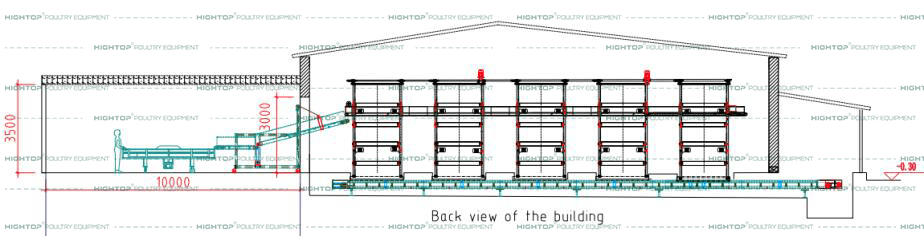
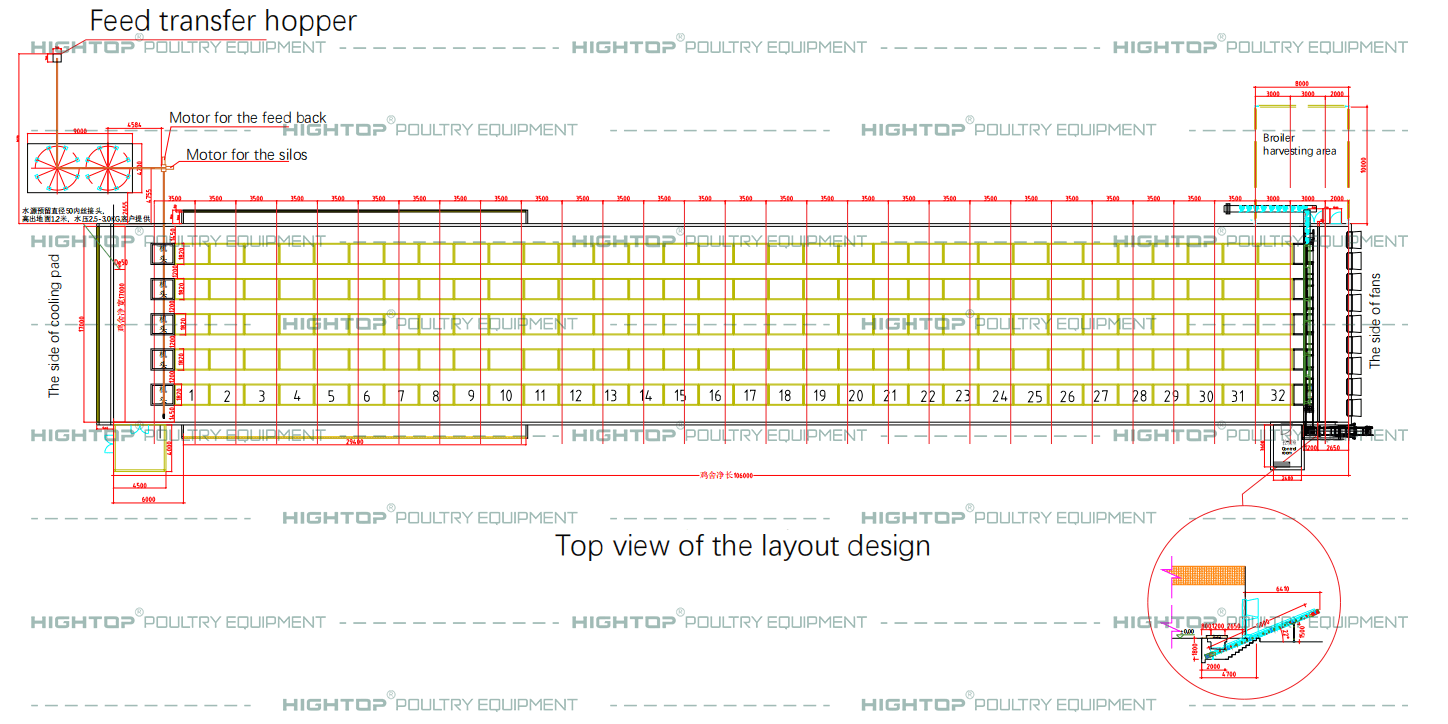
Before manufacturing began, HIGHTOP designed the poultry house and cage arrangement around the required capacity, broiler weight, production process and available building space.
The 106-meter-long and 17-meter-wide poultry house contains five cage rows. Each row includes 32 cage sets, providing 160 sets throughout the building.
Each cage set has four tiers and accommodates 640 broilers. Every tier contains a 300 cm × 180 cm rearing unit with a capacity of 160 broilers.
The layout also includes the feed silo, internal passages, ventilation system, manure discharge area and automatic broiler harvesting route.
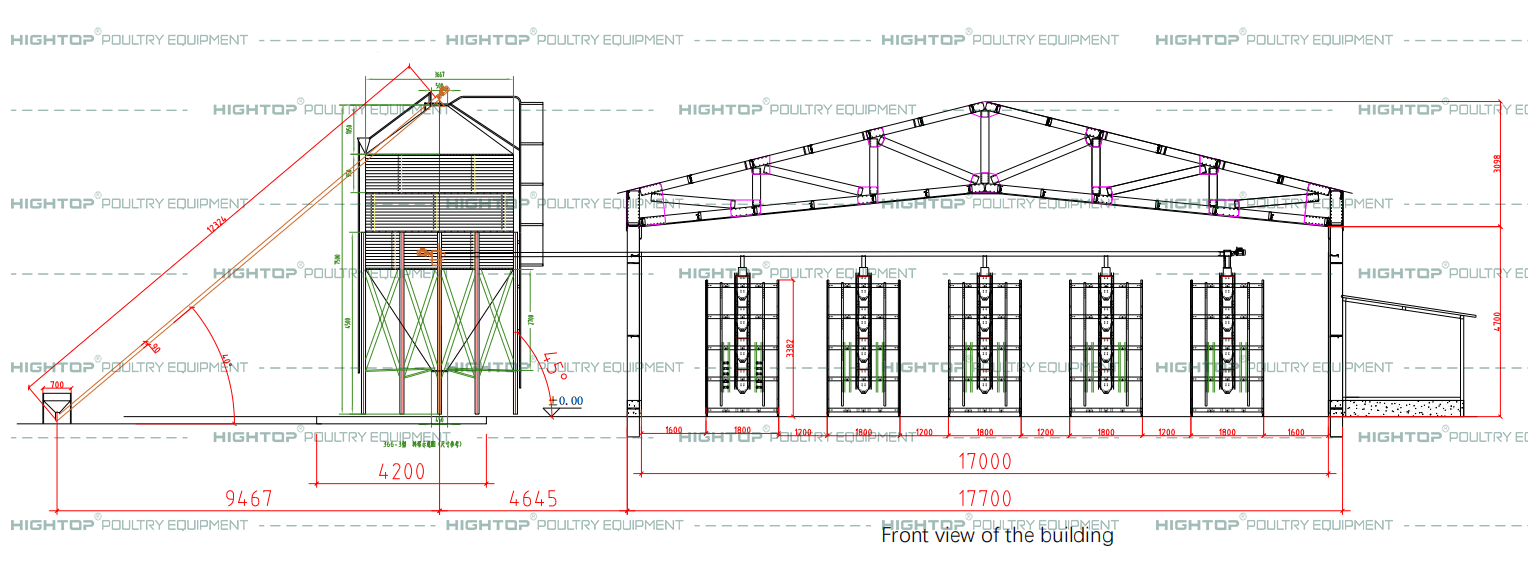
This planning stage was especially important because the steel structure, cage equipment, ventilation and harvesting systems had to work as one coordinated project.
Why the Customer Chose Powder-Coated Broiler Cages
During the Philippine project visit, the customer paid particular attention to the structural stability of the cages and the operation of the pull-out slats. He later saw HIGHTOP’s upgraded powder-coated cage system in project images and videos.
In October 2025, he travelled to China to inspect the HIGHTOP factory. He observed steel processing, component production, powder coating and quality inspection, and discussed how the cages would perform in a hot and humid poultry environment.
The powder-coated system was selected for several practical reasons.
Improved Protection Against Corrosion
Humidity, ammonia, washing and disinfectants can accelerate corrosion inside a poultry house. Powder coating adds a continuous protective layer over the steel surface, helping isolate it from moisture and corrosive contaminants.
Based on HIGHTOP’s accelerated salt-spray test results and supporting certification, the powder-coated cage components are estimated to provide a service life of up to 25 years under suitable operating and maintenance conditions.
Actual service life depends on farm humidity, ventilation, manure management, cleaning chemicals, coating protection during installation and routine maintenance.
Smoother Surfaces
The coated surface is smoother than untreated or damaged metal, reducing rough contact points around the cage components. This can help limit injuries during rearing and harvesting.
Easier Cleaning
A smooth coating provides fewer irregular areas where dust, feathers and organic material can accumulate. This helps farm workers clean and disinfect the cage system between production cycles.
For a broiler house designed for repeated flock turnover, cleaning efficiency directly affects downtime and biosecurity preparation.
Steel Structure Poultry House Designed for Philippine Conditions
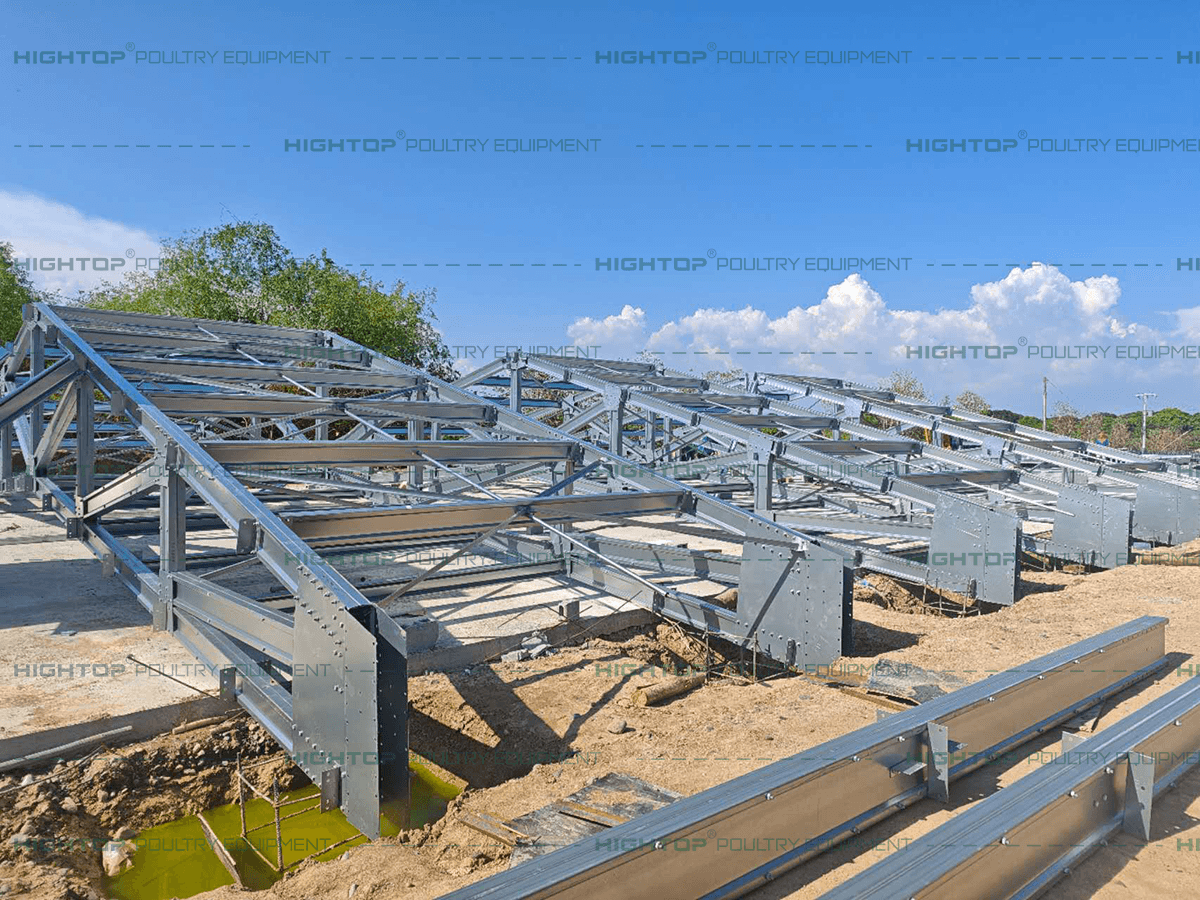
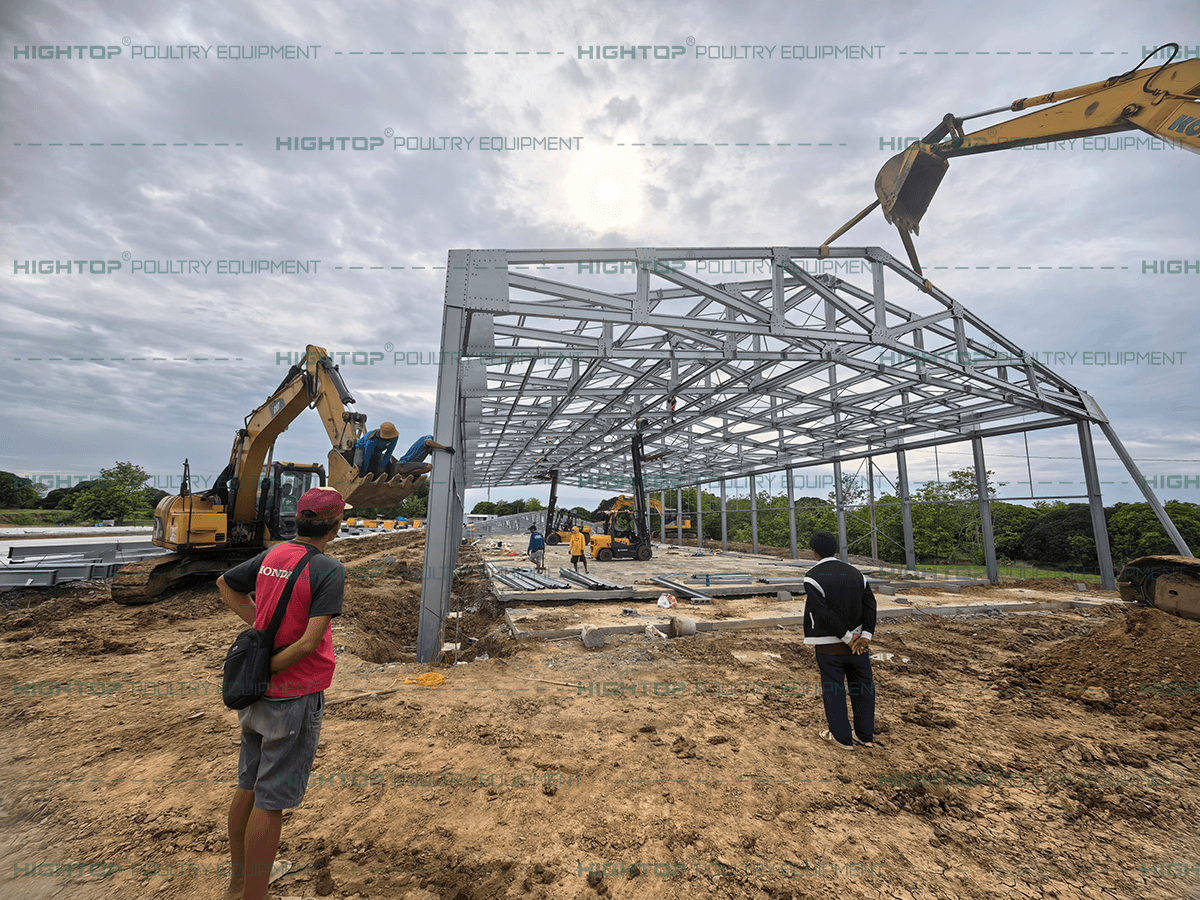
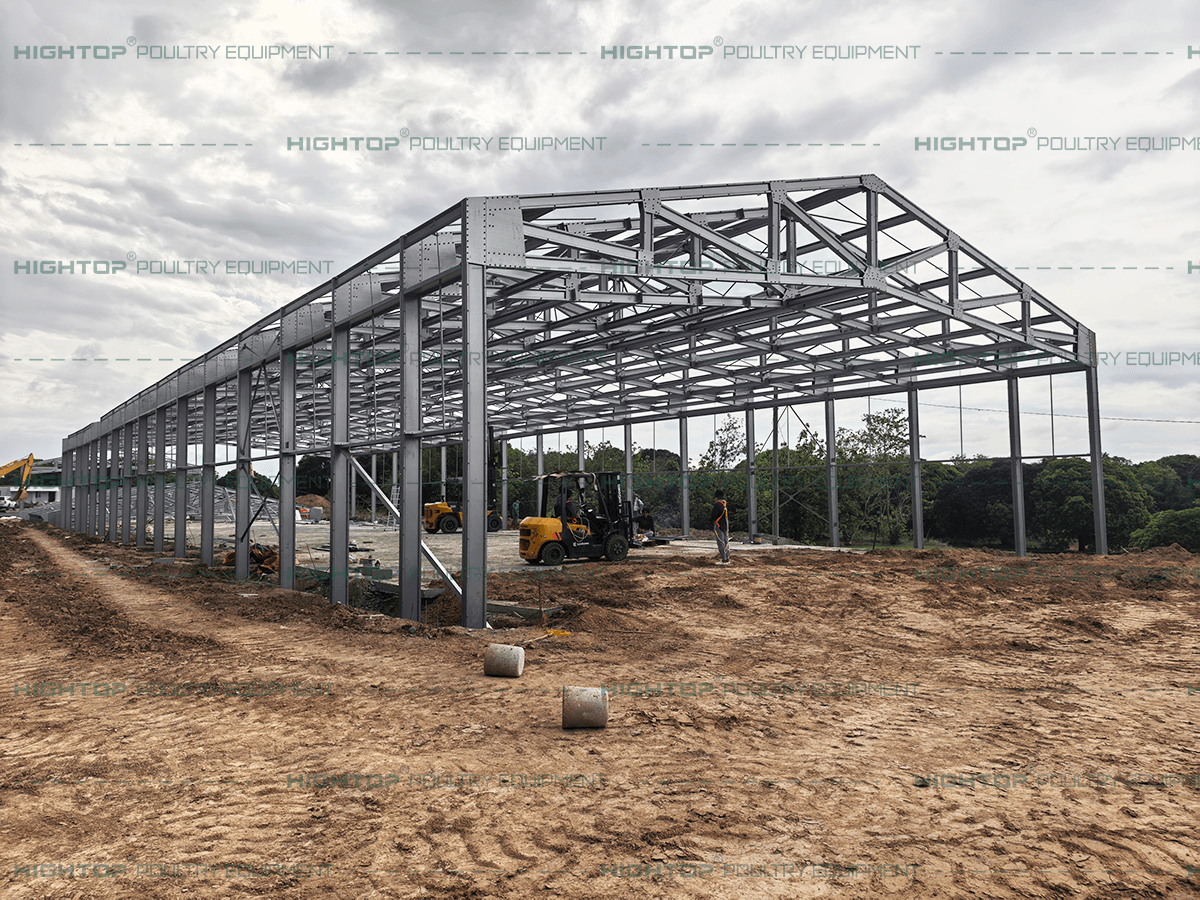
The customer required a poultry house suitable for high temperatures, heavy rainfall, humidity and typhoon risks.
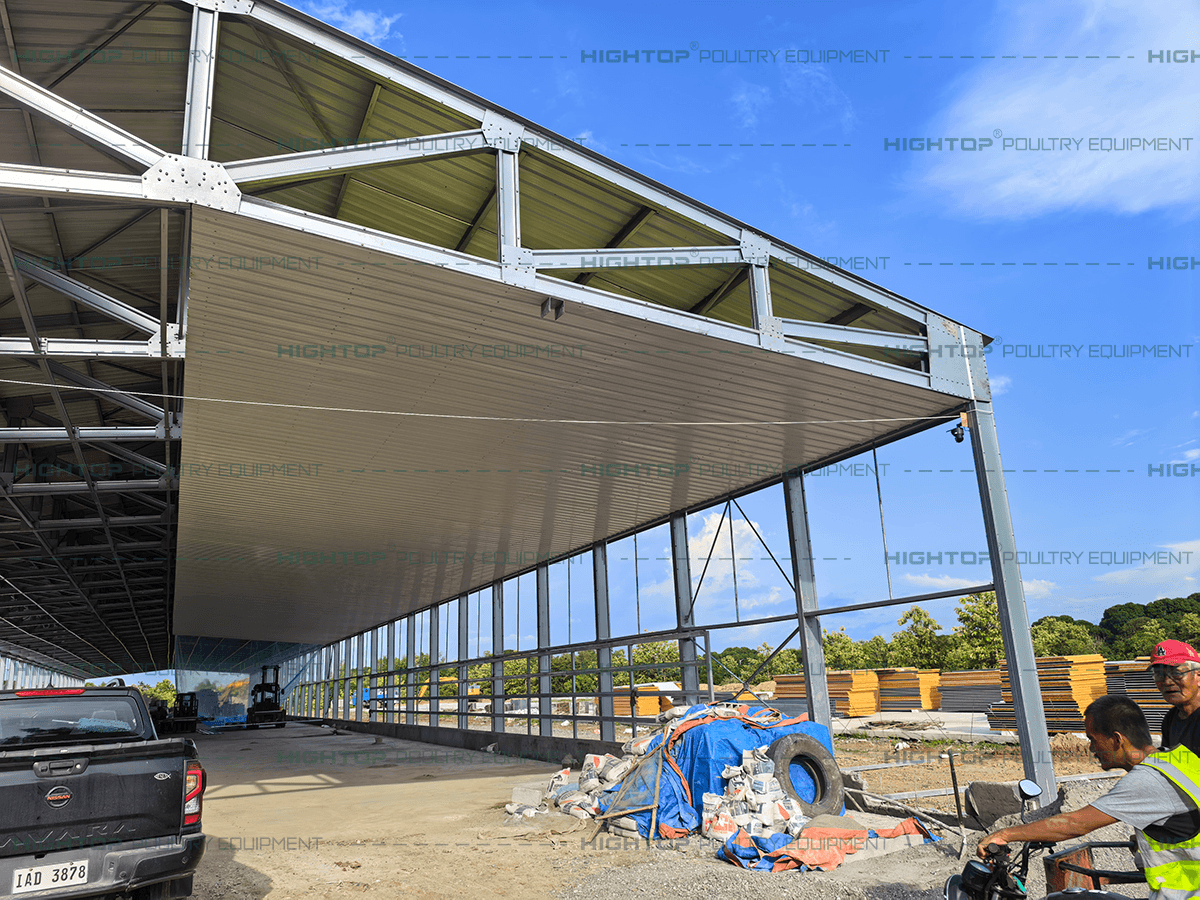
HIGHTOP designed the steel structure according to the site conditions, cage layout and environmental control requirements. The structural design included K-section steel components and concrete-reinforced columns to improve overall stability and wind resistance.
The building also uses insulated panels to help reduce external heat transfer and support more stable indoor conditions.
Smooth interior surfaces simplify washing and disinfection because there are fewer gaps where dust and organic material can collect.
EC Fans for Ventilation and Voltage Fluctuations
Ventilation is critical in a four-tier broiler house containing more than 100,000 birds. The system must remove heat, moisture and harmful gases while delivering sufficient fresh air throughout all cage levels.
The customer selected EC fans because electrical voltage fluctuations can occur in the project area.
Compared with conventional fixed-speed AC fans, EC fans offer several operational advantages:
- Variable-speed airflow control
- Broad voltage adaptability
- Lower electricity consumption under suitable operating conditions
- Quieter operation
- More precise coordination with the environmental control system
Fan speed can be adjusted according to bird age, indoor temperature, humidity and ventilation demand. This avoids relying only on full-speed switching and provides more precise control during different stages of the production cycle.
How the Pull-Out Slat Harvesting System Works
The H-Type automatic harvesting broiler cage uses pull-out floor slats to simplify broiler removal at the end of the flock.
During the growing period, the reinforced slat floor supports the birds. Water lines are installed at the appropriate height within the cage, while the feeding system distributes feed along each row.
At harvesting time, the pull-out slats are withdrawn according to the operating sequence. The broilers move onto the collection conveyor below and are transported toward the end of the poultry house.
This process reduces the need for workers to enter every cage compartment and catch birds individually. It can shorten harvesting time, reduce heavy manual handling and support more organized delivery from the poultry house.
Cage Delivery and Installation
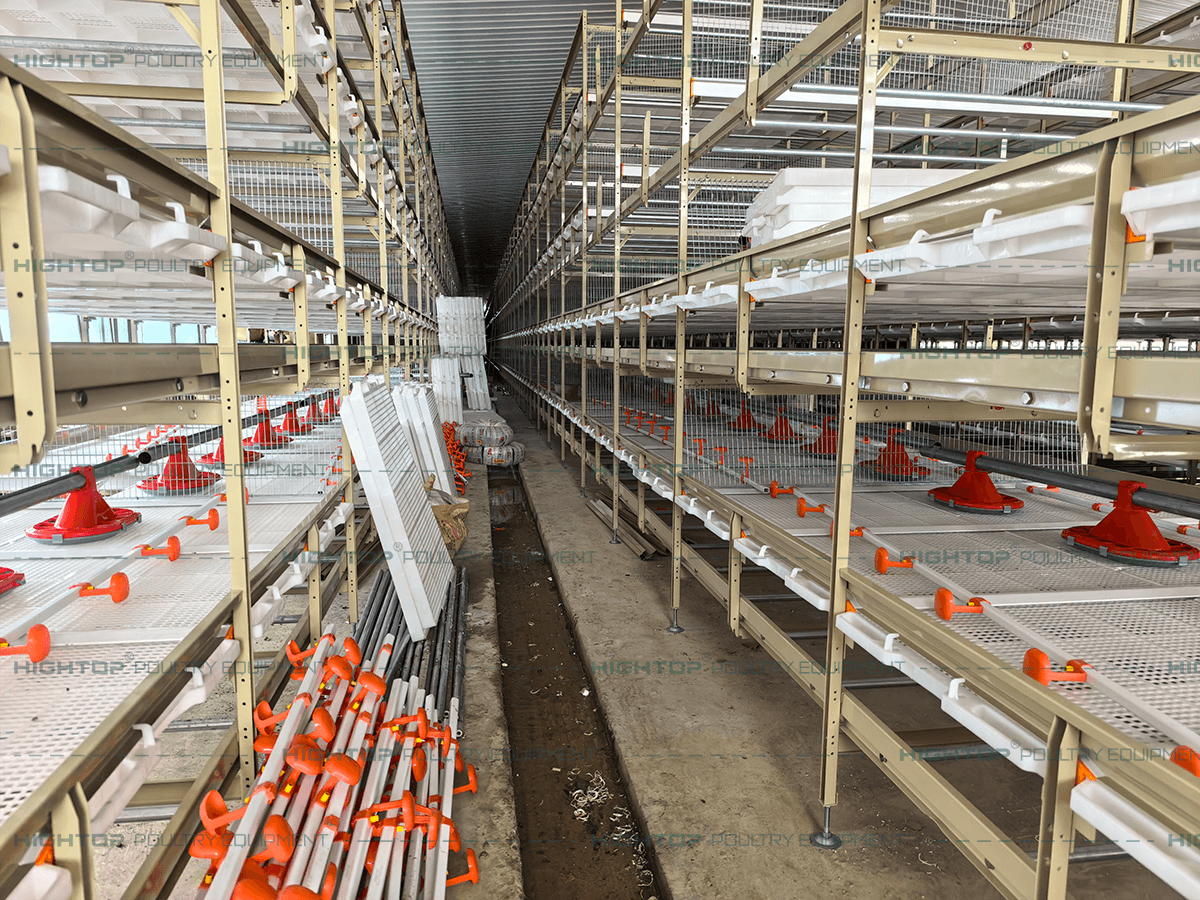
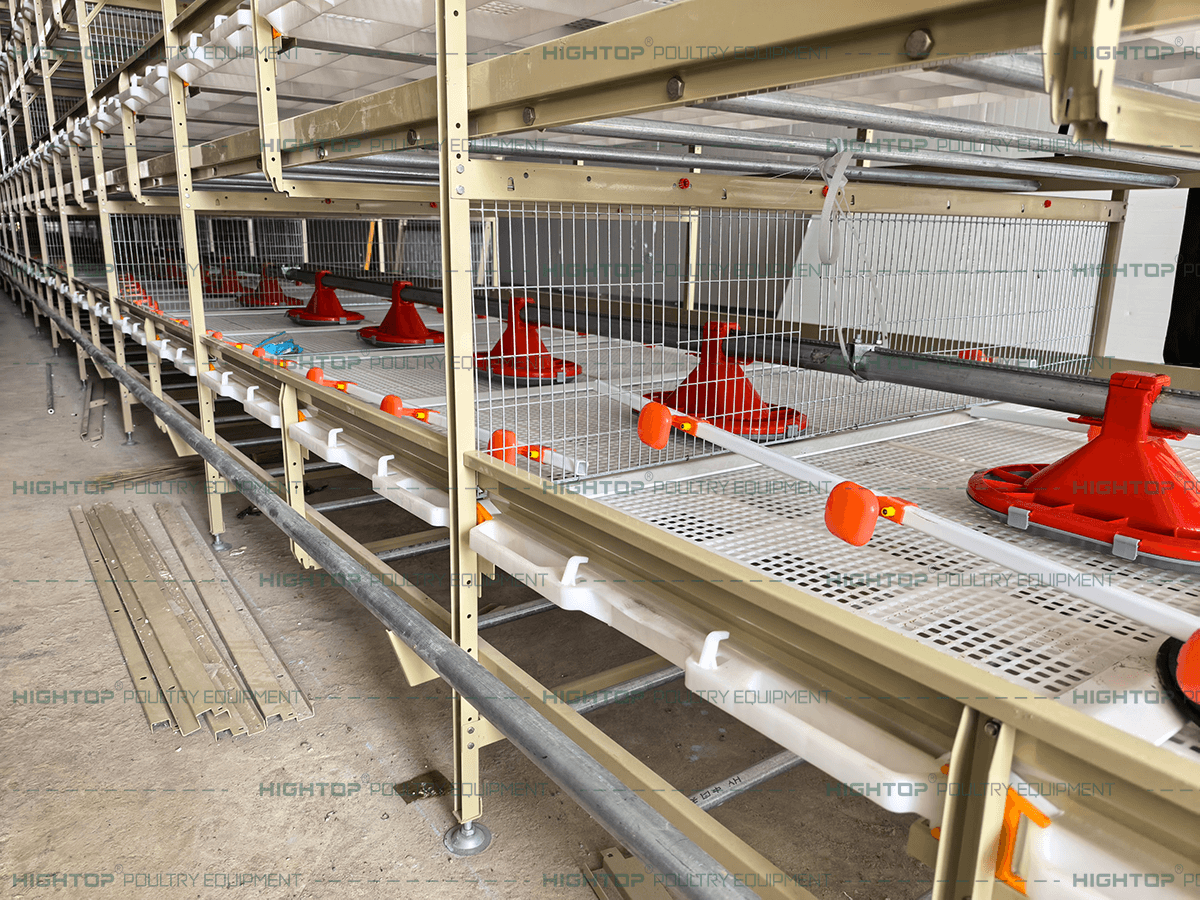
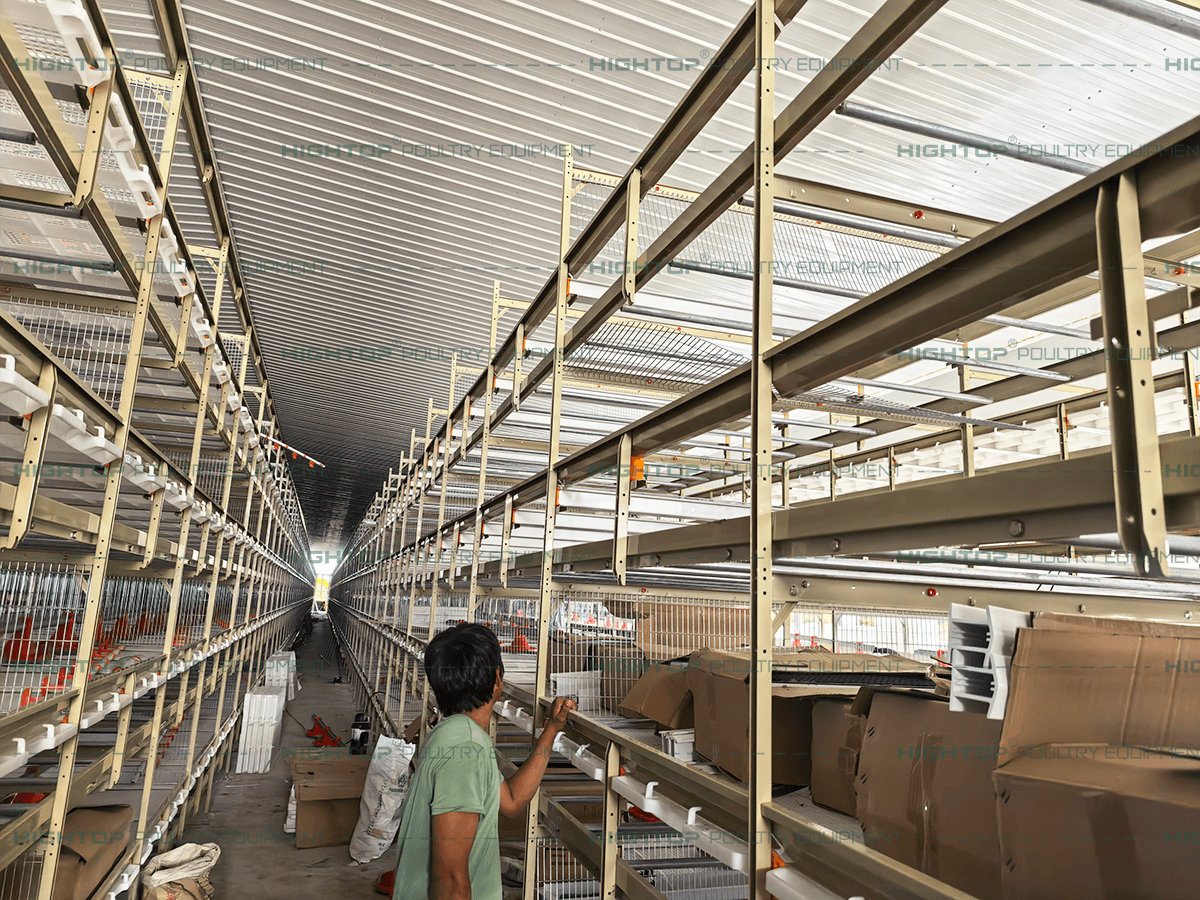
After the equipment arrived at the project site, the installation team checked and organized the cage frames, slats, mesh panels, water lines, supporting pipes and transmission components.
The main frames were positioned first. Reinforcement pipes were then installed beneath the pull-out floor structure to provide stable support during the growing period.
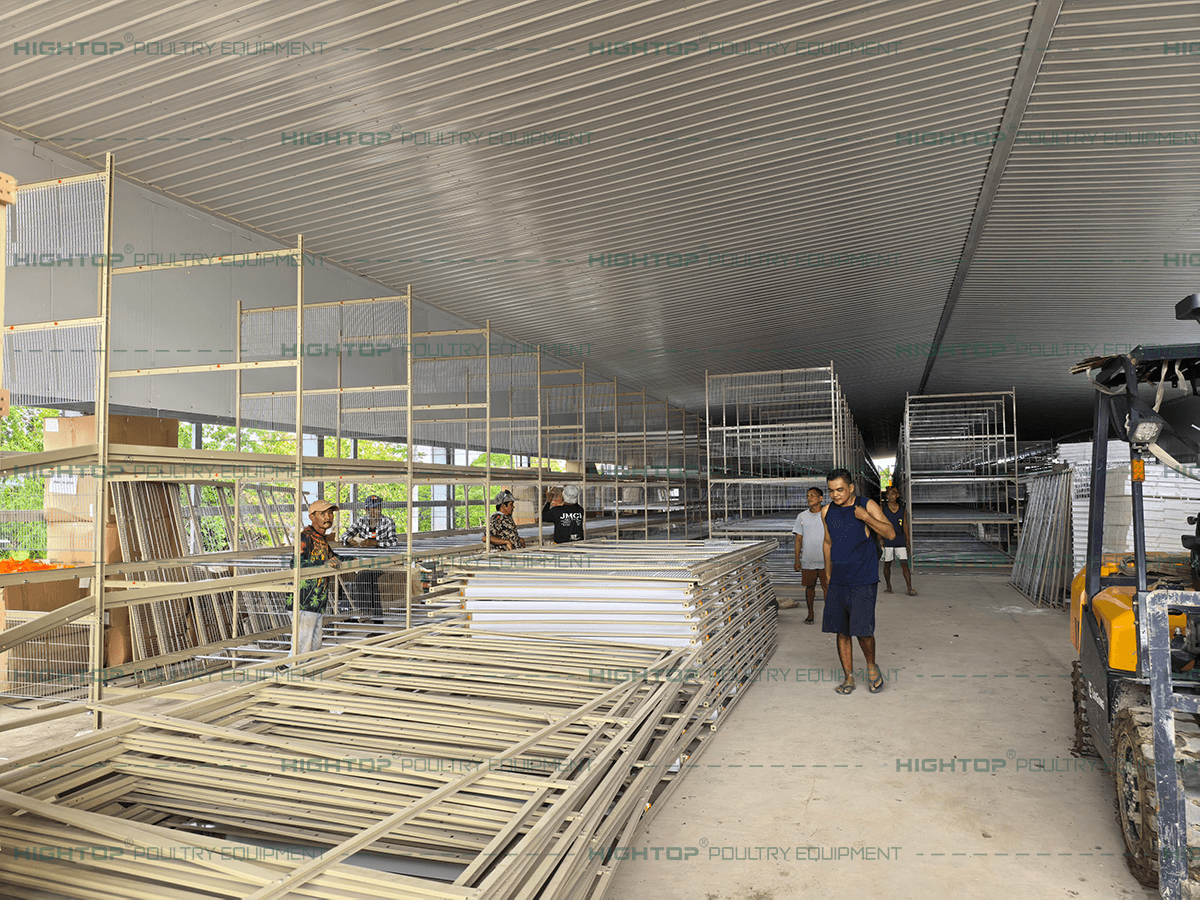
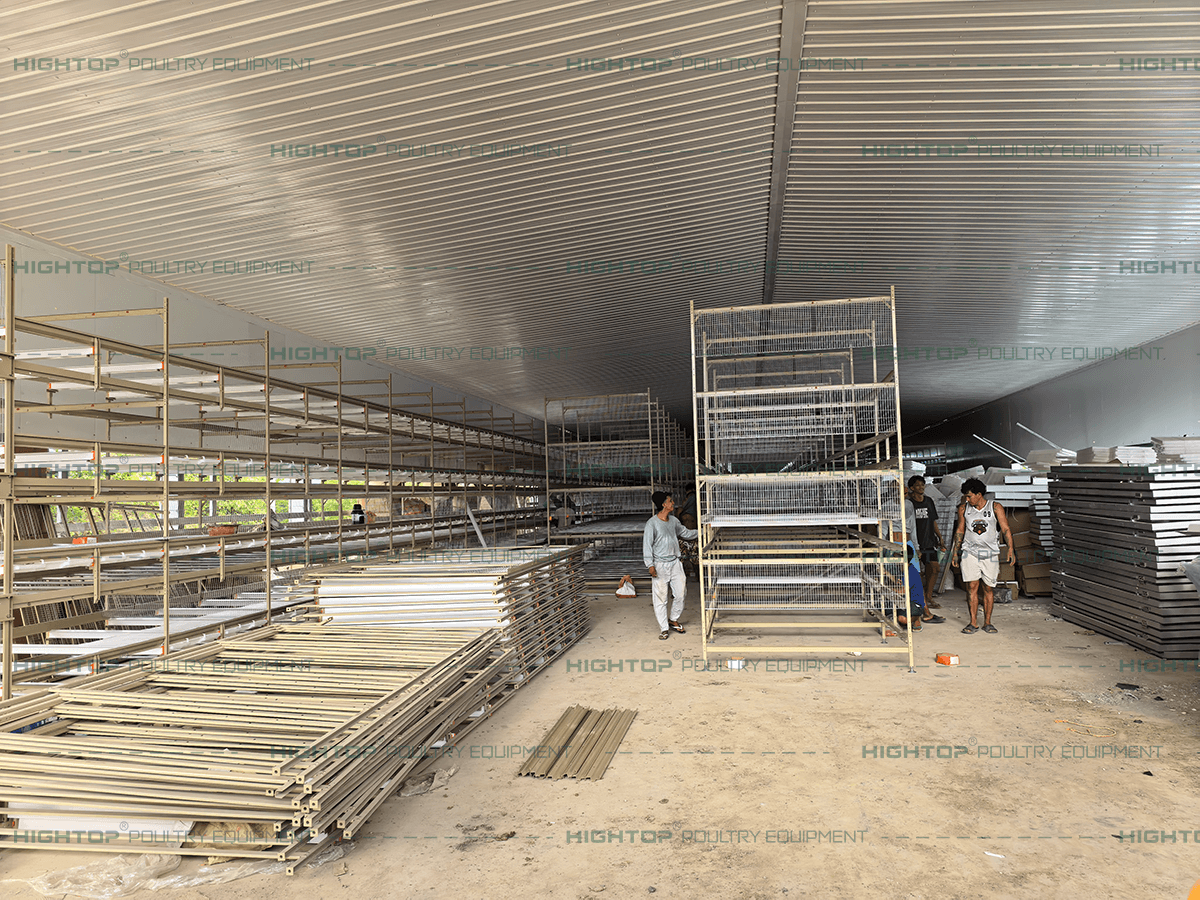
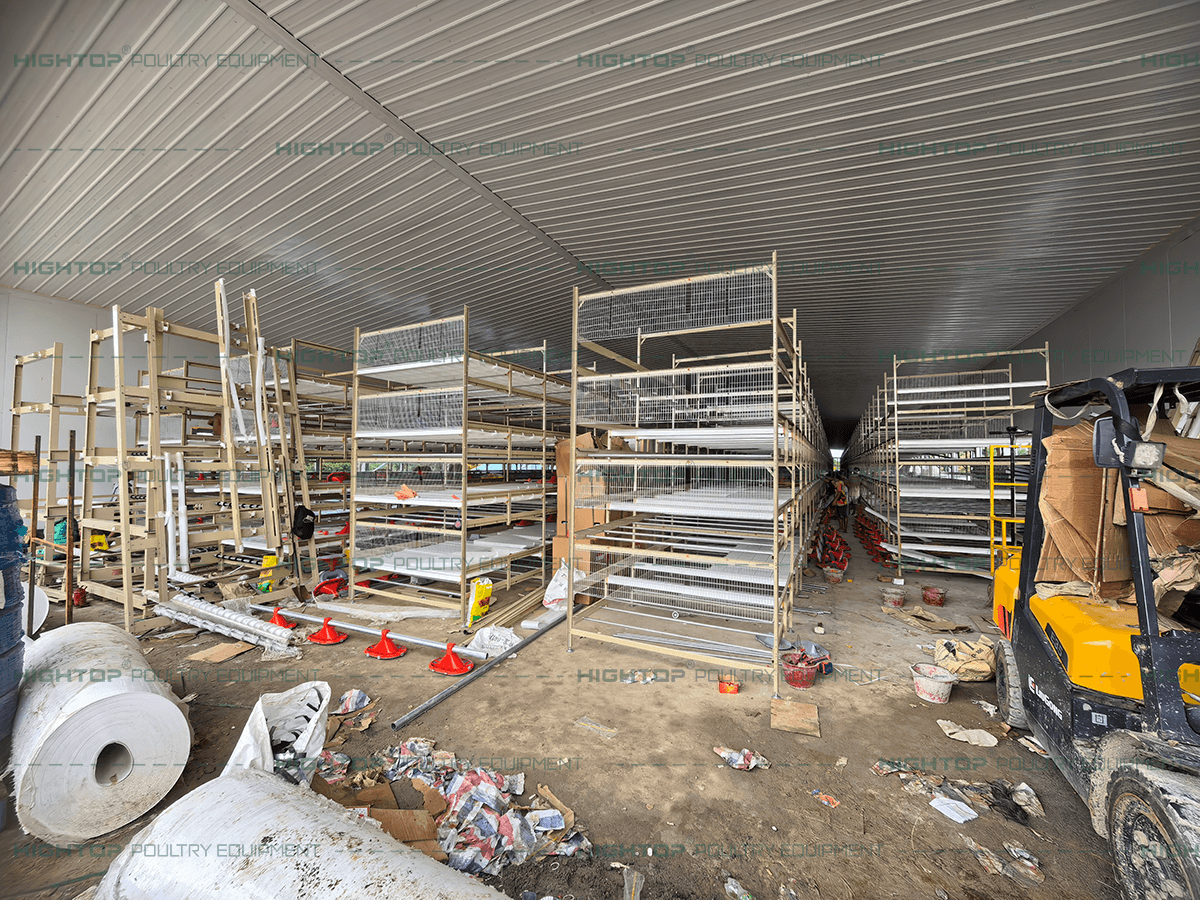
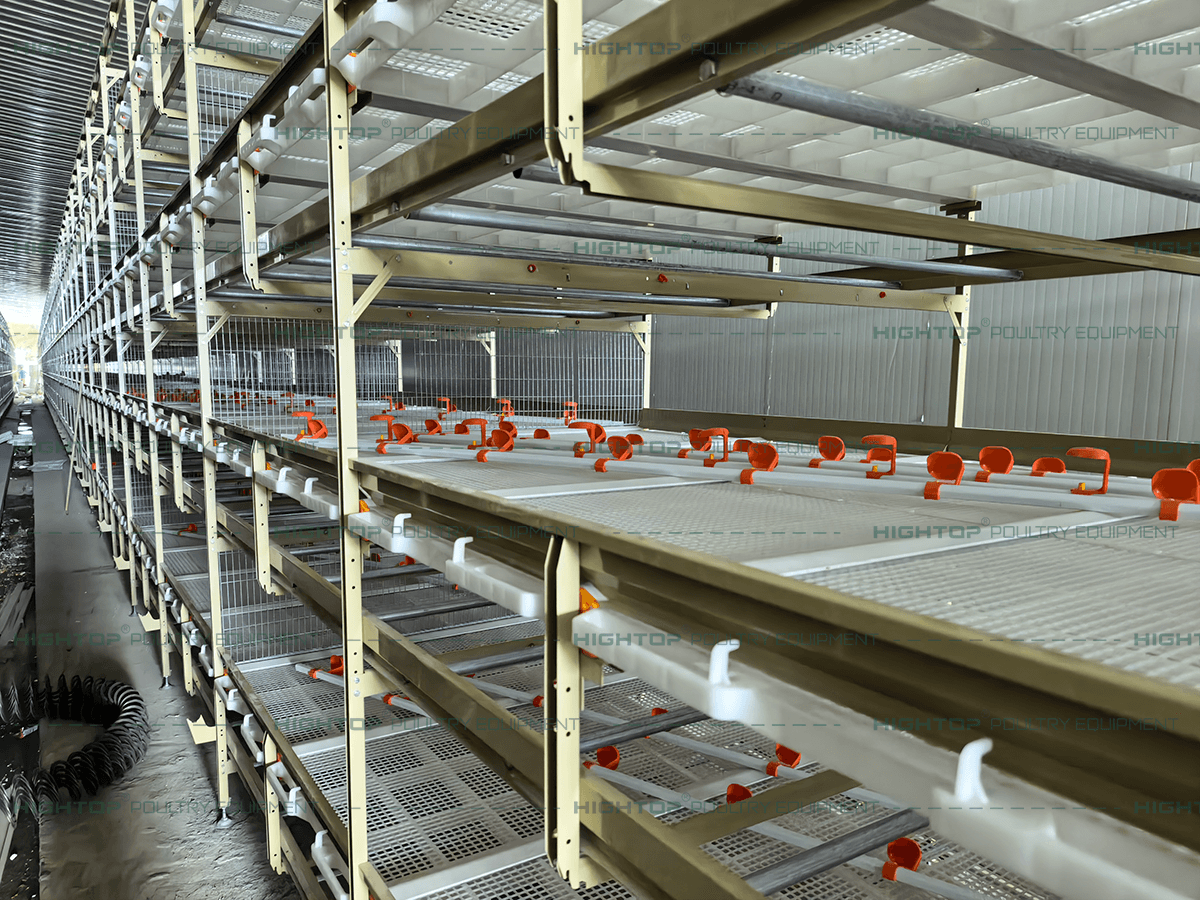
After the cage frames and floor system were checked, the cage mesh and remaining automatic equipment were installed.
Three HIGHTOP Engineers Supporting Installation
Overseas poultry projects require coordination between building construction, cage installation, electrical work and environmental control.
HIGHTOP assigned three engineers to support this project:
- One engineer responsible for steel structure installation
- One engineer responsible for cage equipment installation
- One engineer responsible for overall coordination and technical support
The engineers worked with the local installation team, checked key assembly points and addressed problems during construction.
Their work covered the steel structure, cage alignment, pull-out floor system, drinking lines, motors, harvesting equipment and coordination between the cages and environmental control system.
The project uses three-phase 220 V, 60 Hz electricity and Wanxin motors. Confirming the power supply and motor configuration before commissioning helps avoid mismatches between the equipment and local electrical conditions.
What This Project Demonstrates
This project is more than an increase from 40,000 to 102,400 broilers. It represents a change in the customer’s production model.
The new farm uses vertical cage space to increase capacity without requiring a proportional increase in land. Automated feeding, drinking, manure removal and harvesting reduce repetitive manual work, while the steel structure and environmental control system create a more manageable production environment.
The customer did not make the decision based only on a quotation. He followed a practical evaluation process:
- Meeting HIGHTOP at Farmer Summit 2024
- Comparing equipment and technical proposals
- Visiting an operating HIGHTOP broiler project in July 2025
- Inspecting the HIGHTOP factory in October 2025
- Confirming the 102,400-broiler project in January 2026
- Receiving on-site installation support from three engineers
For farmers considering a similar transition, the project shows the importance of evaluating the complete system—not only the cage price.
The poultry house, stocking capacity, bird weight, ventilation, power supply, harvesting method and local climate must all be considered before the final design is confirmed.
Planning an Automated Broiler Farm?
HIGHTOP provides customized broiler farm solutions based on the customer’s target capacity, land conditions, poultry house dimensions, bird weight, climate and available electricity.
The service scope can include:
- Farm and poultry house layout
- Steel structure poultry houses
- Automatic broiler cage systems
- Feeding and drinking equipment
- Manure removal systems
- Automatic broiler harvesting
- Ventilation and environmental control
- Equipment manufacturing and delivery
- Installation guidance and commissioning
- Operator training and after-sales support
If you are planning to expand a traditional broiler farm or build a new automated poultry house, send HIGHTOP your project location, available land dimensions, target capacity, required market weight and local power specifications.
Our engineering team can prepare an equipment layout and technical proposal for your project.