
Project Overview
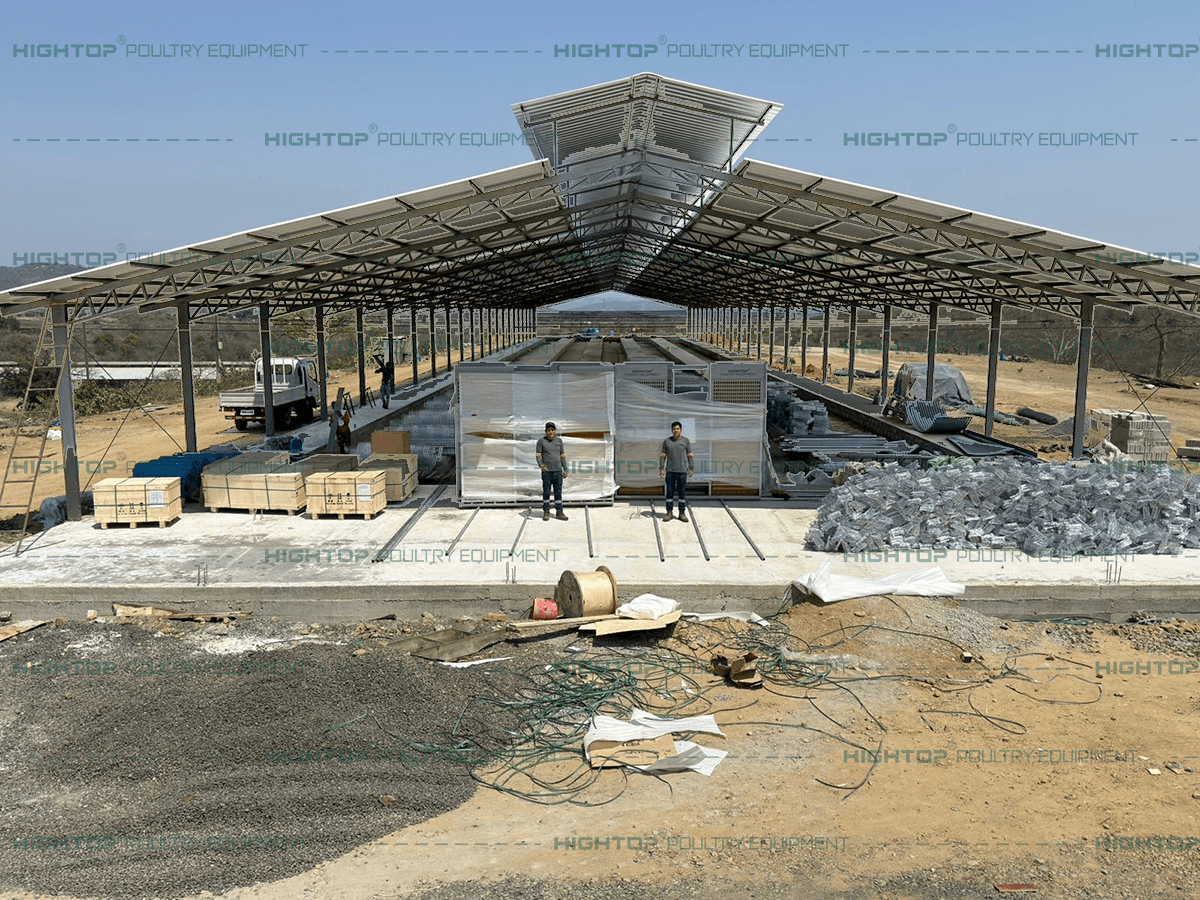
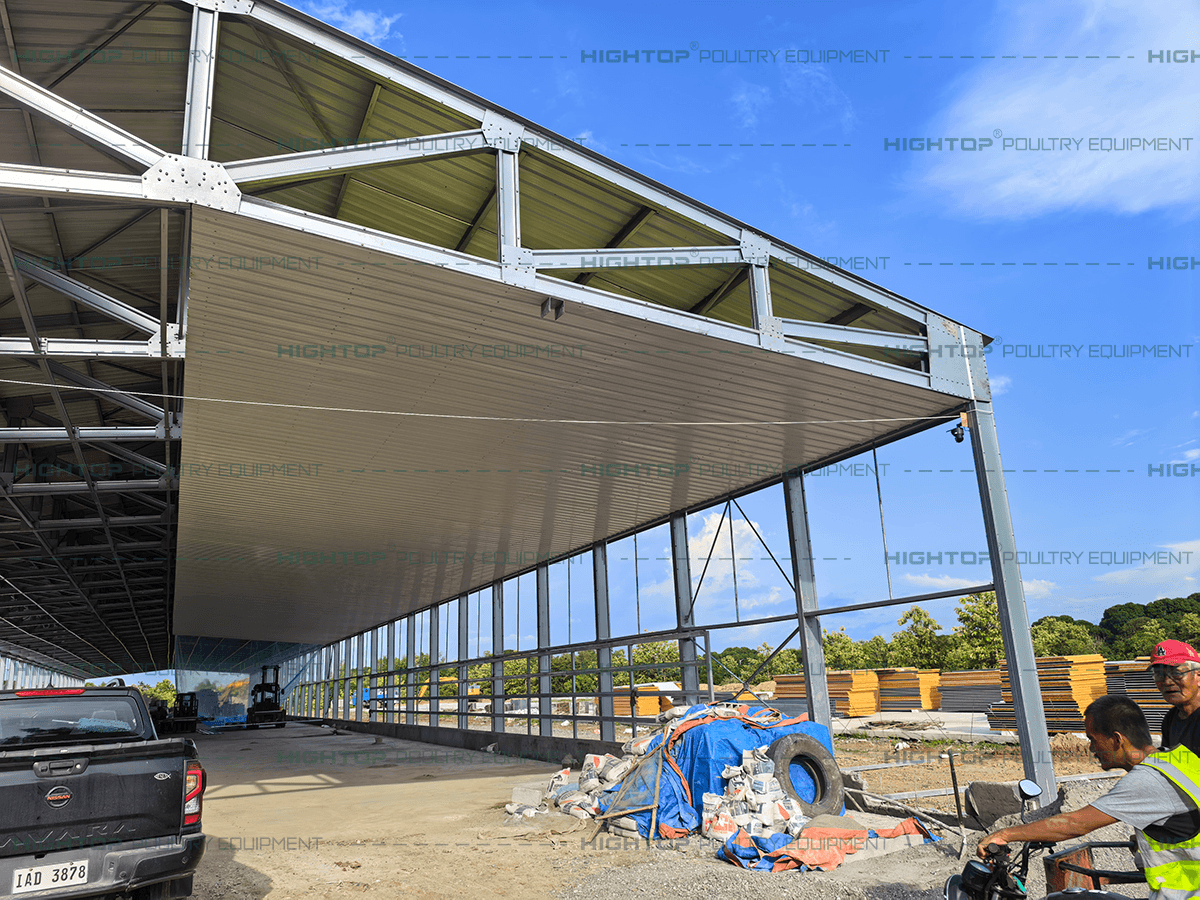
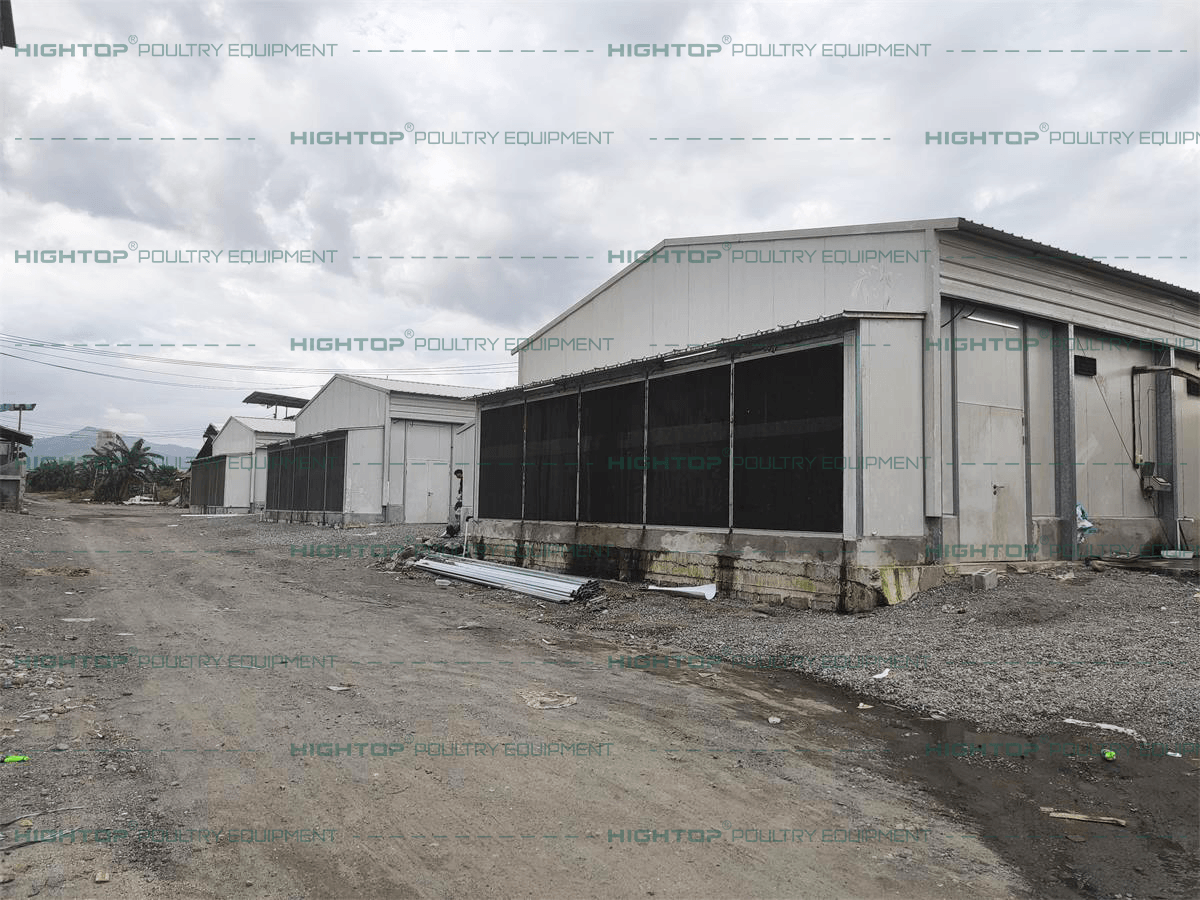
This commercial layer project is located in the Philippines and consists of one enclosed steel structure poultry house measuring 105 meters long, 15 meters wide, and 4 meters high.
The steel structure and original poultry house design were supplied by other companies. After meeting HIGHTOP at an industry exhibition, the customer examined our cage samples and discussed the environmental control requirements with our team.
The customer found that HIGHTOP offered better cage quality and a more practical environmental control solution. Therefore, instead of purchasing the poultry equipment from the original building supplier, the customer selected HIGHTOP to equip the farm.
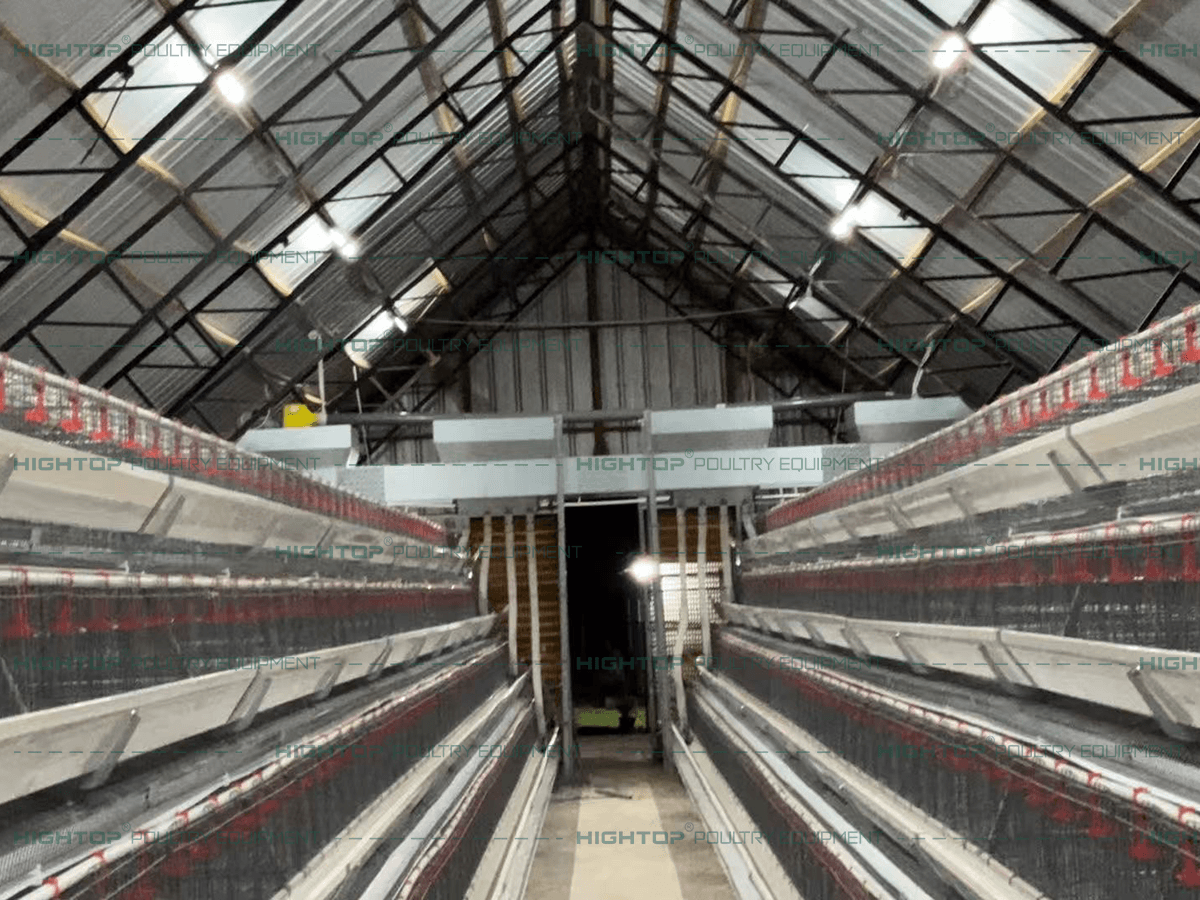
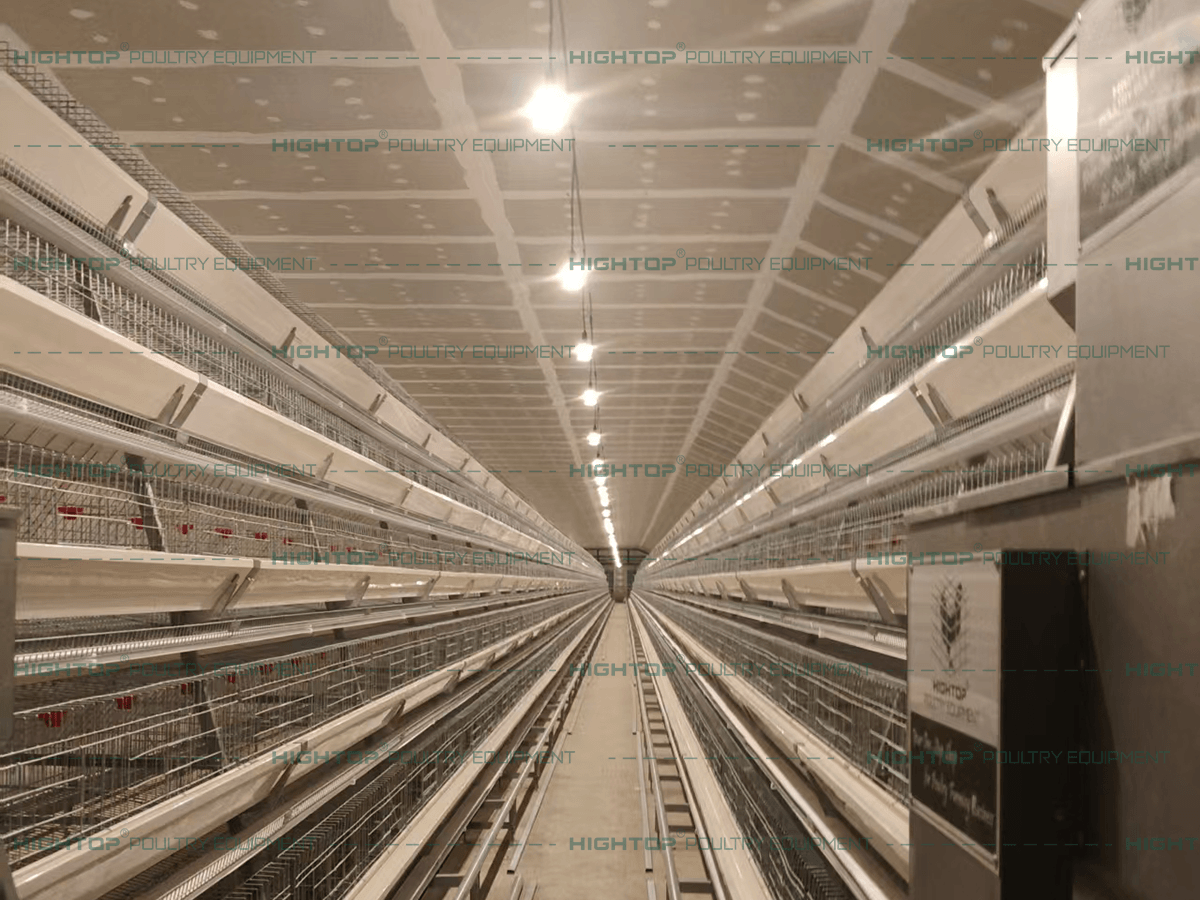
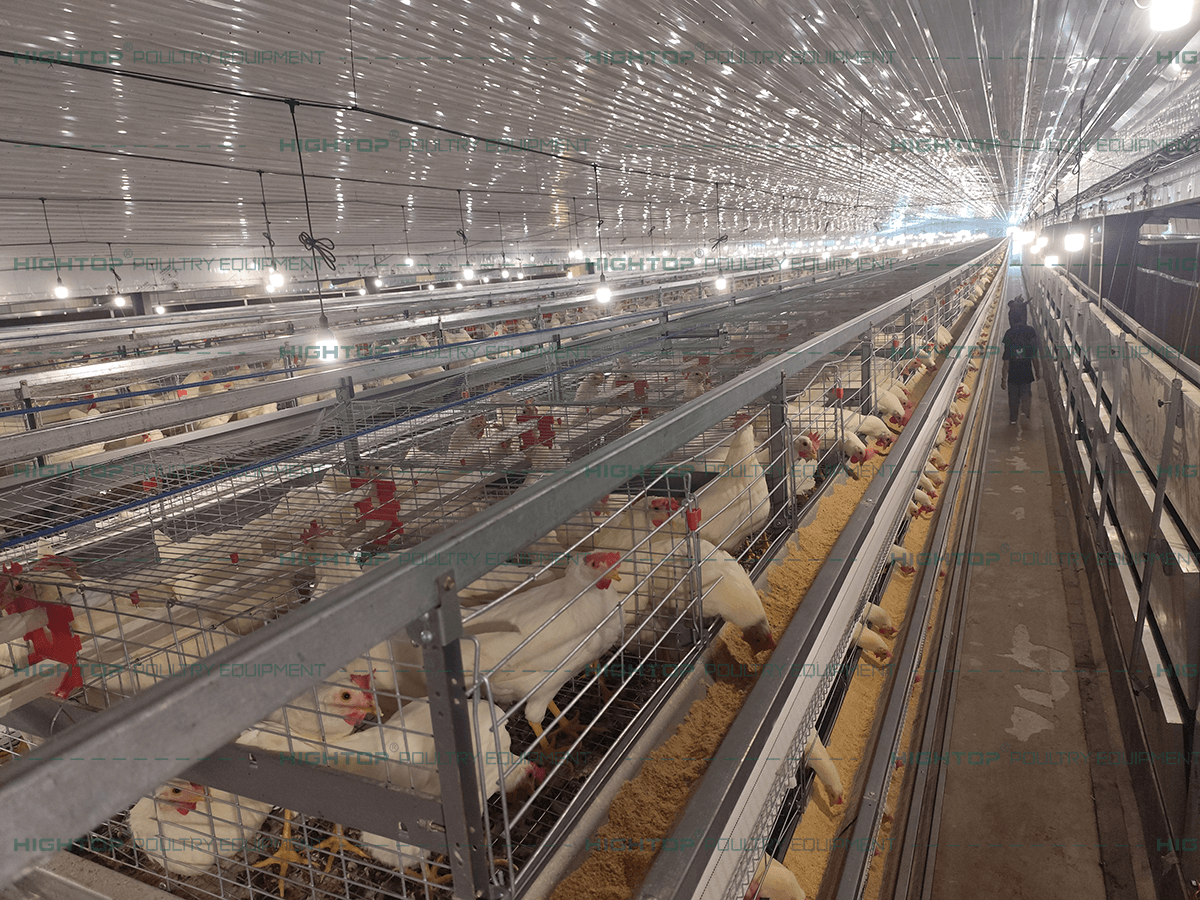
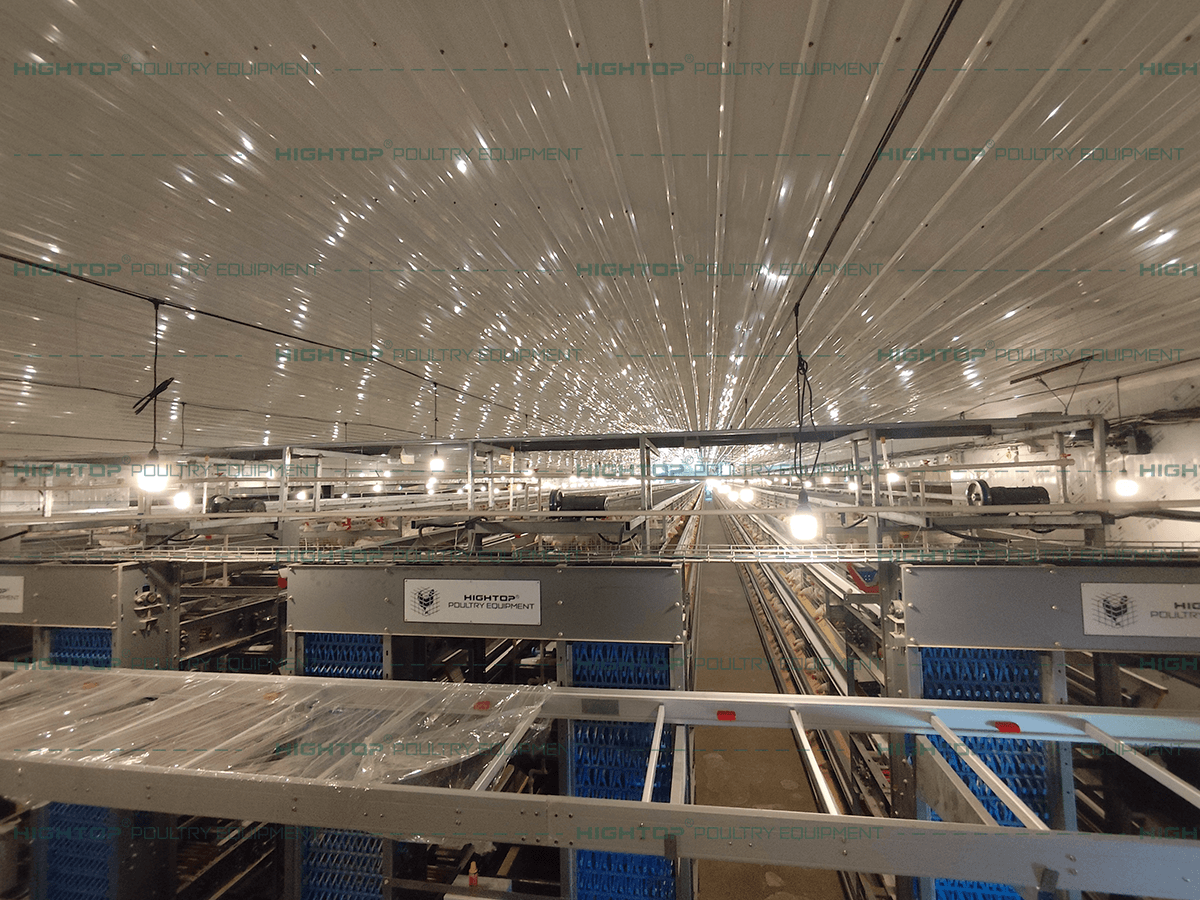
The poultry house uses a 4-tier H-Type automatic layer cage system arranged in five rows. Each row contains 79 cage sets, providing a total capacity of 50,560 laying hens.
The project includes automatic feeding, drinking, manure removal, lighting, central egg collection, egg counting, IoT environmental control, production data monitoring, and an intelligent poultry inspection robot.
Basic Project Specifications
| Project Location | Poultry House | Cage System | House Capacity |
|---|---|---|---|
| Philippines | Enclosed steel structure | 4-Tier H-Type automatic layer cage | 50,560 laying hens |
| House Dimensions | Cage Layout | Cage Sets | Birds per Set |
| 105 m × 15 m × 4 m | 5 rows × 4 tiers | 79 sets per row, 395 sets in total | 128 laying hens |
| Egg Collection | Data Monitoring | Intelligent Inspection | Farm Access |
| Central egg conveyor and egg counter | Water, electricity, feed and egg data | Poultry inspection robot | Mobile app and web platform |
Project Results
The completed poultry house integrates the principal production systems required for managing 50,560 laying hens:
- Five rows of 4-tier H-Type automatic layer cages
- Automatic feeding and drinking
- Automatic manure removal
- Automatic high- and low-level lighting
- Automatic egg collection and egg counting
- Central egg conveyor connected to the customer’s egg grading machine
- IoT monitoring of water, electricity, feed, and egg data
- Mobile and web-based farm management
- Intelligent detection of dead, sick, and non-productive hens
- On-site operational guidance from HIGHTOP specialists
The project shows that HIGHTOP equipment can be integrated into a poultry house designed and supplied by another company. It also demonstrates how cage equipment, environmental control, production data, and intelligent inspection can work together in one commercial layer farm.
Why the Customer Selected HIGHTOP
The customer had already purchased the steel structure and received a poultry house design before contacting HIGHTOP. The final equipment decision was made after an in-person comparison at an industry exhibition.
At the exhibition, the customer inspected HIGHTOP’s cage samples and discussed the requirements of an enclosed poultry house containing more than 50,000 hens.
Two factors influenced the final decision:
- The customer considered the quality of HIGHTOP’s cage samples better.
- HIGHTOP provided a more reasonable environmental control proposal for the enclosed house.
A farm of this scale requires more than a cage layout. Feeding, drinking, manure removal, egg transportation, lighting, ventilation, environmental monitoring, and data collection must operate as a coordinated system.
Based on the equipment quality and system design, the customer selected HIGHTOP to supply the poultry farming equipment.
Equipment Arrival and Installation
After manufacturing and inspection, the poultry equipment was transported to the customer’s farm in the Philippines.
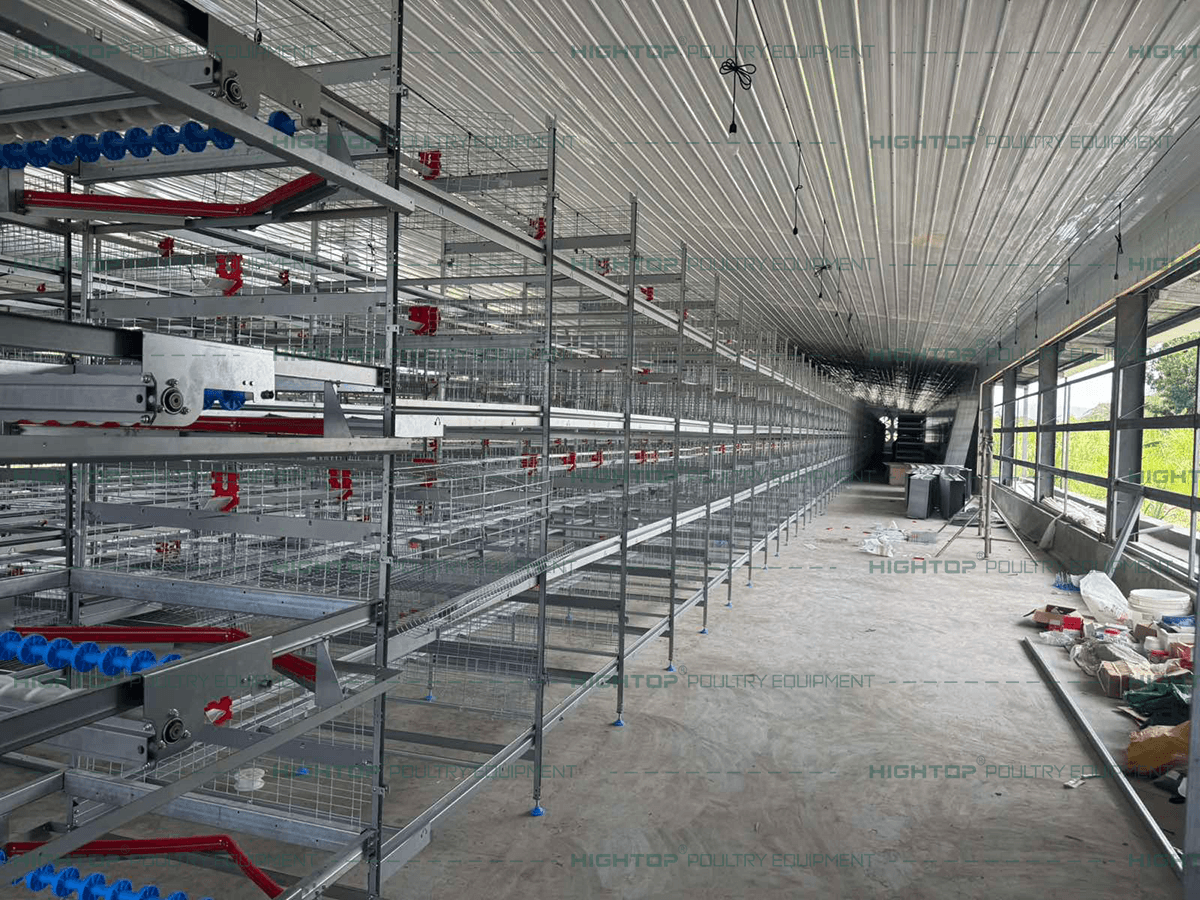
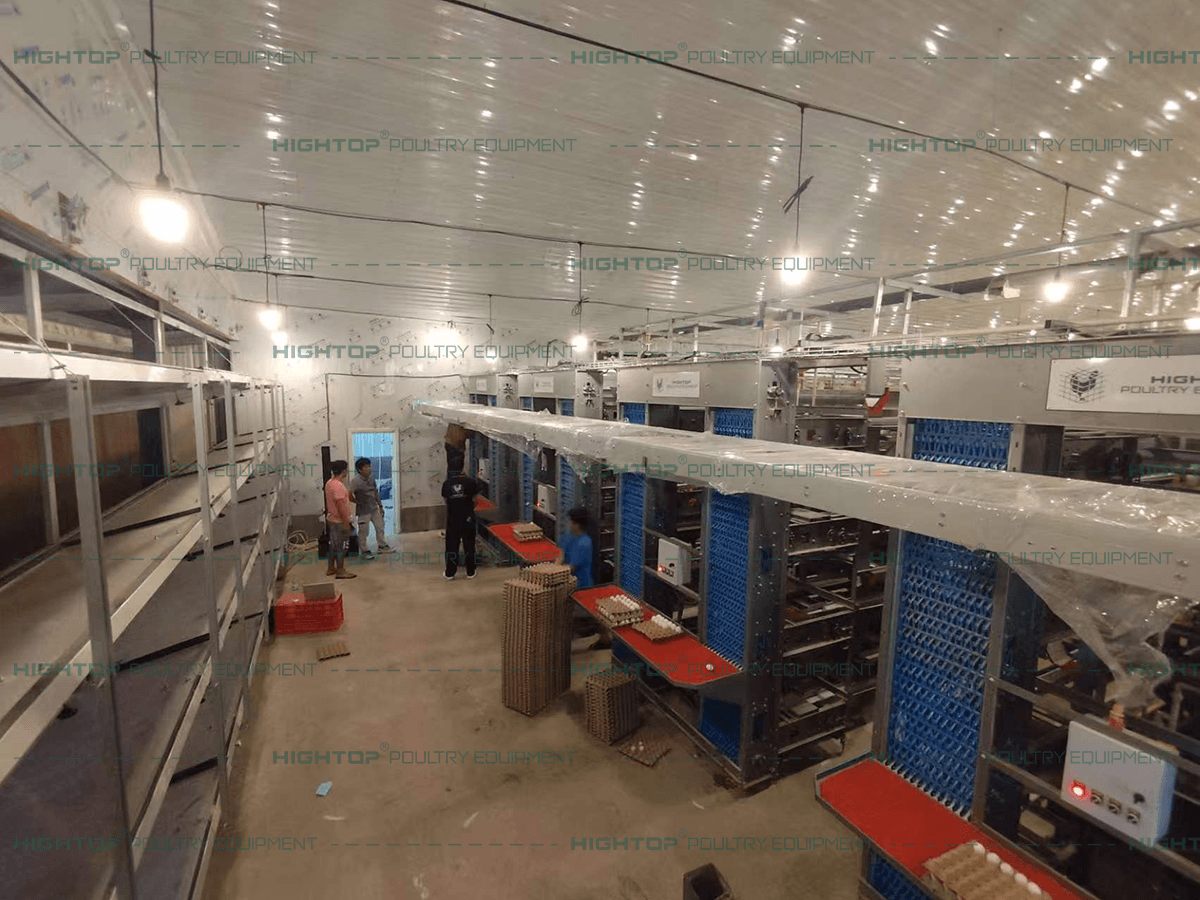
Because the steel structure had already been completed, the equipment layout had to match the existing 105 × 15-meter building. HIGHTOP arranged five cage rows while retaining the space required for equipment operation, ventilation, egg transportation, inspection, and daily management.
Before installation, the delivered components were checked, sorted, and positioned inside the poultry house.
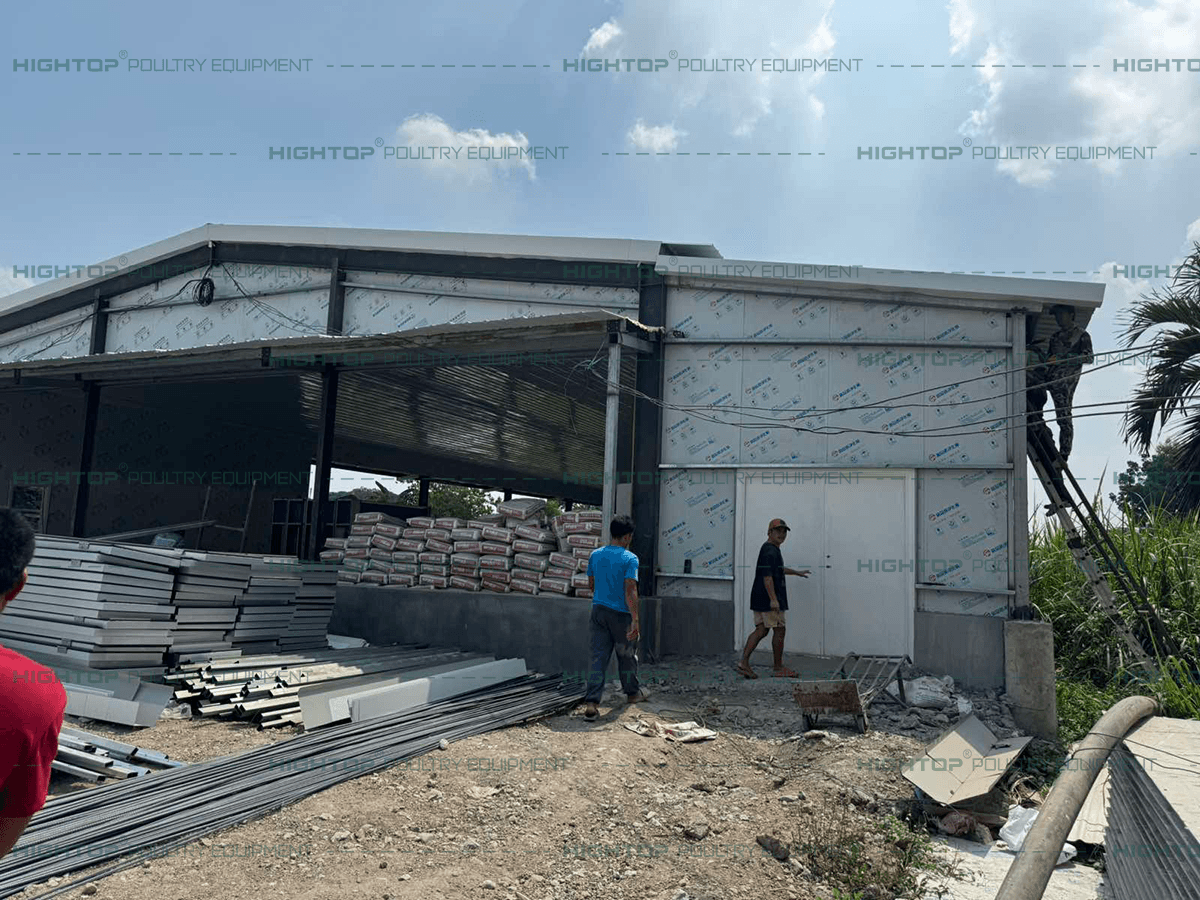
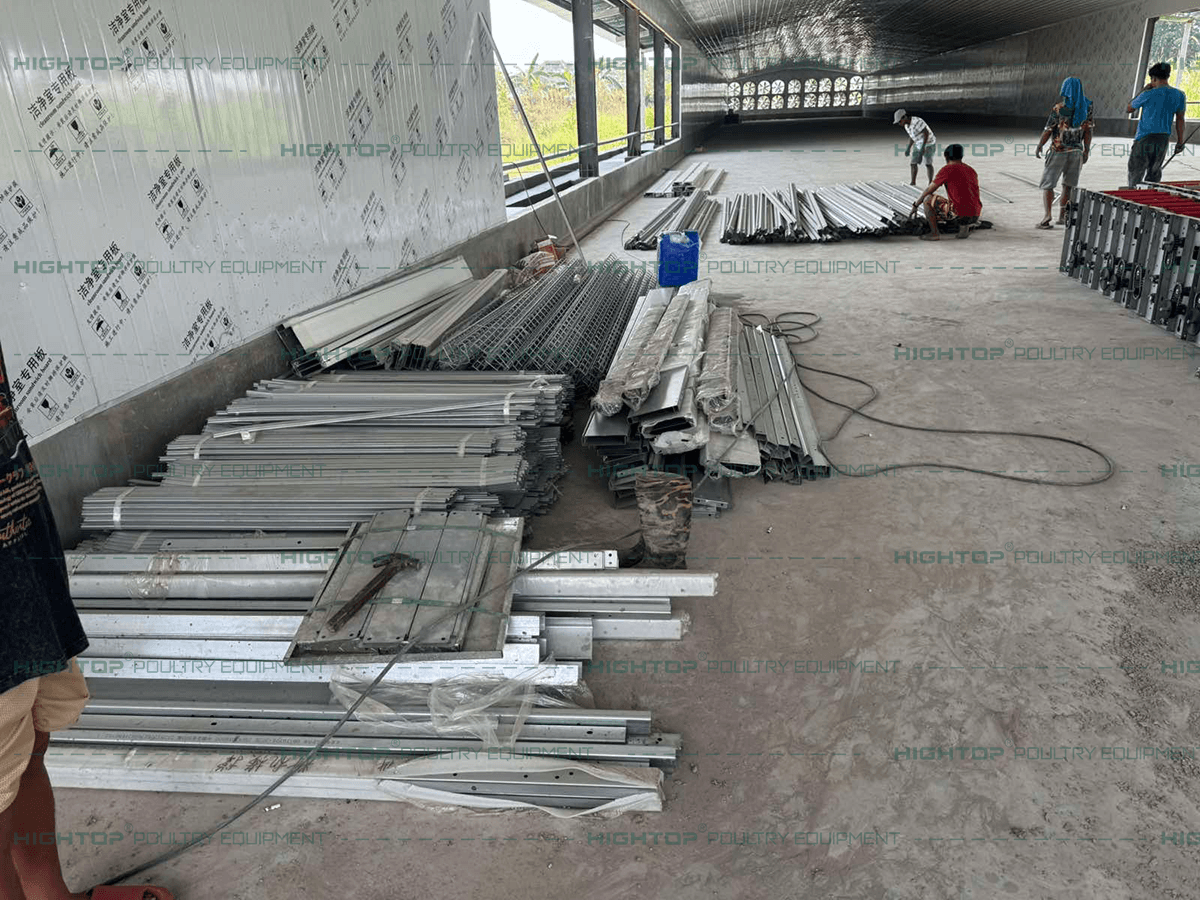
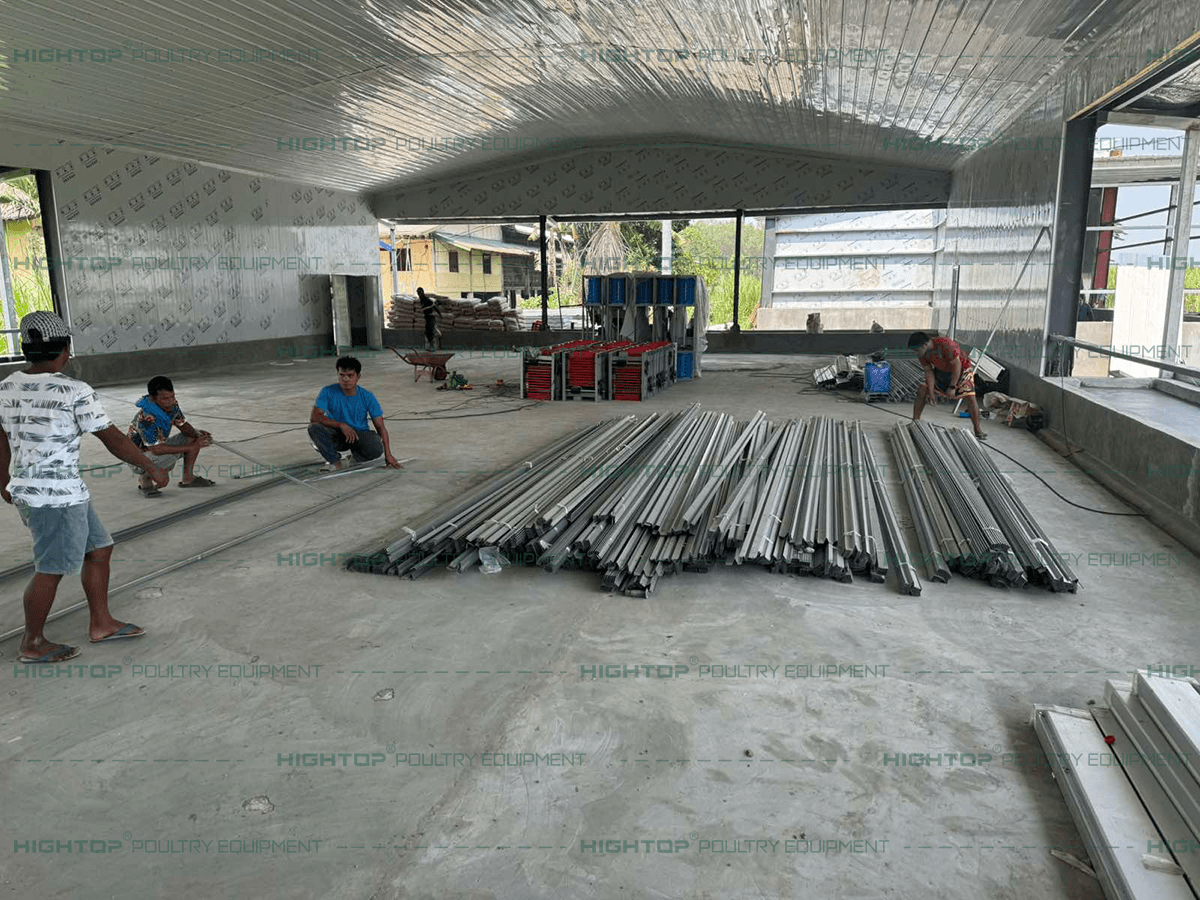
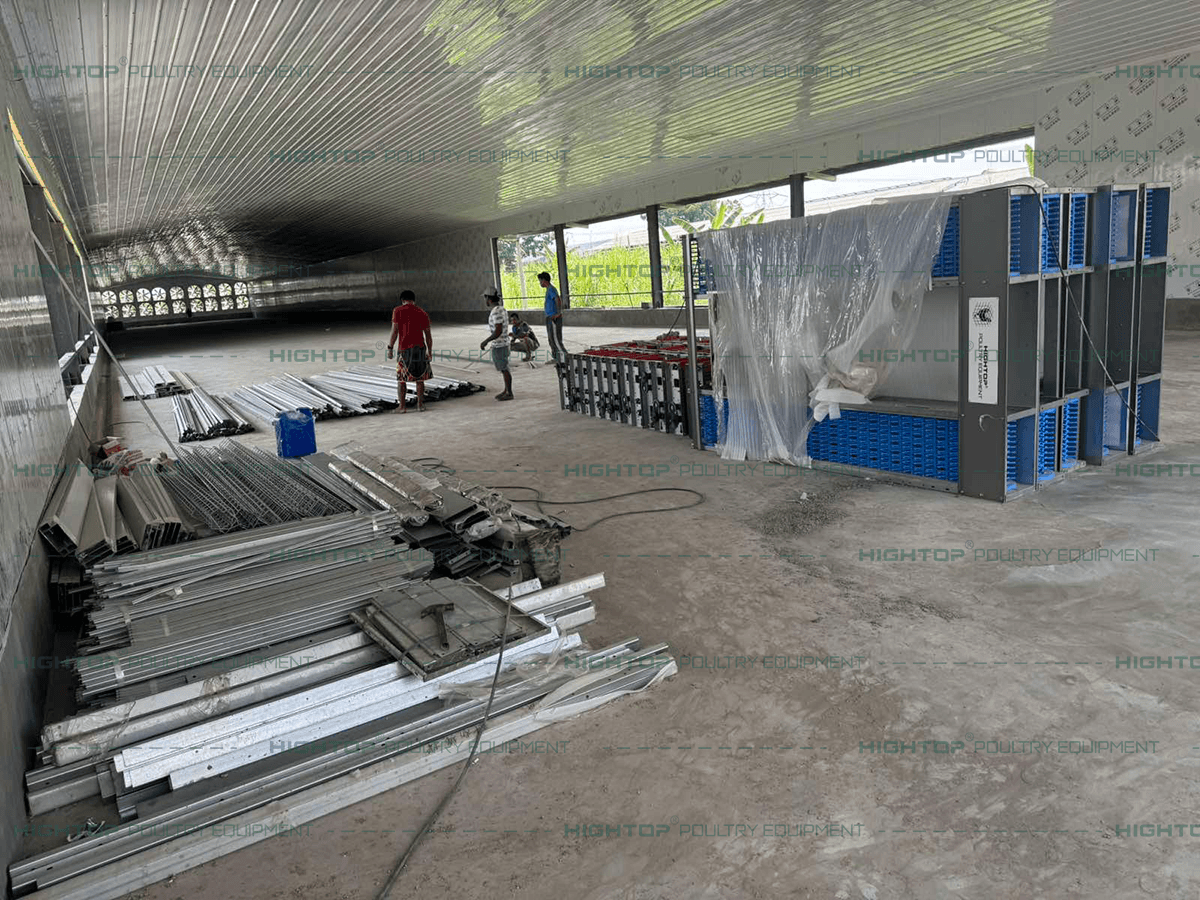
The cage layout consists of five rows, with 79 cage sets in each row. Every cage set accommodates 128 laying hens:
5 rows × 79 cage sets × 128 hens = 50,560 laying hens
This layout gives the customer a high production capacity in one enclosed building while allowing all major systems to be centrally controlled.
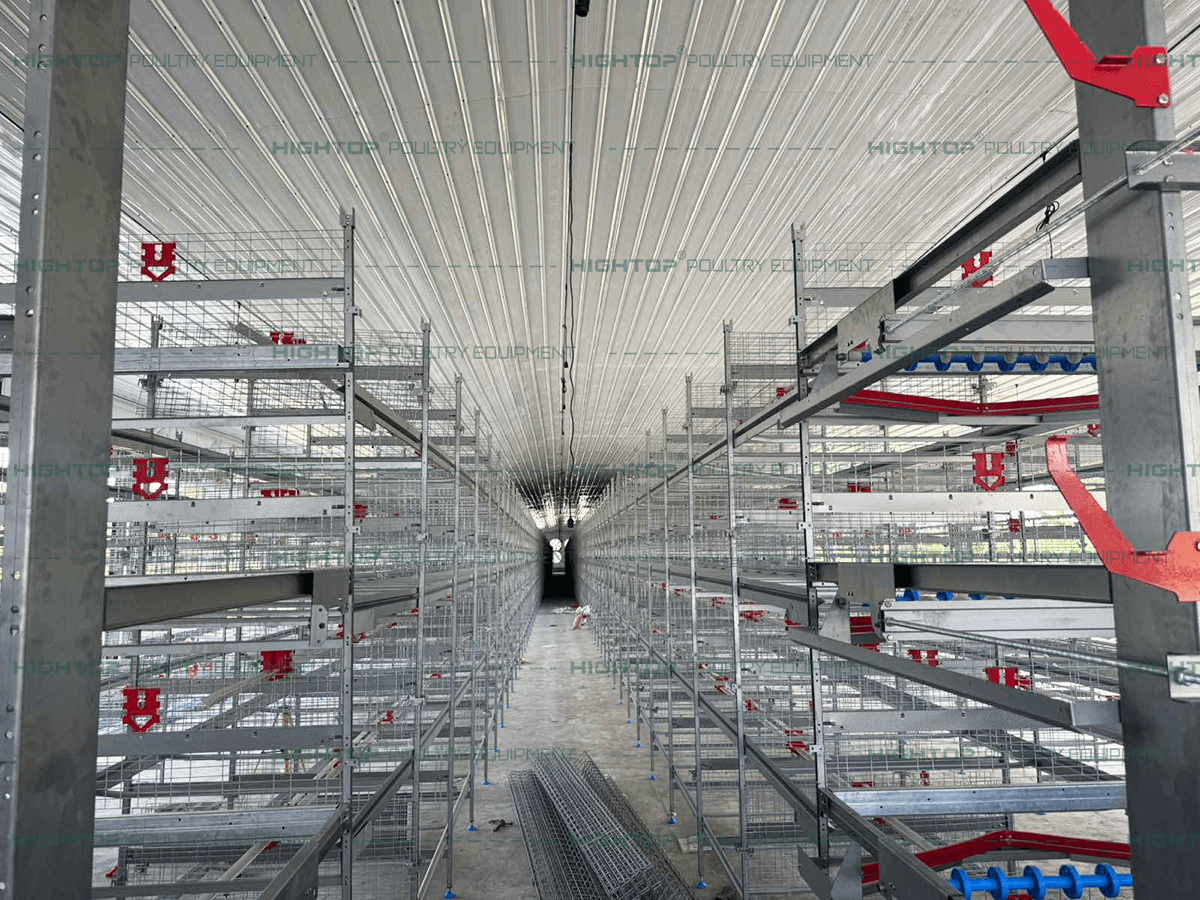
Automatic Poultry Equipment Included
H-Type Layer Cage System
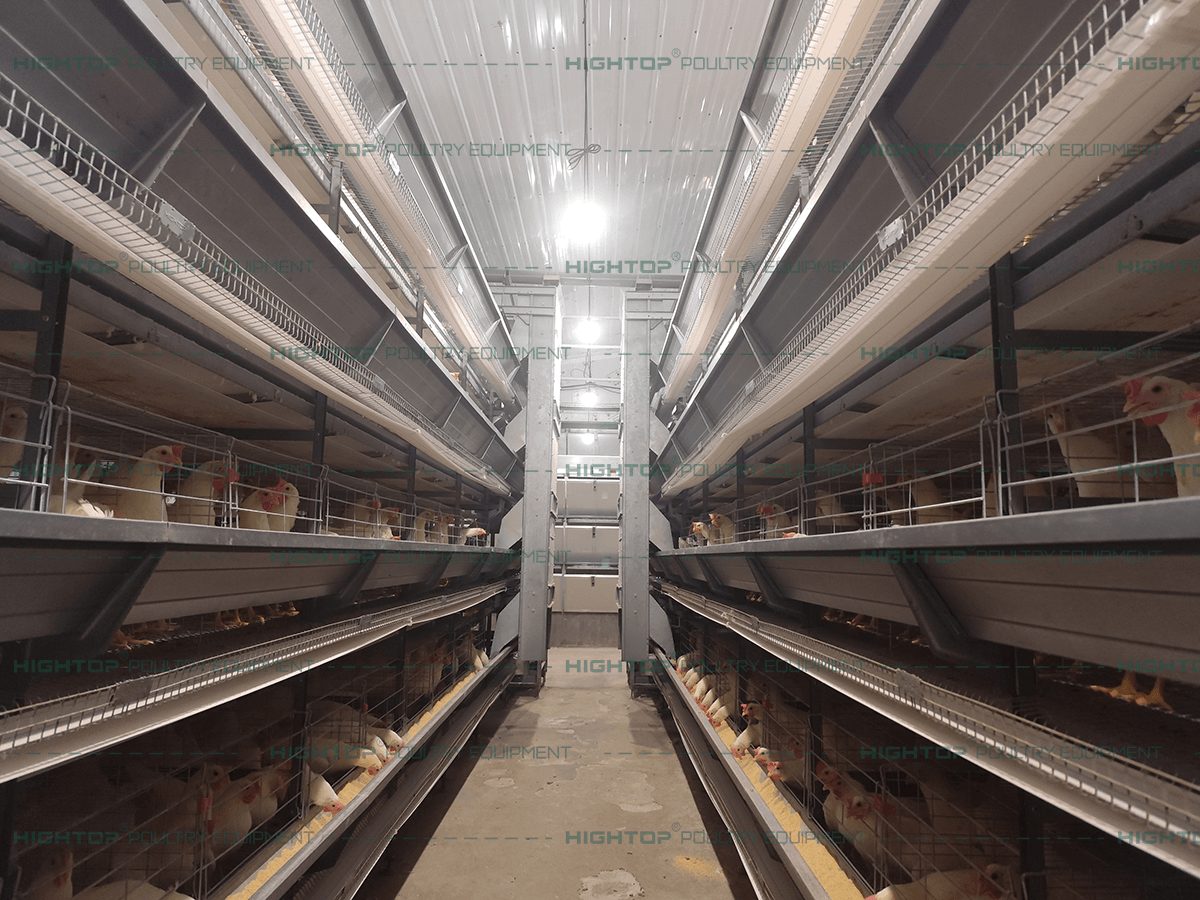
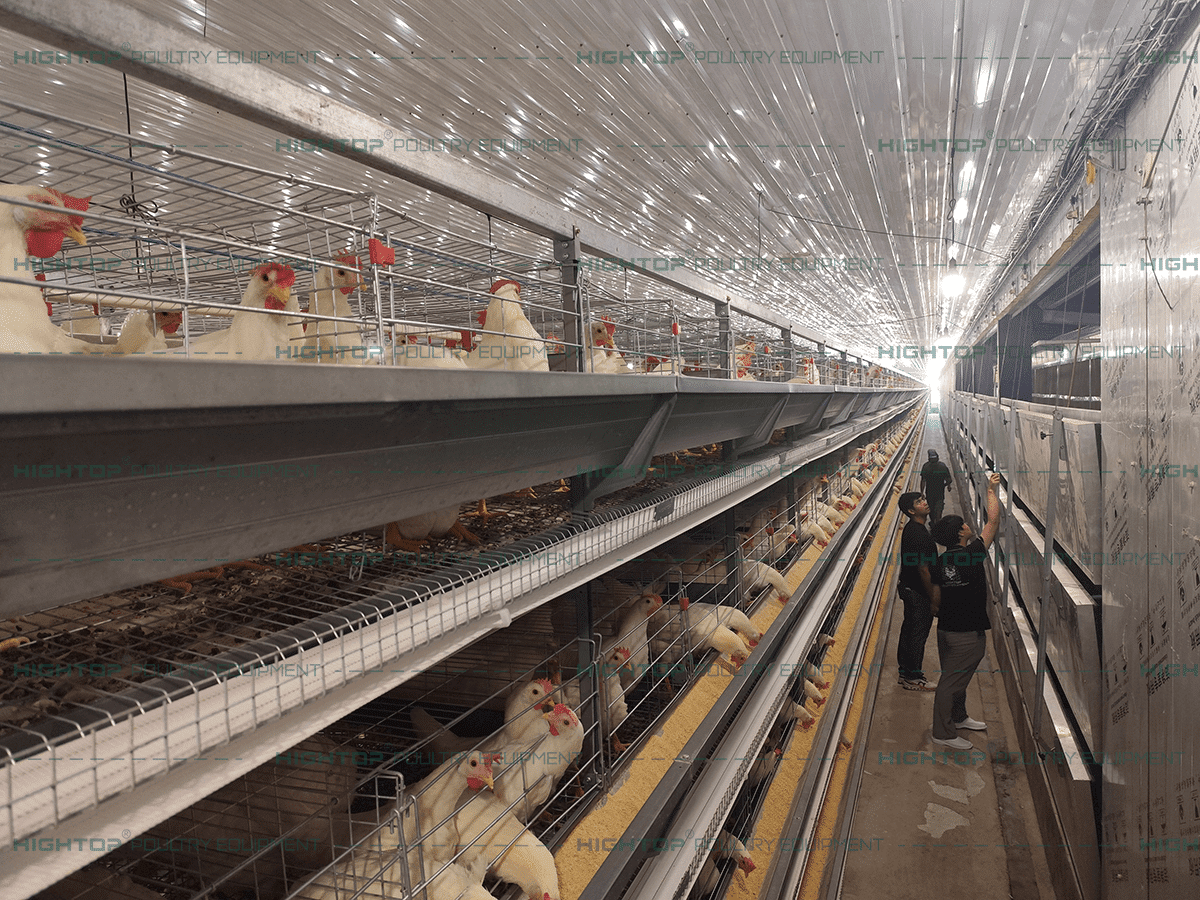
The 4-tier H-Type cage system forms the main structure of the farm. Its vertical layout increases the number of laying hens that can be housed in the available building area.
The equipment is arranged in straight rows so that feeding, drinking, egg collection, manure removal, lighting, and inspection equipment can operate along the cages.
Structural stability and manufacturing consistency are particularly important in a multi-tier poultry house because each cage row must remain correctly aligned with several automatic systems.
Automatic Feeding and Drinking
The automatic feeding system distributes feed along the five cage rows, reducing manual work and helping the hens receive feed on a consistent schedule.
The automatic drinking system provides water throughout the four cage tiers. Water consumption data can be collected by the IoT system and viewed through the farm management platform.
Monitoring feed and water usage helps the farm manager identify unusual changes and compare consumption with egg production.
Automatic Manure Removal
Manure belts installed beneath the cage tiers transport manure out of the poultry house.
Regular manure removal helps control moisture and ammonia inside an enclosed building. It also makes waste management more efficient and supports a cleaner environment around the cage rows.
Automatic Lighting
The project uses an automatic lighting system with lamps positioned at different heights.
This high- and low-level arrangement improves light distribution between the cage tiers. The farm can manage lighting according to the required production schedule instead of switching each area manually.
Central Egg Collection and Egg Counting
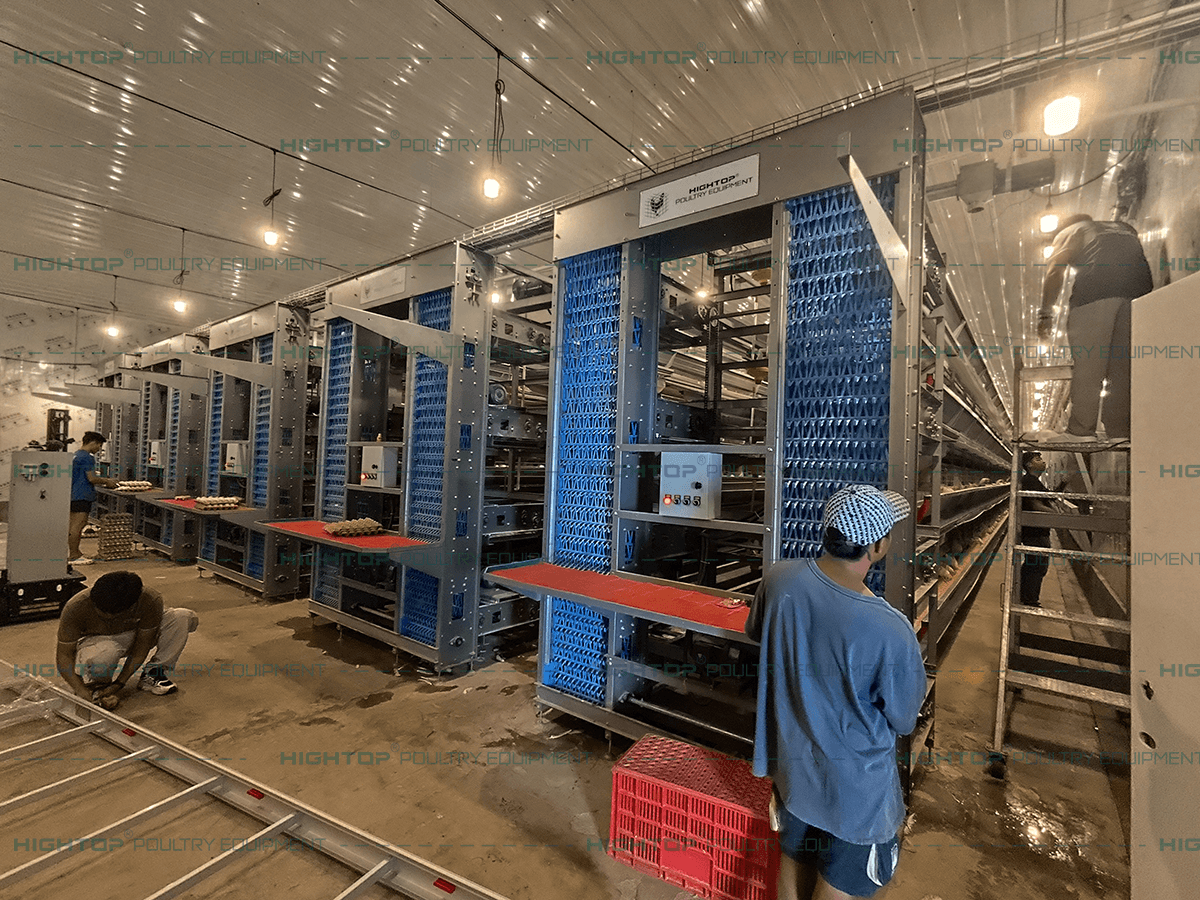
Eggs are transported from the cage rows to the front of the poultry house and then transferred to a central egg collection line.
The central conveyor will connect with the customer’s egg grading machine, allowing eggs to move from the cage system to the grading process with less manual handling.
An egg counter records production quantities and transfers the data to the management platform. This gives the customer a more direct way to monitor daily egg production.
IoT Environmental Control and Production Monitoring
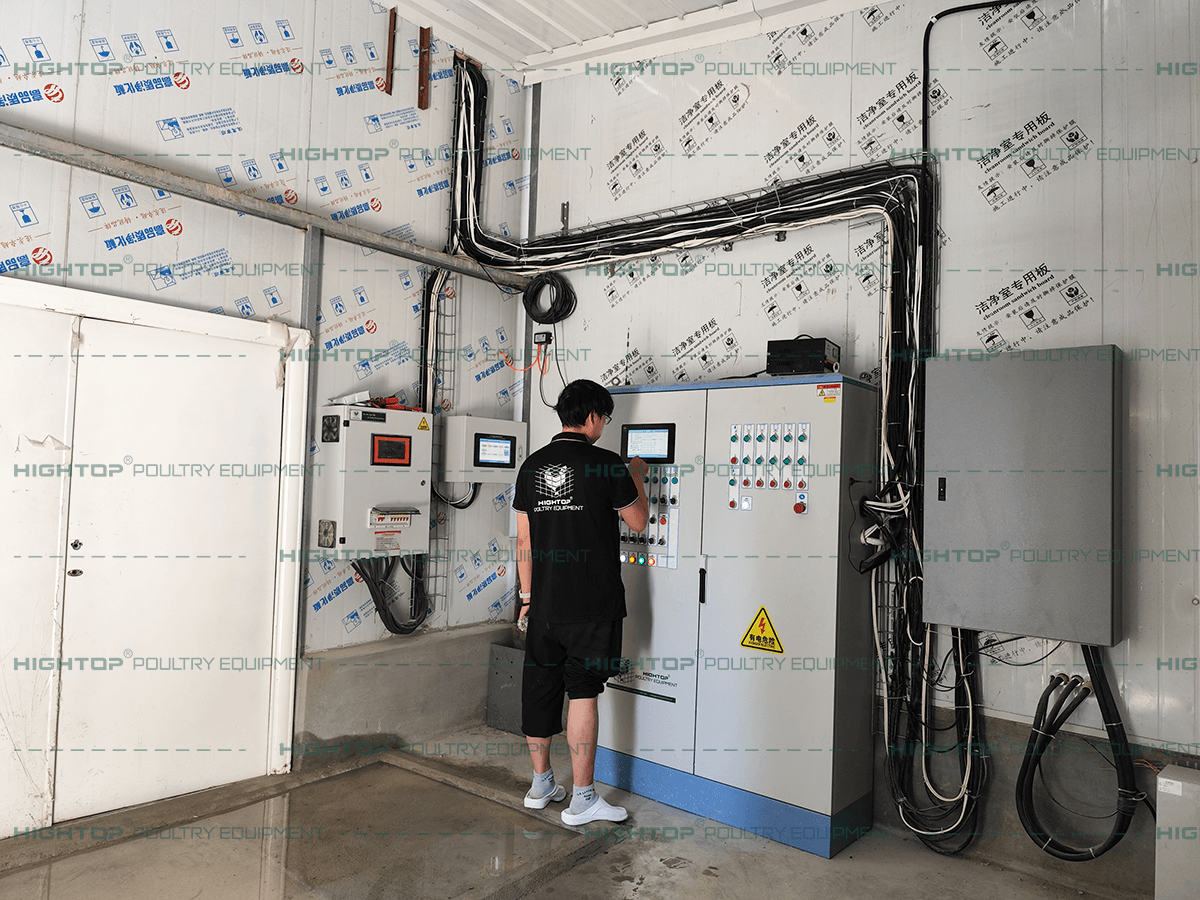
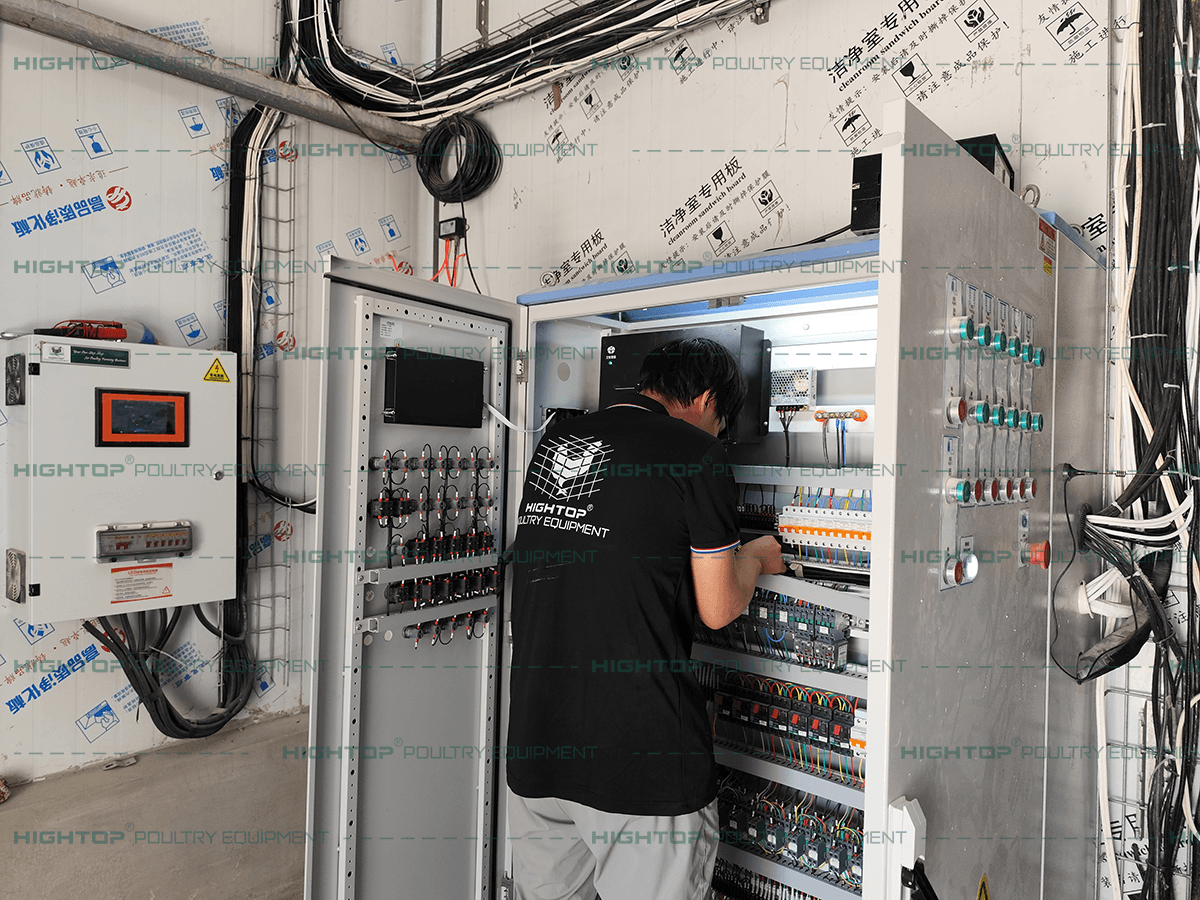
The environmental and electrical control system uses IoT technology to collect four important categories of farm data:
- Water consumption
- Electricity consumption
- Feed consumption
- Egg production
The data is synchronized with HIGHTOP’s management platform. Authorized farm personnel can review the information through a mobile app or a computer web interface.
This system allows the farm manager to view production and equipment information without checking every system separately. It also makes it easier to compare feed and water consumption with egg output.
If production changes unexpectedly, the customer can review the available data to determine whether the change may be associated with feeding, water supply, environmental conditions, or equipment operation.
Intelligent Poultry Inspection Robot
The project includes an inspection robot developed to assist with flock monitoring inside the multi-tier poultry house.
The robot can automatically identify:
- Dead hens
- Hens showing signs of illness
- Non-productive hens
Manually inspecting 50,560 birds across four cage tiers requires considerable time. The robot helps farm workers locate birds that may need closer attention and improves the efficiency of routine inspection.
Because the inspection robot uses intelligent recognition and automated movement, proper setup and operator training are essential. Its operation was therefore one of the main subjects covered during HIGHTOP’s follow-up visit.
On-Site Technical Support After Commissioning
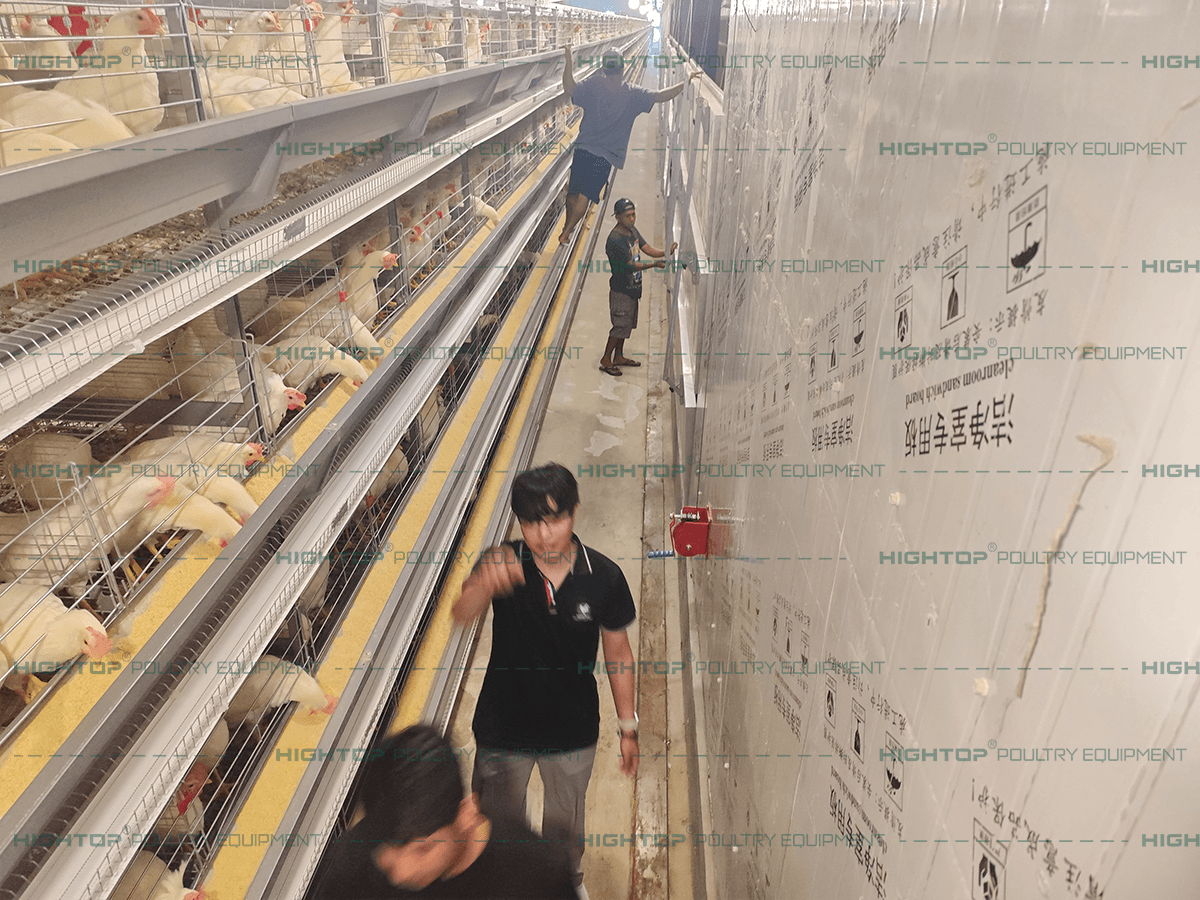
After the poultry house entered formal operation, HIGHTOP sent a business manager and technical personnel to the customer’s farm.
The team inspected the equipment under real production conditions and helped the customer solve problems encountered during daily operation. The visit focused on the environmental control system, airflow management, and inspection robot.
Environmental Control System Inspection
HIGHTOP technicians checked the environmental control settings and helped the customer understand how to adjust the system according to actual poultry house conditions.
In an enclosed house, ventilation settings must correspond with bird age, stocking conditions, local weather, and internal temperature. On-site inspection allowed the technicians to evaluate the actual environment and make appropriate adjustments.
Air Deflector Guidance
Air deflectors influence the direction and distribution of incoming air.
If they are not adjusted correctly, airflow may be uneven across the poultry house. HIGHTOP personnel demonstrated their correct use and explained how they work together with the ventilation system.
Inspection Robot Training
The technical team also provided practical guidance on the inspection robot, including its main functions, operating process, and use during routine flock management.
This on-site support helped the customer use the intelligent systems more effectively after the farm entered production.
Interested in the Same H-Type Layer Cage System?
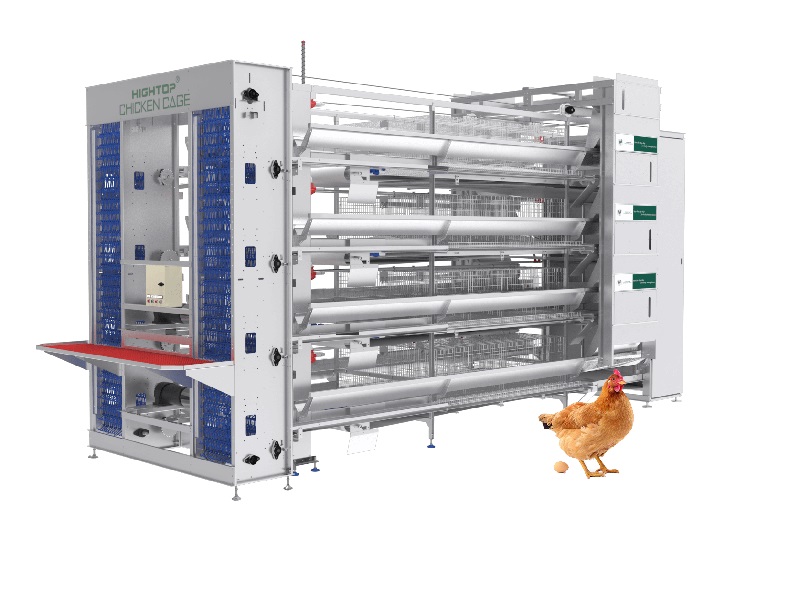
The HIGHTOP H-Type automatic layer cage is designed for medium- and large-scale commercial egg farms that require high capacity and centralized automation.
Its multi-tier structure makes better use of the available poultry house area. The cage system can be integrated with automatic feeding, drinking, manure removal, egg collection, lighting, ventilation, and intelligent farm management equipment.
Key advantages include:
- High stocking capacity within a limited building area
- Centralized management of multiple automatic systems
- Reduced manual feeding, egg handling, and manure cleaning
- Compatibility with enclosed environmental-control poultry houses
- Flexible layouts based on house dimensions and target capacity
- Options for IoT monitoring and intelligent poultry inspection
- Technical support for installation, commissioning, and operation
HIGHTOP Service for International Poultry Projects
HIGHTOP provides poultry equipment design, manufacturing, installation guidance, commissioning, operator training, and after-sales technical support.
Support is provided according to the actual project situation through online communication, remote diagnosis, or on-site visits. This helps customers solve problems encountered during installation and daily operation, especially when several automatic and intelligent systems must work together.
If you are planning a layer farm, send HIGHTOP your country, poultry house dimensions, target capacity, and required automation level. Our team can prepare a customized equipment layout and project proposal.