
Project Overview
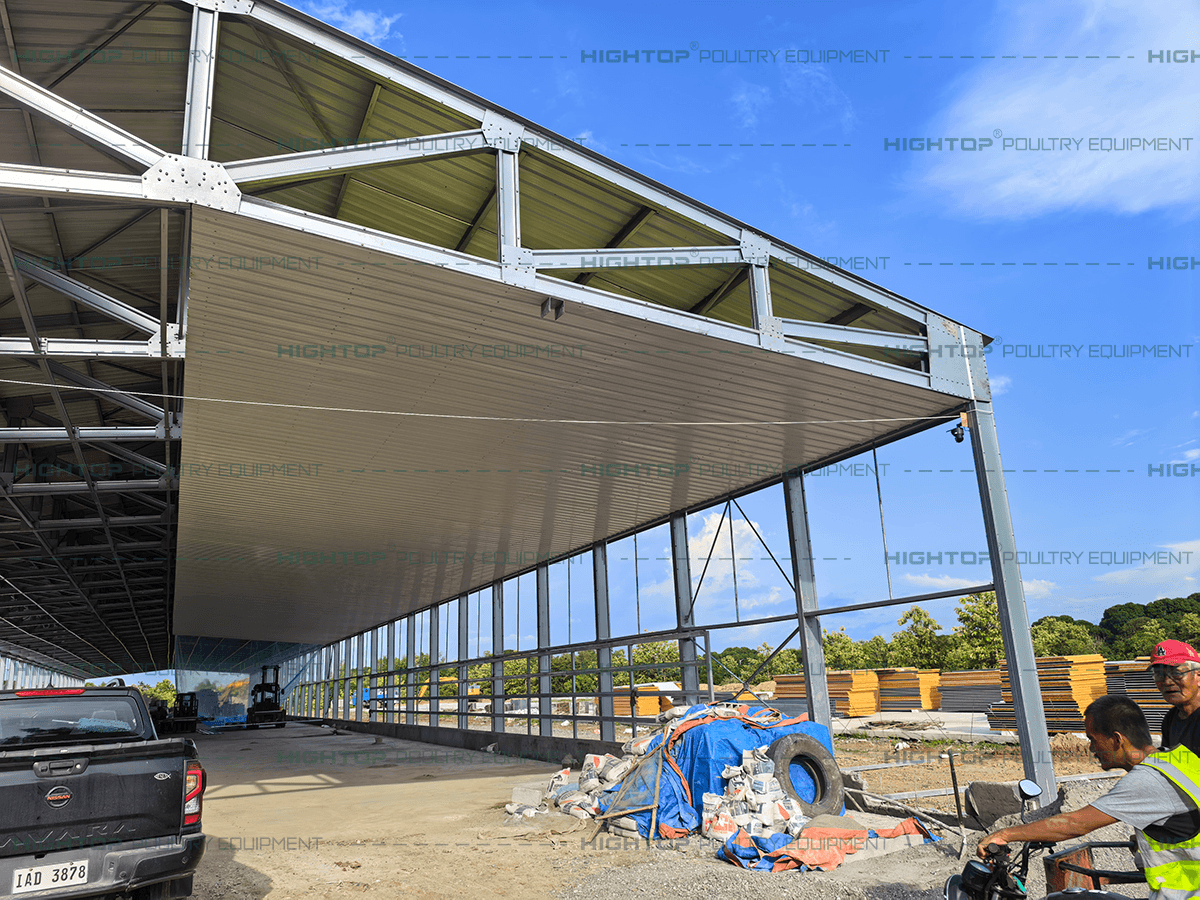
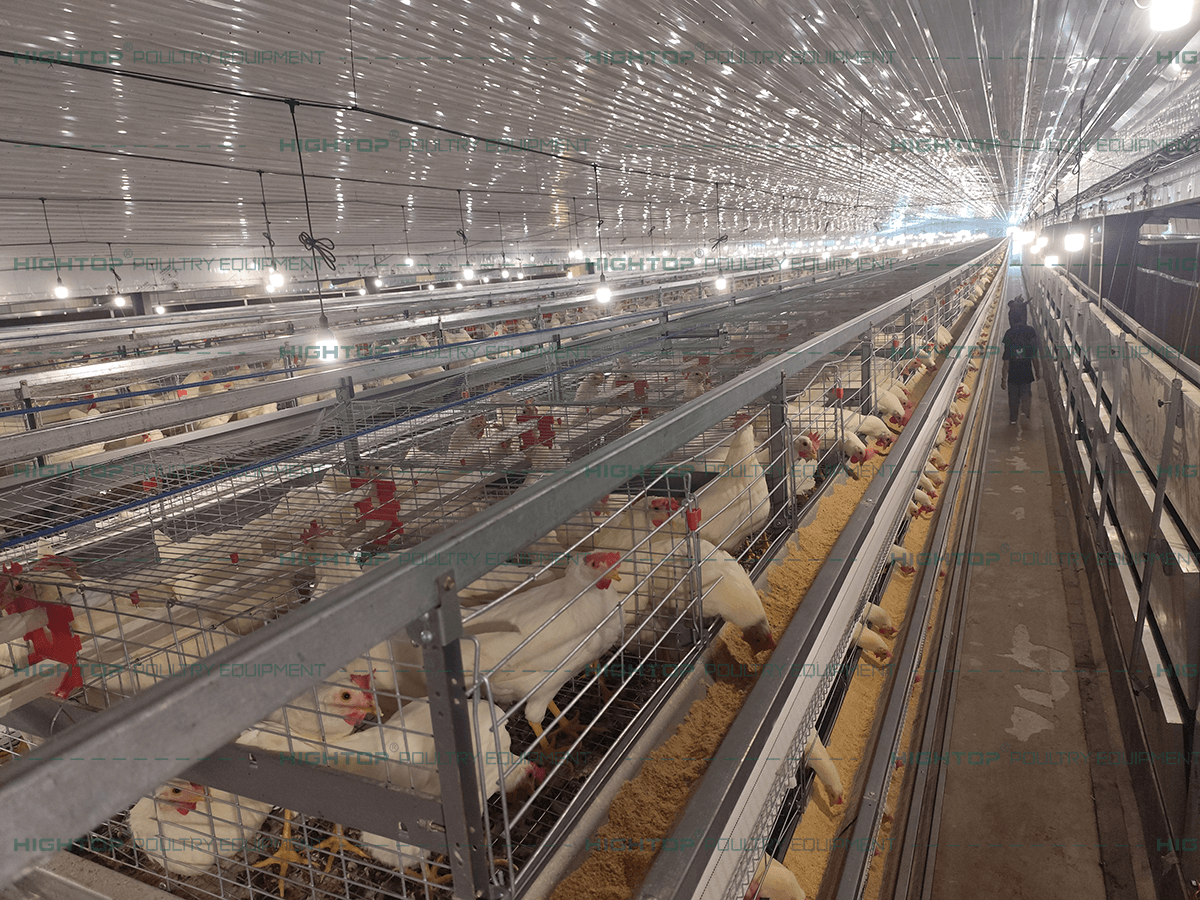
This commercial egg production project in Ecuador uses a 4-tier A-Type automatic layer cage system inside an open-sided poultry house.
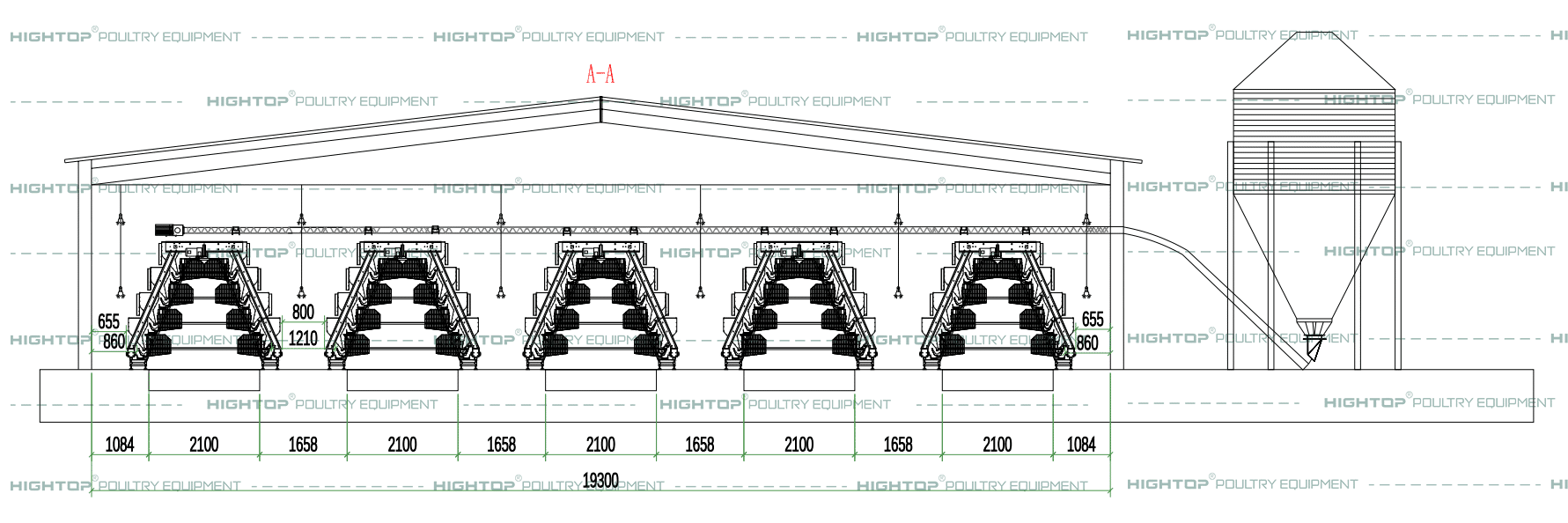
The poultry house measures 108 meters long, 19.3 meters wide and 3.5 meters high. HIGHTOP designed five cage rows, with 50 cage sets in each row and 250 sets in total. The completed house provides capacity for 30,000 laying hens.
The customer purchased:
- 4-tier A-Type layer cages
- Automatic feeding system
- Automatic egg collection system
- Scraper manure removal system
- Horizontal cross manure conveyor
- Installation and technical support from HIGHTOP’s local team
The project combines an open-house design with automatic feeding, egg collection and manure removal. It also includes a customized manure discharge arrangement based on the customer’s plan to collect and ferment the manure instead of loading it directly onto a truck.
Main Project Specifications
| Project Location | Poultry House Type | Cage System | Total Capacity |
|---|---|---|---|
| Ecuador | Open-sided poultry house | 4-tier A-Type automatic layer cage | 30,000 laying hens |
| House Dimensions | Cage Layout | Cage Sets per Row | Total Cage Sets |
| 108 m × 19.3 m × 3.5 m | 5 rows × 4 tiers | 50 sets | 250 sets |
| Capacity per Set | Feeding System | Egg Collection | Manure Removal |
| 120 hens | Automatic feeding | Automatic egg collection | Scraper system with horizontal cross conveyor |
Capacity calculation:
5 rows × 50 cage sets × 120 hens = 30,000 laying hens
Project Results
After installation and commissioning, the customer obtained an automated open-house layer farm with the following functions:
- Housing for 30,000 laying hens in one poultry house
- Five rows of 4-tier A-Type cages
- Automatic feed distribution
- Automatic egg collection
- Automatic scraper manure removal beneath the cage rows
- Horizontal manure transport from the row ends to outside the poultry house
- Local installation support in Ecuador
- Easier access to technical assistance after commissioning
The project also demonstrates that a manure removal system does not have to follow the same configuration on every farm. HIGHTOP adjusted the discharge method according to how the customer planned to collect, ferment and reuse the manure.
Why the Customer Selected HIGHTOP
The customer did not make the purchasing decision after receiving only one quotation. Several factors gradually built confidence in HIGHTOP.
Consistent Communication Across the Time Difference
China and Ecuador have a significant time difference. During the discussion and design stages, the HIGHTOP team adjusted communication schedules to respond to the customer’s questions and keep the project moving.
For an international poultry project, delayed communication can affect layout confirmation, equipment selection, production and shipping. Fast and consistent responses helped the customer review each stage without unnecessary delays.
Repeated Exposure to Real HIGHTOP Projects
Before placing the order, the customer had already seen HIGHTOP’s social media posts and detailed project cases on the official website several times.
These materials allowed the customer to review actual cage layouts, installed equipment and completed poultry houses rather than relying only on product catalogues.
The website cases also helped explain how HIGHTOP adapts equipment layouts and automatic systems to different house dimensions and farm requirements.
Visiting an Existing Customer’s Farm
The customer also visited a farm belonging to an existing HIGHTOP customer.
This was an important step in the decision-making process. He could inspect the cage equipment, observe how the automatic systems worked and evaluate the actual operating conditions of a completed farm.
After seeing the equipment in use and being satisfied with the installation, the customer decided to proceed with HIGHTOP.
Local Installation Support in Ecuador
HIGHTOP has a cooperating installation team in Ecuador. This helped reduce one of the customer’s main concerns when purchasing equipment from an overseas manufacturer: who would install the equipment and provide assistance after delivery?
The local team could participate in the installation, respond more quickly to site conditions and provide continued support after the equipment entered operation.
For the customer, this meant that technical service would not depend entirely on remote communication across a large time difference.
A Customized Layout for an Open-Sided Poultry House
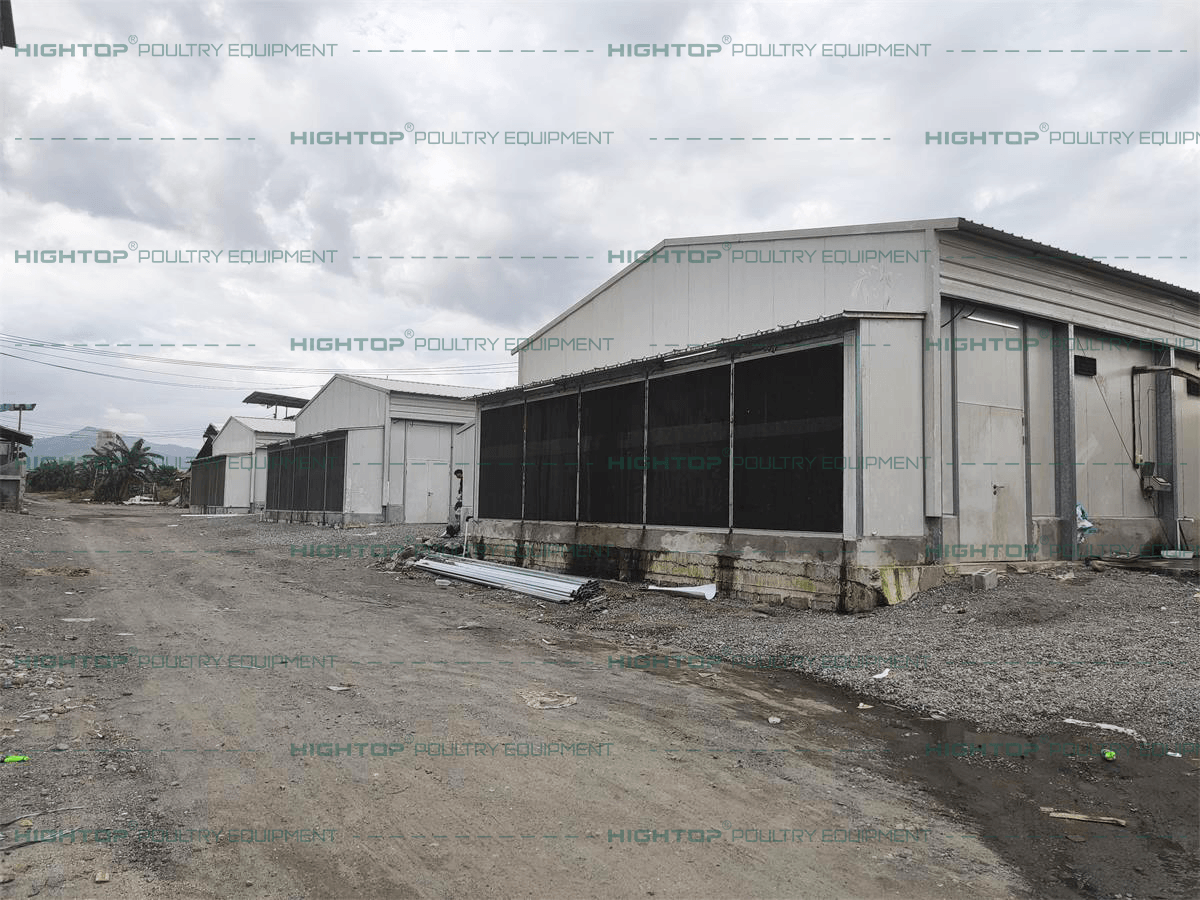
The customer selected an open-sided poultry house, a common solution in regions where natural airflow can contribute to daily ventilation.
HIGHTOP designed five rows of A-Type cages within the 19.3-meter width. The layout had to provide enough room for:
- Cage rows
- Automatic feeding equipment
- Egg collection equipment
- Manure channels
- Service aisles
- Cross manure transportation
- Daily inspection and maintenance
The fan-end elevation and front layout drawings were used to confirm the relationship between the building dimensions, cage height, internal passages and equipment positions before installation began.
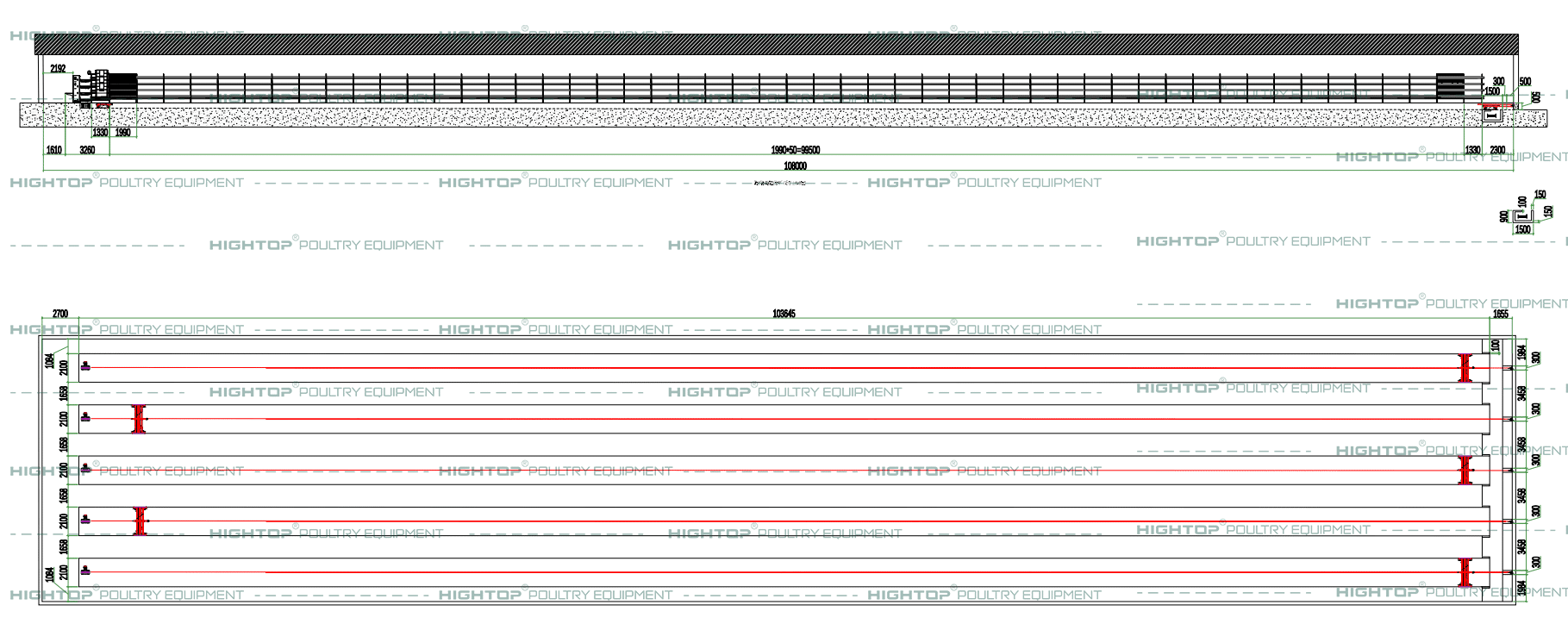
The design stage helped prevent conflicts between the cage rows, feeding equipment, egg collection system and manure removal components.
Raised A-Type Cages Create Manure Channels
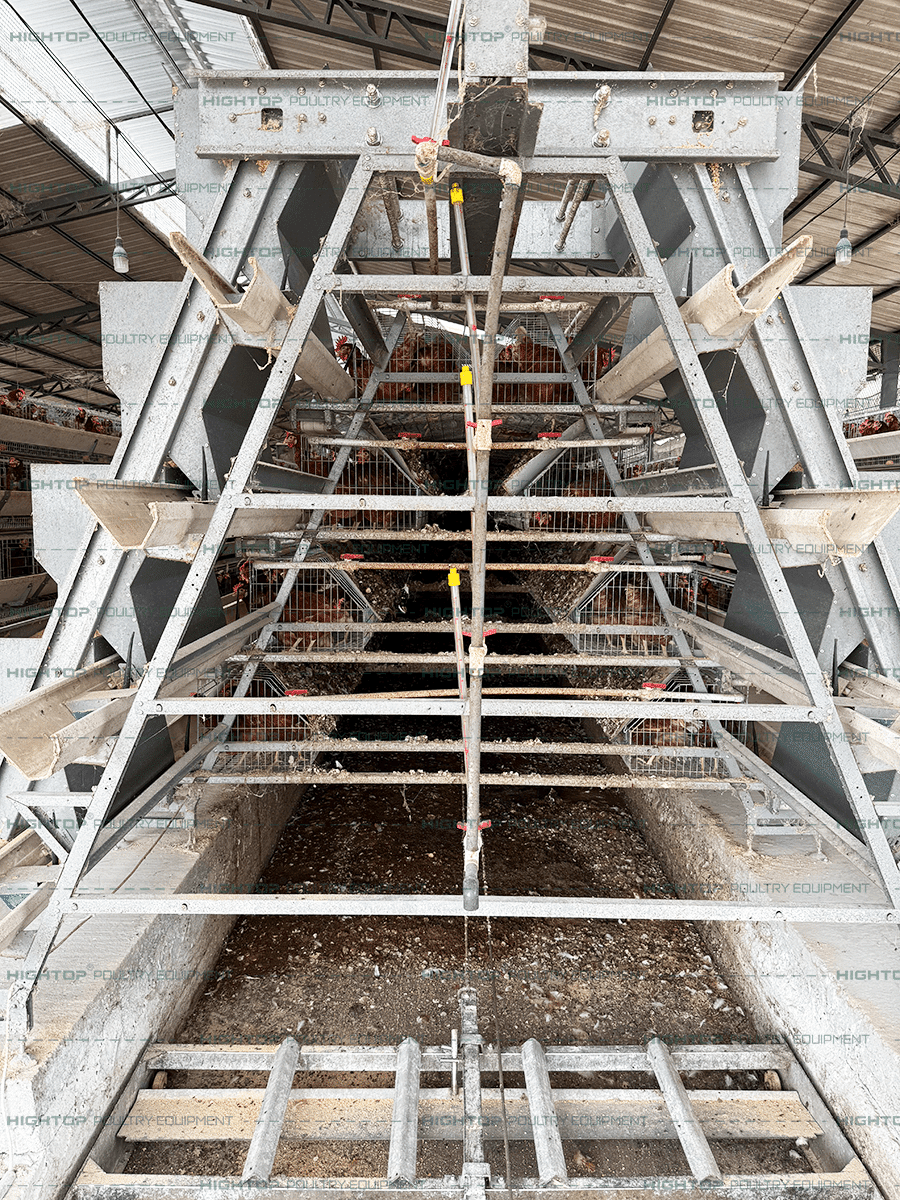
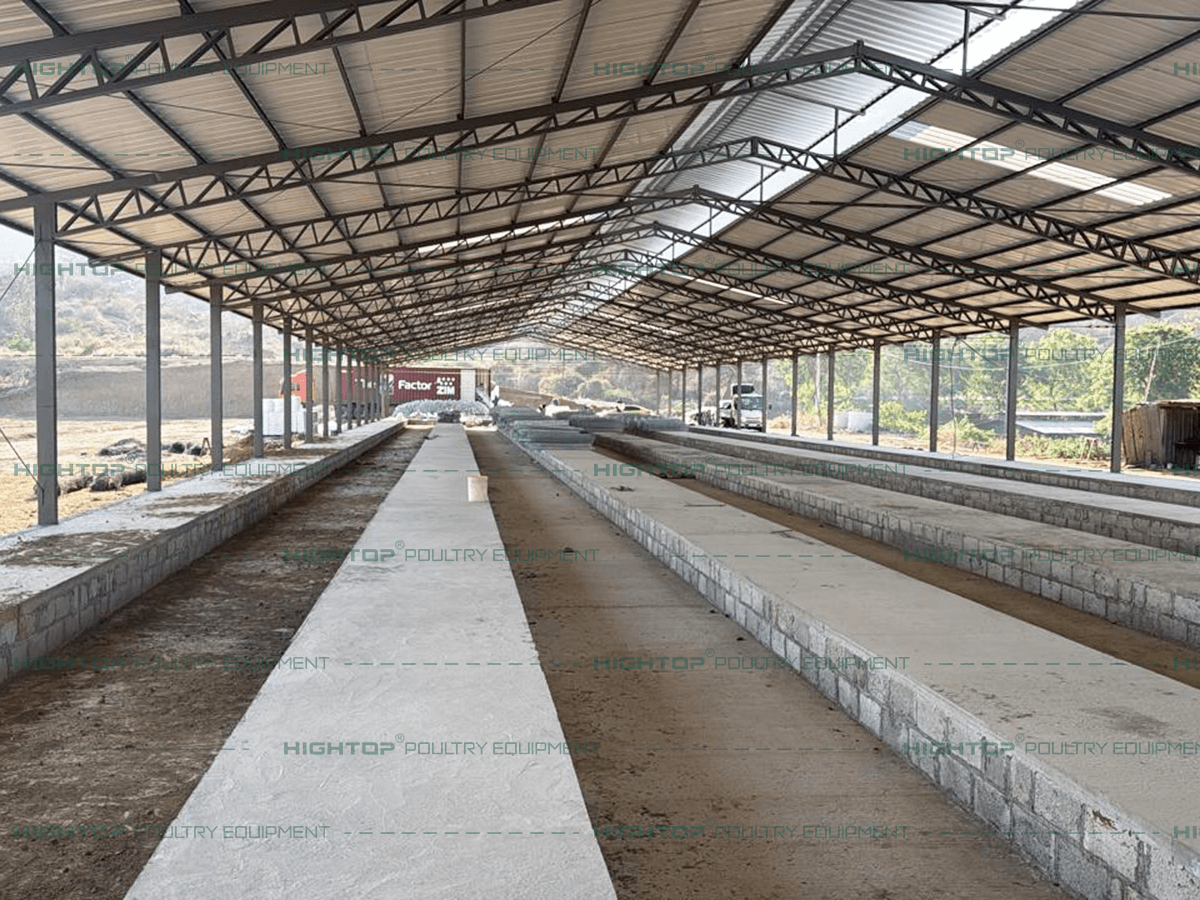
In this project, the A-Type cage frames were raised approximately 30 cm above the original floor level.
This space forms a manure channel beneath each cage row. Manure falls naturally from the cages into the channels instead of accumulating directly around the cage supports and working aisles.
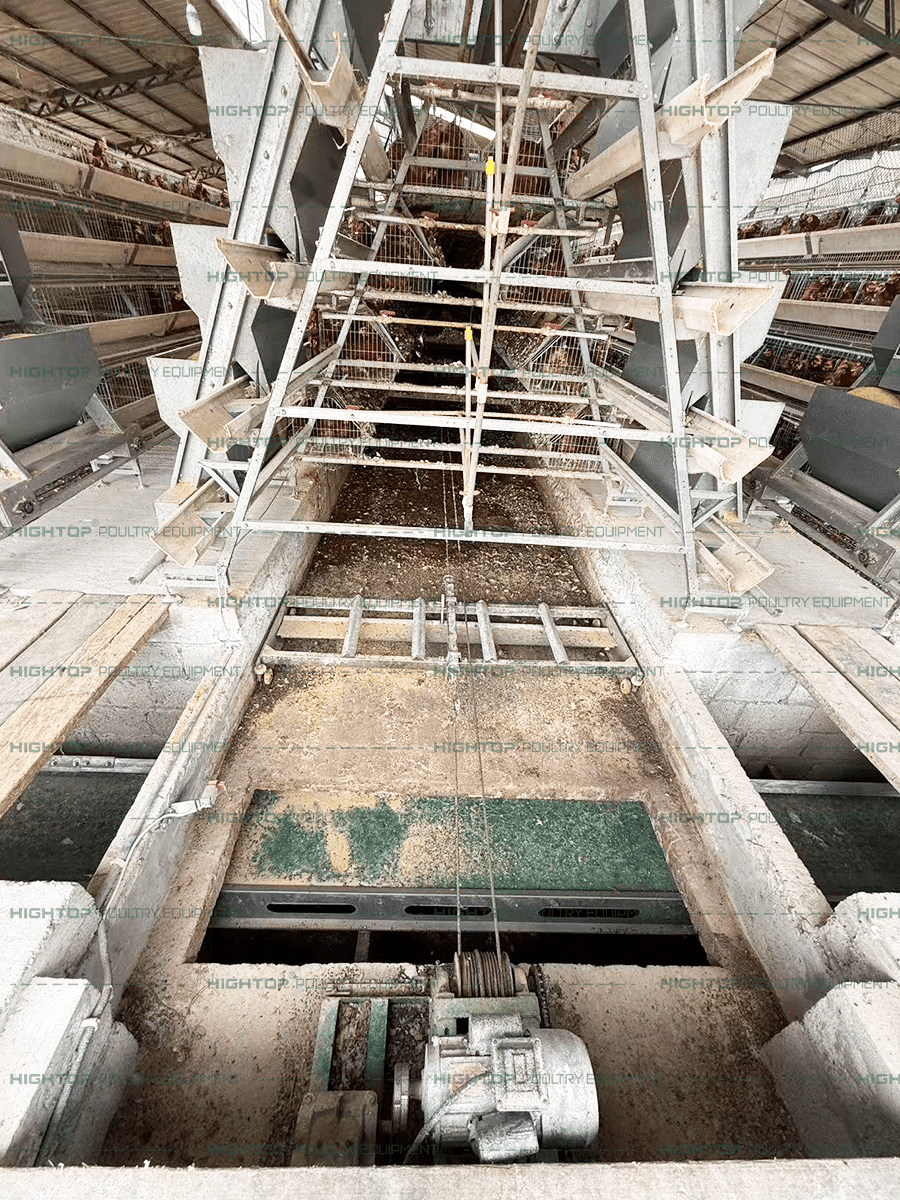
A scraper manure removal unit is installed inside each channel. When cleaning begins, the scraper travels along the channel and pulls the manure toward the end of the cage row.
This arrangement provides several practical advantages:
- It uses the space beneath the A-Type cages.
- Manure is separated from the main working aisles.
- Cleaning can be performed without manually removing manure from beneath every cage.
- The manure can be transported to a defined discharge point.
- The open-house floor remains easier to inspect and maintain.
The approximately 30 cm raised structure was therefore not simply an installation detail. It was necessary to create the working space for the manure channels and scraper equipment.
How the Manure Removal System Works
The manure removal process includes two main stages.
Stage 1: Scraper Removal Along the Cage Rows
Manure falls into the channels beneath the five cage rows. Scraper blades travel along these channels and pull the manure toward the end of the poultry house.
The scraper system performs the longitudinal movement of manure underneath the cages.
Stage 2: Horizontal Transportation Outside the House
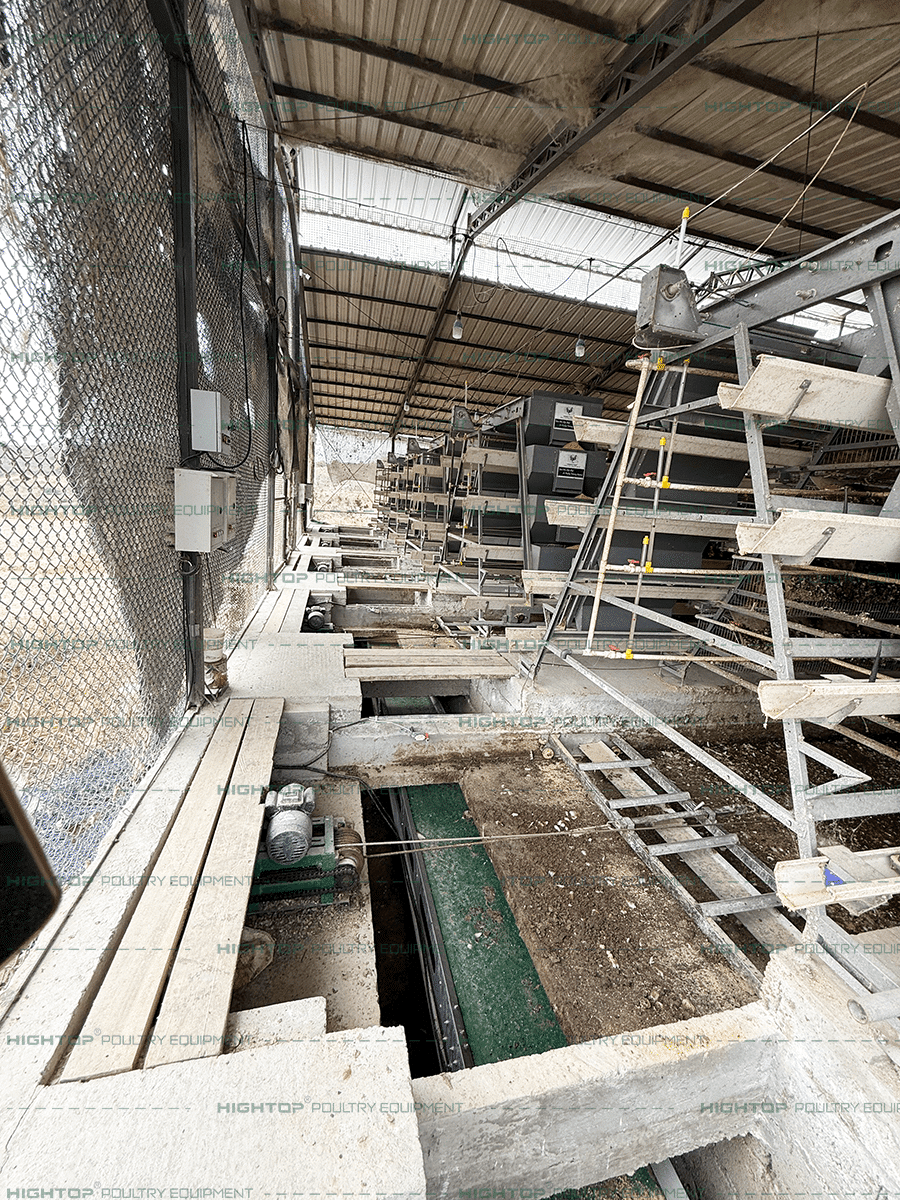
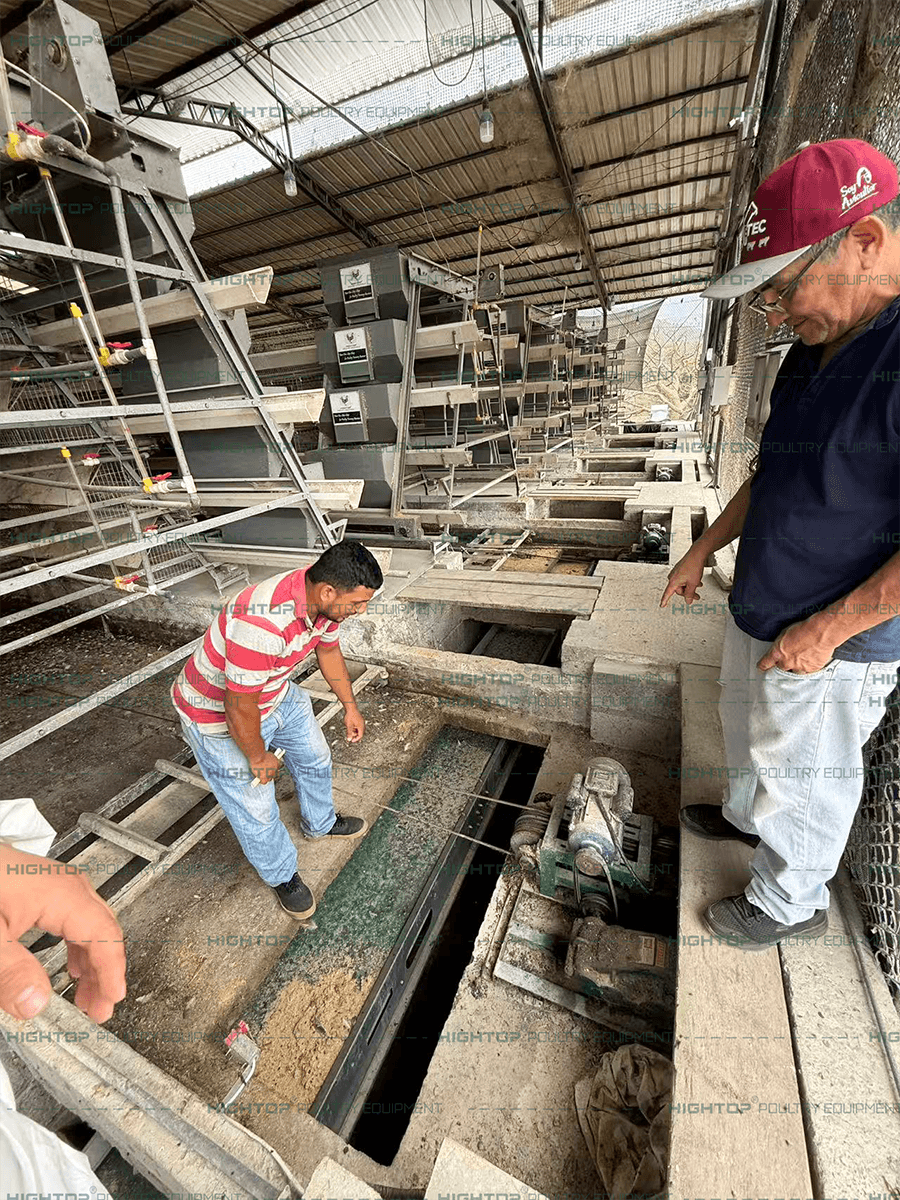
At the end of each cage row, the manure drops onto a horizontal cross conveyor.
This conveyor collects manure from the row ends and transports it outside the poultry house. The process removes the manure automatically from beneath the cages and transfers it to the customer’s selected collection area.
Why This Project Does Not Use an Inclined Manure Conveyor
Many automatic poultry farms combine a horizontal cross conveyor with an inclined lifting conveyor.
In that configuration, the horizontal conveyor collects manure from the cage rows and transfers it onto the inclined conveyor. The inclined section then raises the manure to a sufficient height for a truck or trailer to park underneath and receive it directly.
This Ecuador project does not use the inclined lifting conveyor.
The horizontal conveyor transports the manure outside the poultry house and discharges it near ground level. The manure is therefore not lifted directly into a collection vehicle.
This was a deliberate choice based on the customer’s manure management plan.
The customer intends to collect the manure and ferment it on the farm. After treatment, the manure can be used or sold as an organic fertilizer, creating an additional source of value for the poultry operation.
Because the customer did not need immediate high-level loading into a truck, the inclined conveyor was unnecessary. The selected arrangement avoided purchasing equipment that did not match the farm’s actual workflow.
This is an example of how HIGHTOP adjusts a poultry equipment package to the customer’s production and waste-management plan instead of supplying the same configuration to every farm.
Automatic Feeding System
The automatic feeding equipment distributes feed along all five cage rows.
For a poultry house containing 30,000 laying hens, manual feeding would require substantial labor and make it more difficult to maintain consistent distribution across 250 cage sets.
The automatic system helps:
- Reduce repetitive manual work
- Deliver feed along the full length of each cage row
- Maintain a more consistent feeding schedule
- Improve management efficiency inside the long poultry house
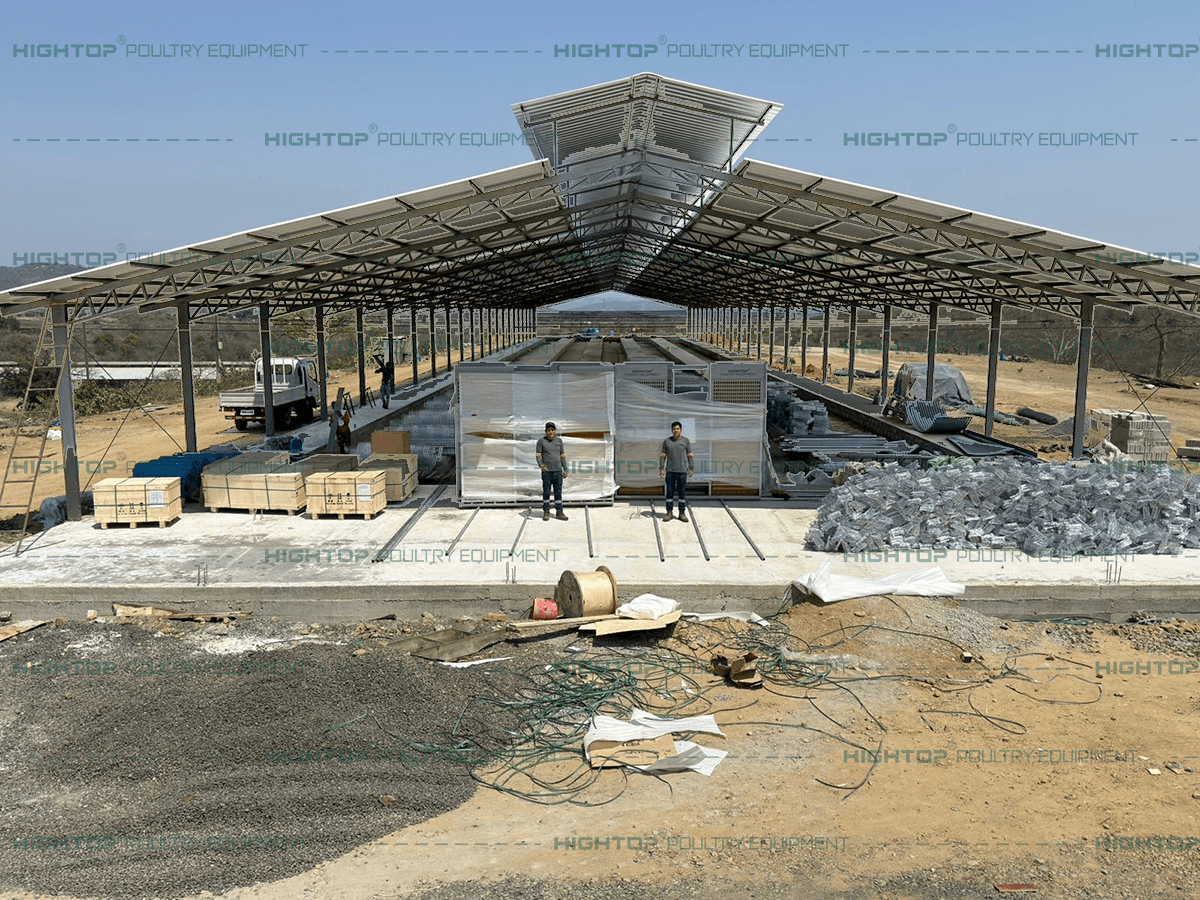
The feeding equipment was delivered and checked before being moved into its final installation position.
Automatic Egg Collection
Eggs roll from the cage floors onto the egg belts and are transported toward the front of the poultry house.
Automatic egg collection reduces the need for workers to collect eggs manually from each cage. It also creates a more organized route for transferring eggs out of the cage rows.
For a 30,000-layer house, the system provides several benefits:
- Less manual handling
- Faster collection from five cage rows
- Reduced walking distance for farm workers
- More centralized egg handling
- Easier daily production management
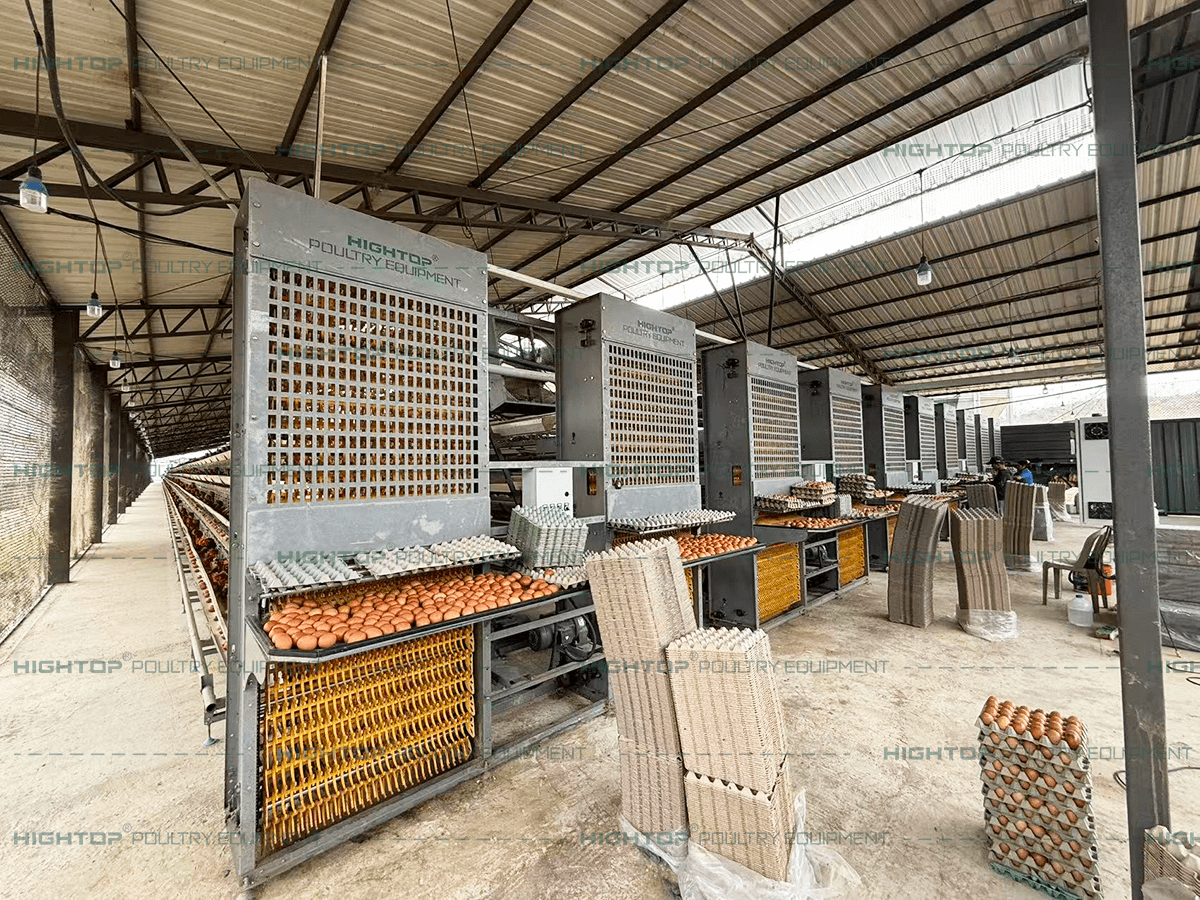
Automatic egg collection equipment operating after the farm entered production.
Equipment Delivery and Installation Preparation
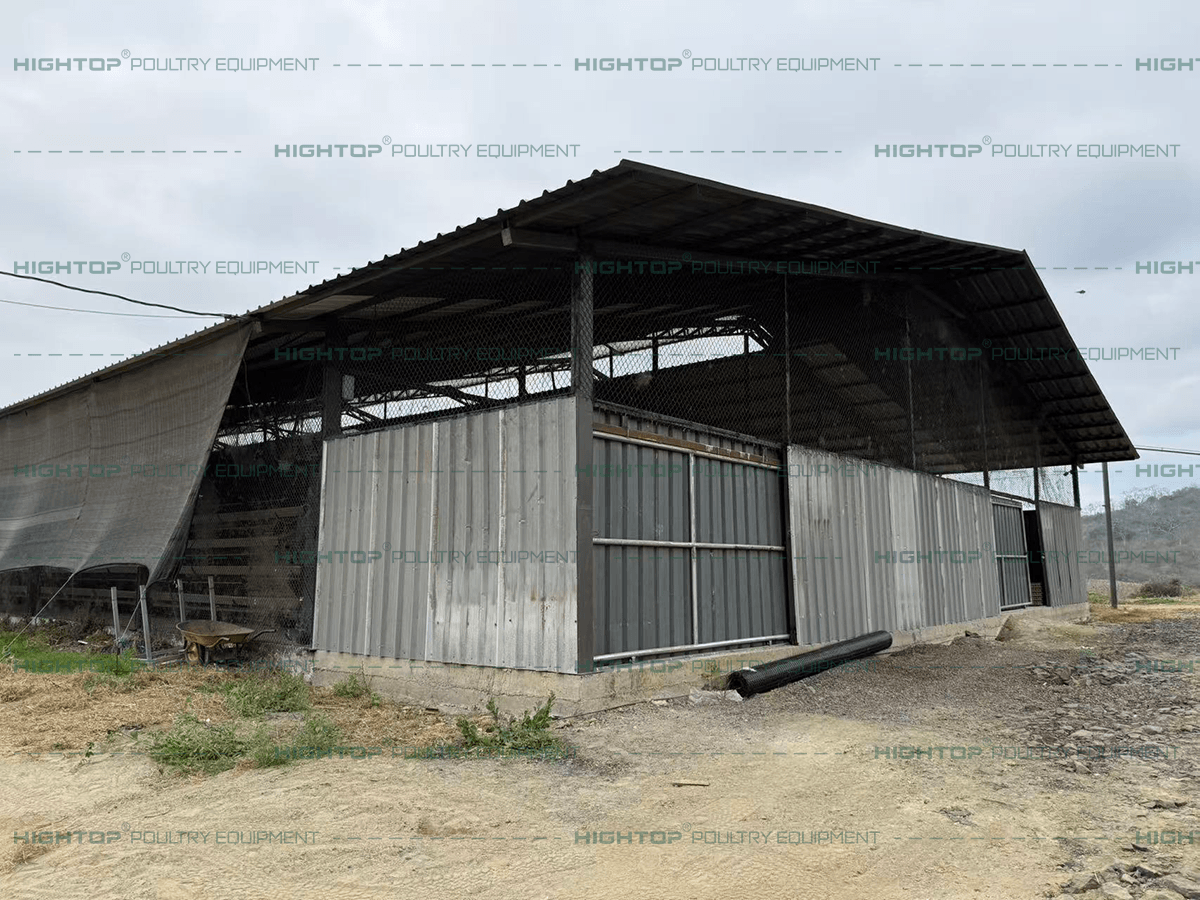
After the cages and automatic equipment arrived, the local installation team organized the components and prepared them for entry into the poultry house.
The availability of an installation team in Ecuador simplified coordination between delivery, assembly and site conditions. It also allowed questions discovered during installation to be handled locally while remaining connected with HIGHTOP’s technical personnel.
The Farm After Entering Operation
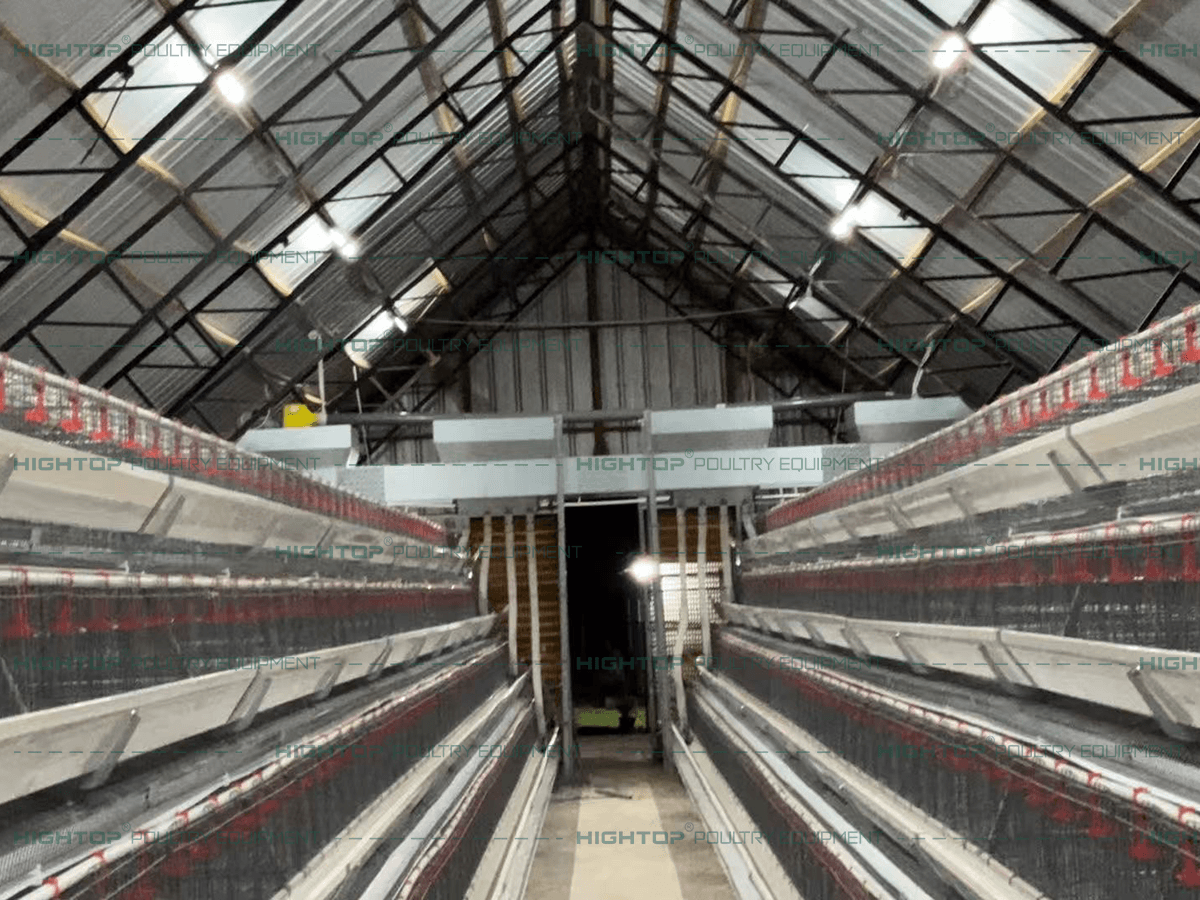
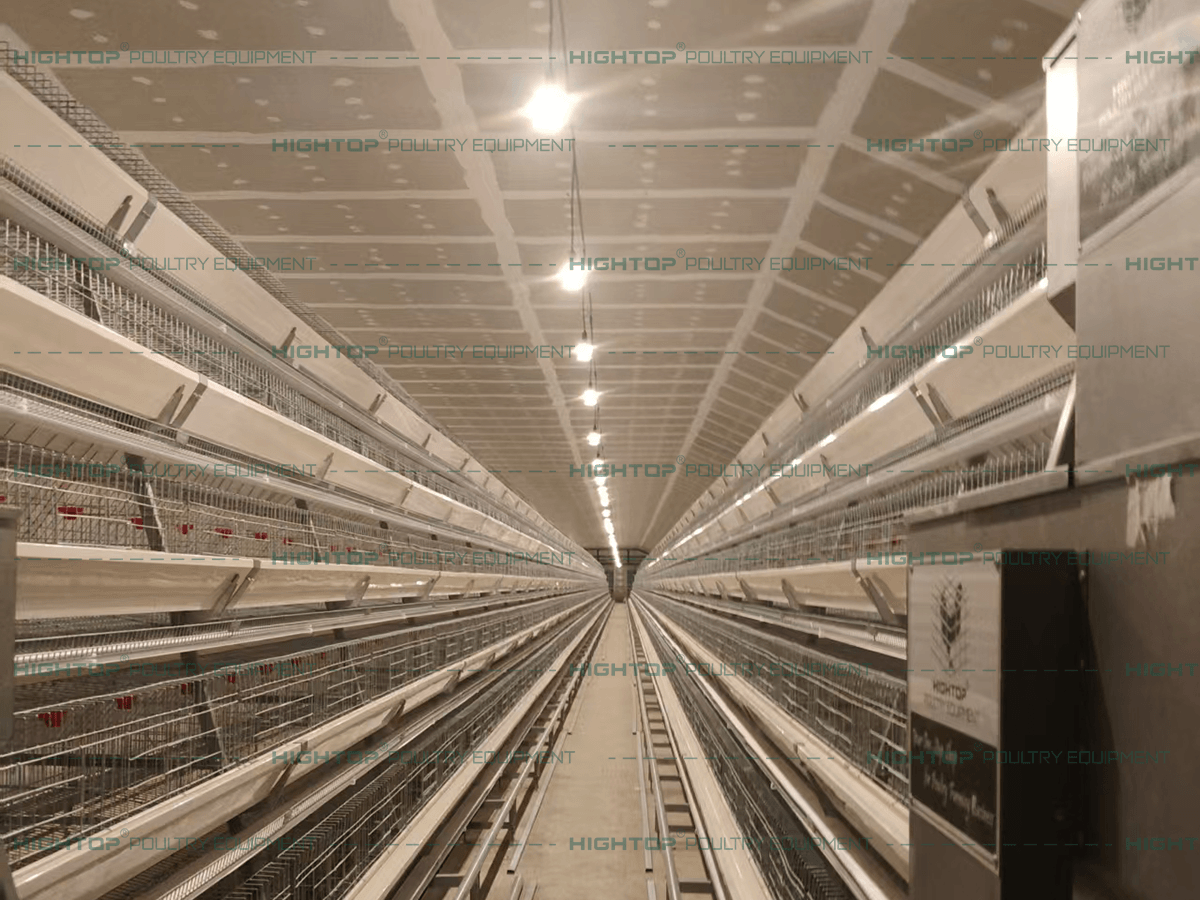
Once installation was completed, the five cage rows, feeding equipment, egg collection system and manure removal system entered normal operation.
The front and middle views of the poultry house show how the 4-tier A-Type cages are arranged inside the open building.
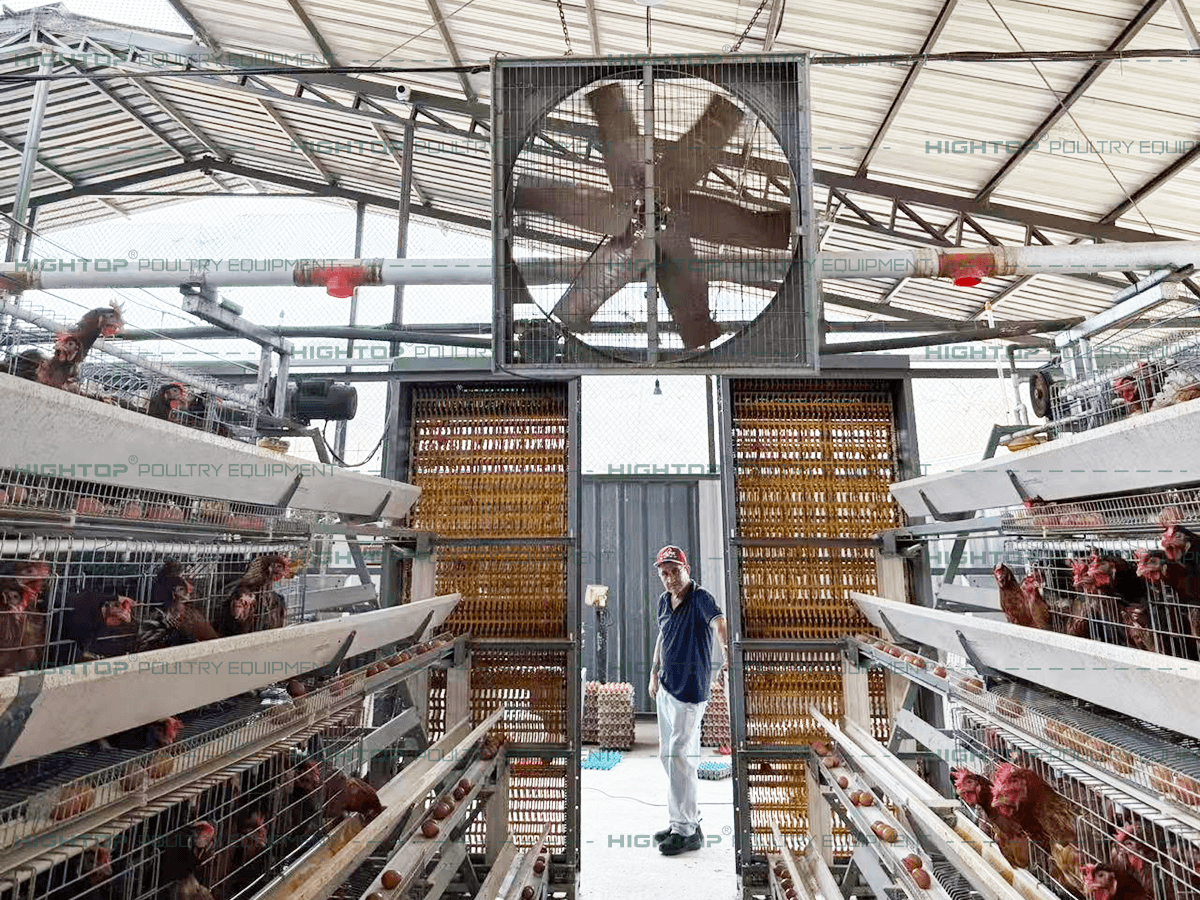
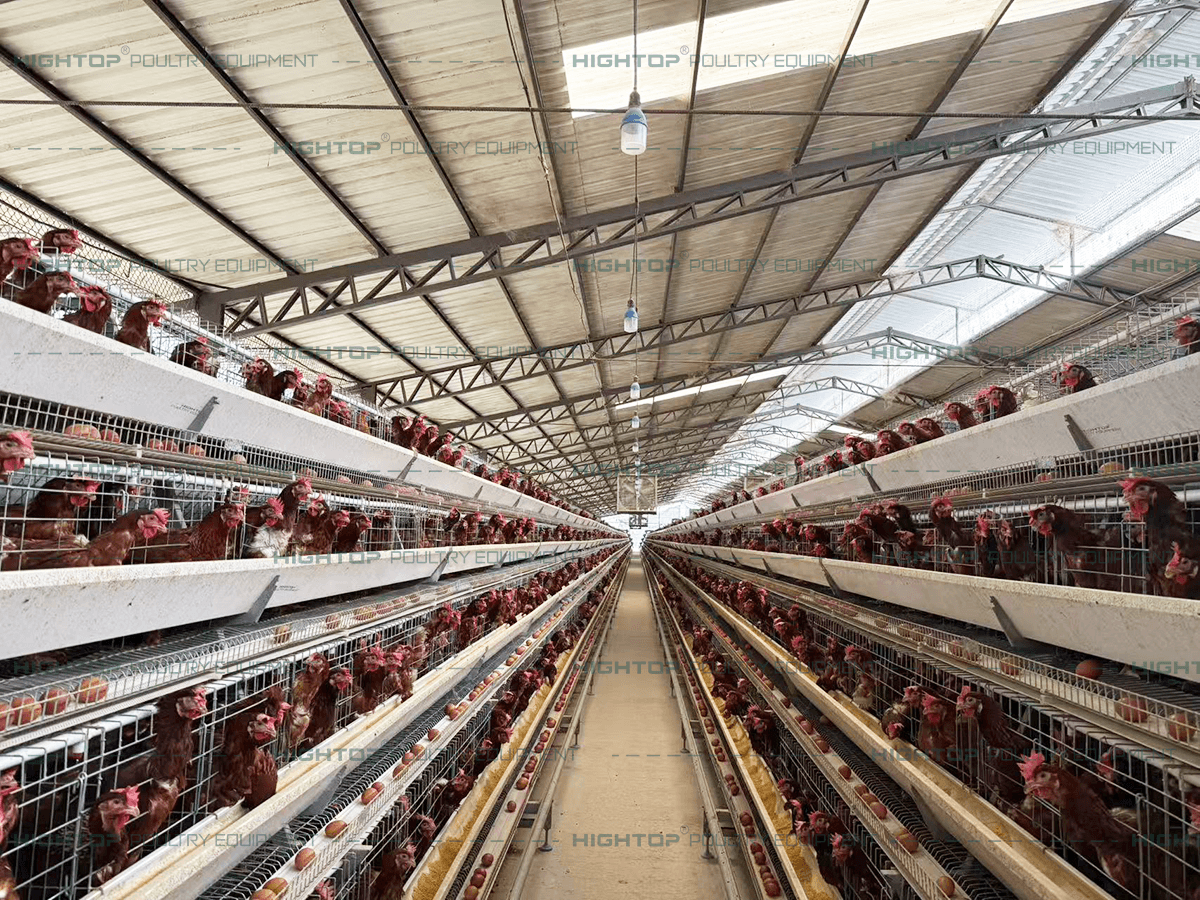
The completed project combines the lower building cost and natural ventilation potential of an open-sided house with the labor-saving benefits of automatic poultry equipment.
Local Installation and After-Sales Support
For many poultry investors, the main concern is not whether equipment can be manufactured and shipped. The larger concern is what happens after it arrives.
This project was supported by HIGHTOP’s cooperating installation team in Ecuador.
Local installation capability provides practical benefits:
- Faster communication during assembly
- Better understanding of local working conditions
- On-site inspection of equipment positions
- Support during system testing
- Easier follow-up after the farm begins operating
- Coordination with HIGHTOP’s technical team when required
The local team does not replace the manufacturer’s technical responsibility. It provides a faster connection between the customer’s farm and HIGHTOP’s engineering support.
Combined with responsive communication from the HIGHTOP sales and technical teams, this helps reduce uncertainty throughout installation and operation.
What Other Poultry Farmers Can Learn from This Project
This Ecuador project demonstrates several points that are relevant to other commercial egg farms.
First, an open-sided poultry house can still use automatic feeding, egg collection and manure removal systems. Automation is not limited to fully enclosed buildings.
Second, the equipment layout must be designed together with the manure-management plan. In this case, the customer did not need an inclined conveyor because the manure would be collected and fermented on the farm.
Third, visiting an existing project can help a buyer evaluate equipment more accurately than relying only on prices and specifications.
Finally, local installation support can be an important factor when choosing an international poultry equipment supplier. Equipment quality matters, but correct installation and accessible technical assistance directly affect long-term operation.
Interested in the Same A-Type Layer Cage System?
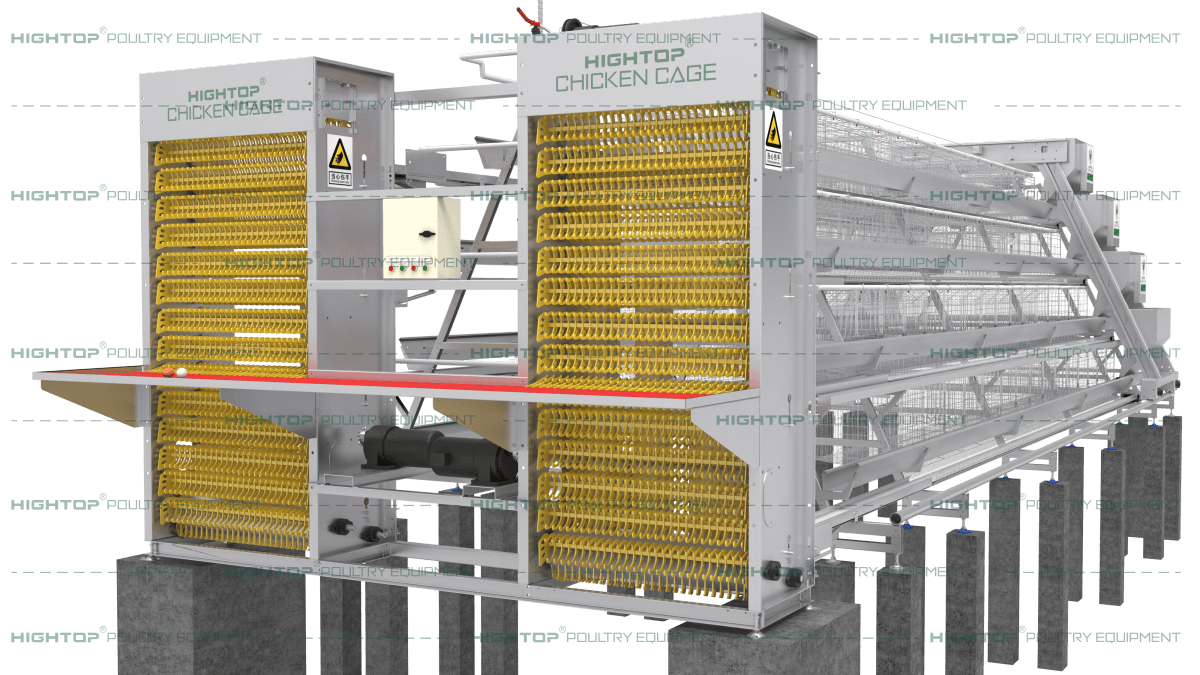
The HIGHTOP A-Type battery cage system is designed for small, medium and large commercial layer farms.
It can be configured for open-sided or enclosed poultry houses and integrated with:
- Automatic feeding
- Automatic drinking
- Automatic egg collection
- Scraper manure removal
- Horizontal and inclined manure conveyors
- Lighting and other supporting equipment
The cage layout and automation package can be adjusted according to the poultry house dimensions, target capacity, local climate, labor availability and manure-management method.
If you are planning a new layer farm or upgrading an existing poultry house, send HIGHTOP the following information:
- Country and project location
- Poultry house dimensions
- Target number of laying hens
- Open or enclosed house preference
- Required automatic systems
- Local power supply
- Planned manure collection or treatment method
HIGHTOP can prepare a customized layout and equipment proposal based on the actual conditions of your farm.