
As the Sales Manager at HIGHTOP Group, I always tell our clients the same truth: even the world’s best poultry equipment will underperform if the land isn’t planned correctly from day one. That’s why we don’t just sell cages and feeders — we take your land dimensions and use our professional drafting technology to deliver a fully optimized, future-proof farm layout. Here’s your comprehensive guide to land planning and how HIGHTOP makes the process seamless.
1. Site Selection: 4 Non-Negotiables for Any Poultry Farm
Before we draw a single line, your land must pass a few critical checks. We guide every client through these:
- Biosecurity distances (mandatory):Keep at least 500 m from residential areas, major roads, and water sources; 1,000 m from other livestock farms; and 3,000 m from slaughterhouses, rendering plants, and quarantine facilities.
- Terrain and soil:Choose a slightly elevated site with a 1–3% slope and well-drained sandy loam soil. Avoid low-lying areas — standing water breeds disease and increases mortality.
- Water and power:A tested, reliable water source is essential. You must also have a stable power supply with 100% backup generator capacity. Even 30 minutes of ventilation failure can wipe out an entire flock.
- Legal compliance:Your land must sit within the government’s designated “suitable area” for livestock. In most countries, poultry farms on agricultural land need only a facility filing, not a full land-use conversion — but always verify local regulations.
Once your site passes these checks, the real design work begins. At this point, you simply send us your land survey map or the boundary dimensions, and HIGHTOP’s drafting team gets started.
2. Zoning: Designing the Five Functional Areas
A professionally planned poultry farm needs five distinct zones, arranged strictly by the prevailing wind direction and terrain elevation:
| Order | Zone | Position |
| 1 | Living quarters (staff housing, canteen) | Highest elevation, upwind |
| 2 | Administration area (offices, vet room) | |
| 3 | Service area (feed storage, egg room, generator, water pump) | |
| 4 | Production area (brooding, rearing, layer houses) – the core | |
| 5 | Waste treatment area (manure, disposal, wastewater) | Lowest elevation, downwind |
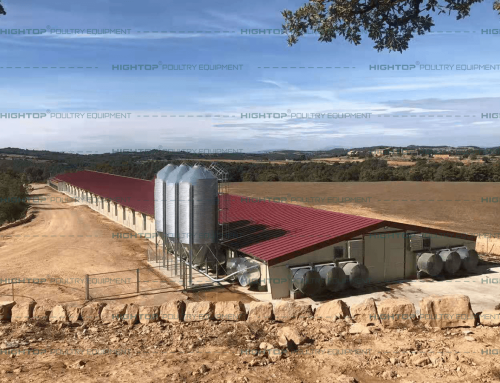
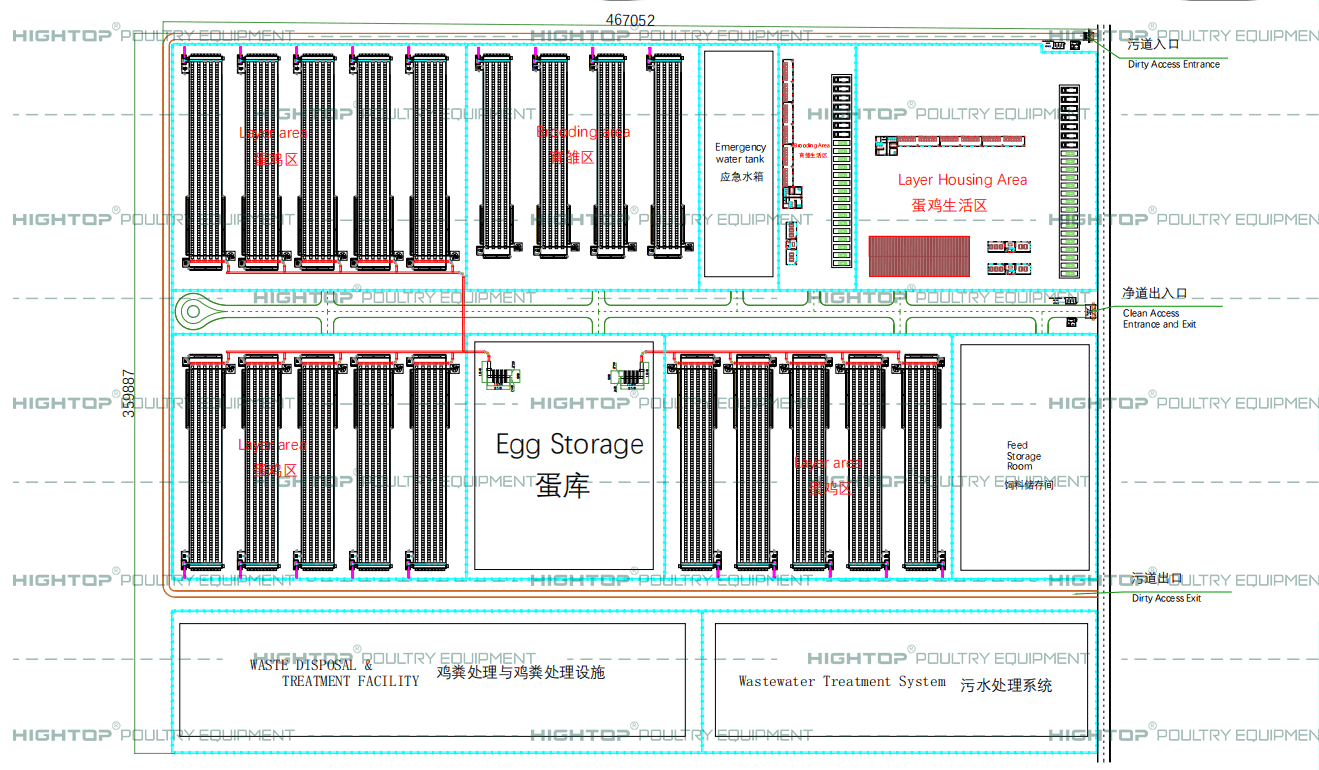
Using your exact plot shape, we overlay this zoning map. Whether your land is an irregular polygon, a long narrow strip, or a hillside, we adjust the layout while enforcing essential separation distances: the production area must be at least 50 m from other zones, and the waste treatment zone 200–300 m from living quarters. There is no guesswork — our CAD drawings display every meter clearly.
A critical detail inside the production area: Many farms mistakenly place brooding houses downwind of adult layer houses. This exposes young birds to pathogens carried by seemingly healthy adults. HIGHTOP’s layouts always follow the biological flow: brooding → rearing → layer houses, moving from upwind to downwind, which drastically cuts cross-infection risk.
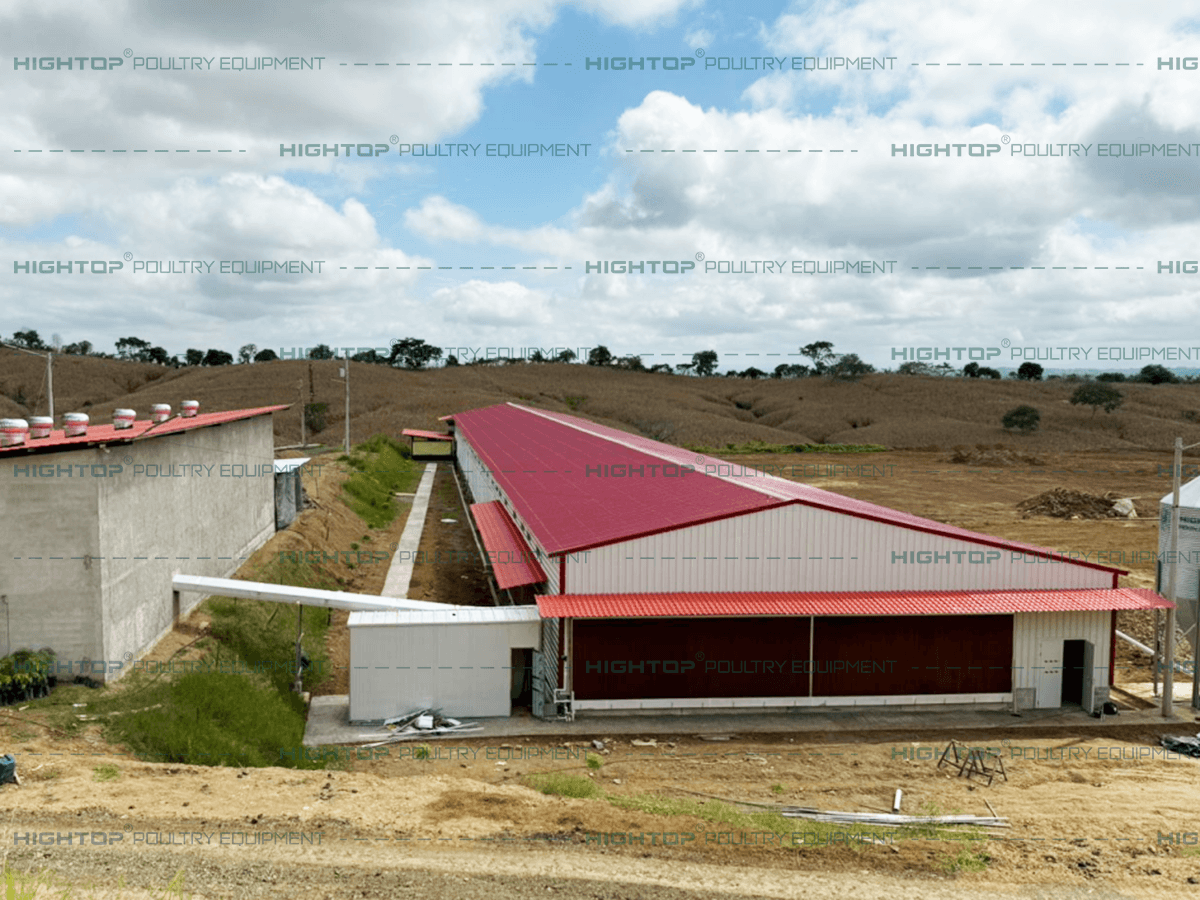
3. House Orientation, Spacing, and a Zero-Contamination Road System
With the zones fixed, we draft each house placement:
- Orientation:In most climates, chicken houses should run east–west with the long axis perpendicular to the prevailing summer wind. This maximizes natural ventilation and avoids direct overhead sunlight. We fine-tune the angle (up to 15° off true east–west) based on your local wind rose data.
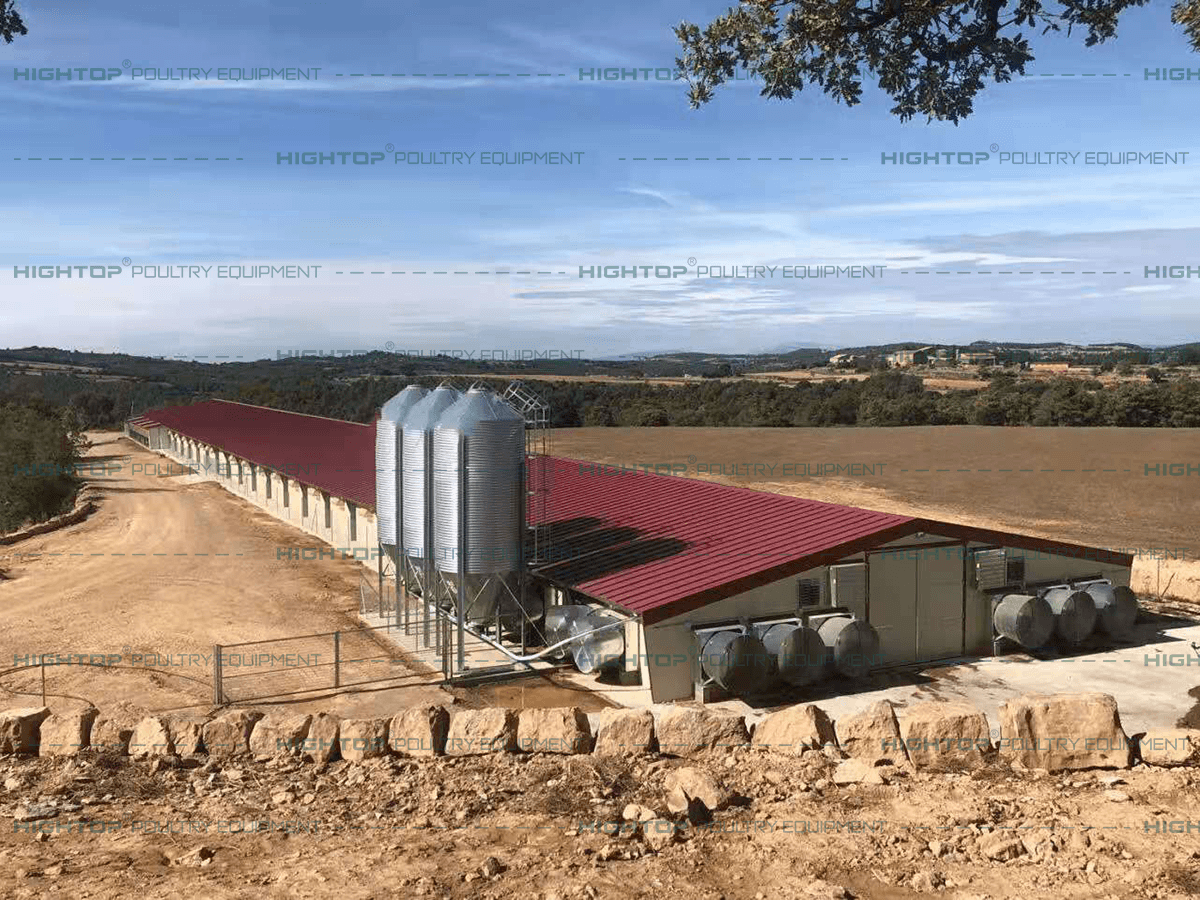
- Spacing:The distance between houses must be 2 to 3 times the building’s height. Typically, we leave 15–25 m between layer houses and 30–70 m between brooding/rearing houses and layer houses. On our drawings, we simulate winter solstice shadow paths to guarantee every house receives full daylight.
- Road system: Clean vs. dirty, with zero cross-contamination.
- Clean road(green on plans): for feed delivery, egg collection, and pullet transport — connects to the front of each house.
- Dirty road(red on plans): for manure removal, dead-bird collection, and spent-hen culling — connects to the back of each house.
HIGHTOP’s drafting team draws these two routes completely independent. If site constraints force an intersection, we design a strict time-separation protocol and a disinfection station at the crossing point, all clearly marked on your master plan.
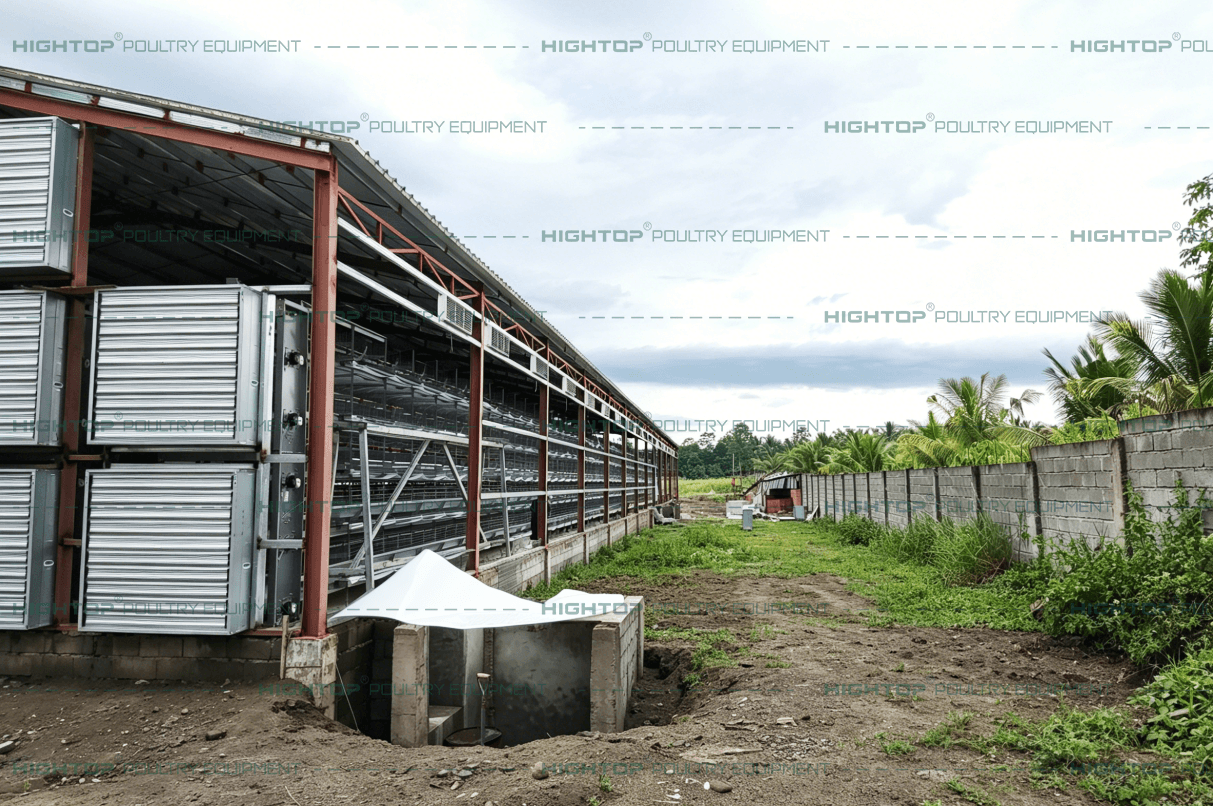
4. From Your Land Dimensions to a Ready-to-Build Blueprint
Here’s how HIGHTOP’s drafting technology adds tangible value that a standard equipment catalog can’t provide:
Step 1 – You provide the land.
Give us GPS coordinates, a Google Earth screenshot, a hand-drawn sketch with dimensions, or a professional topographical survey. We accept all formats.
Step 2 – We create a base map.
Our team imports your data into CAD/BIM software to build a scaled, georeferenced plot complete with contour lines, existing features, and a wind direction overlay.
Step 3 – Customized layout draft.
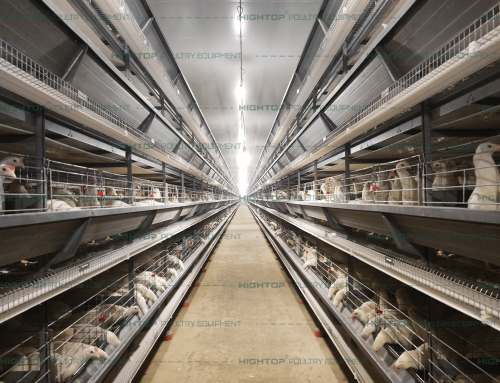
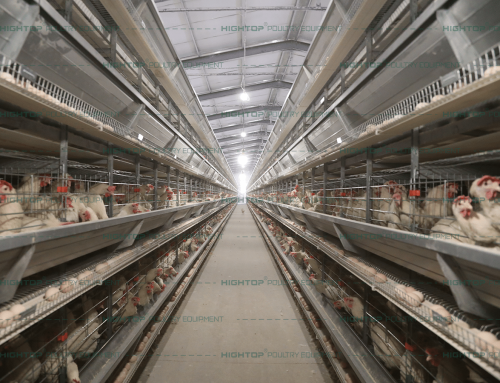
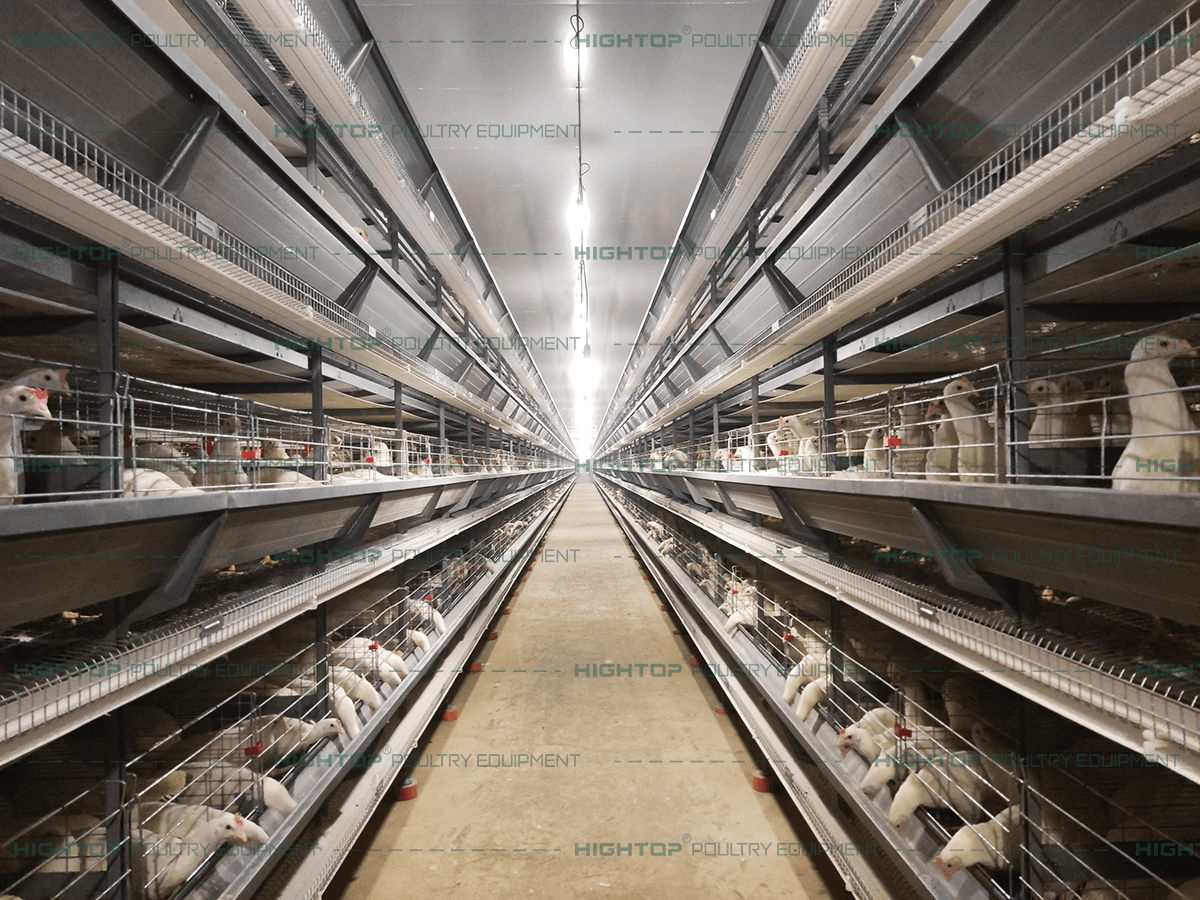
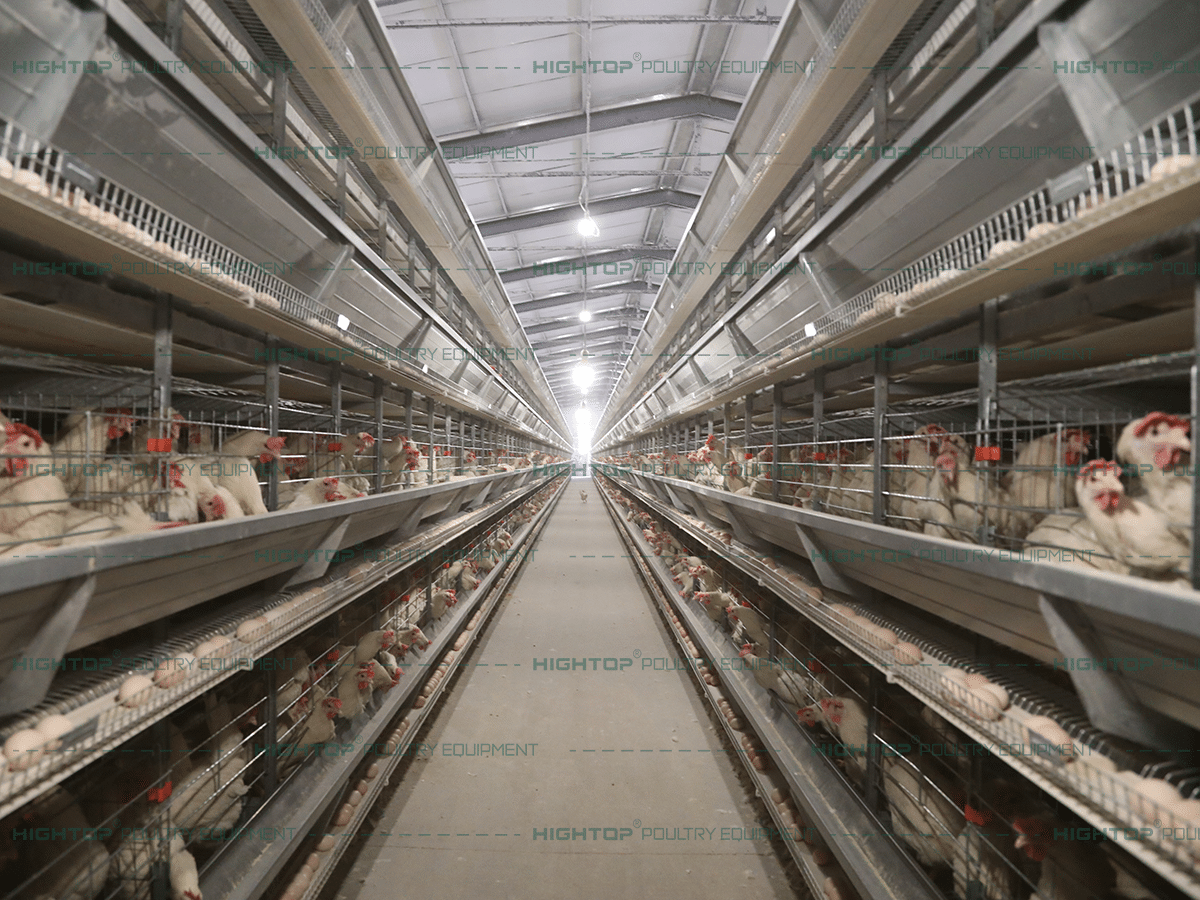
Based on your target flock size (for example, 200,000 layers) and preferred cage type (H-type stacked cages, 4–8 tiers), we position the exact number of houses, calculate door locations, and allocate space for feed silos, egg cold rooms, and loading bays. Because we know the precise footprint of every piece of HIGHTOP equipment, a house designed for our 5-tier, 4-row system fits perfectly the moment installation begins. Zero guesswork.
Step 4 – Seamless integration with housing and equipment.
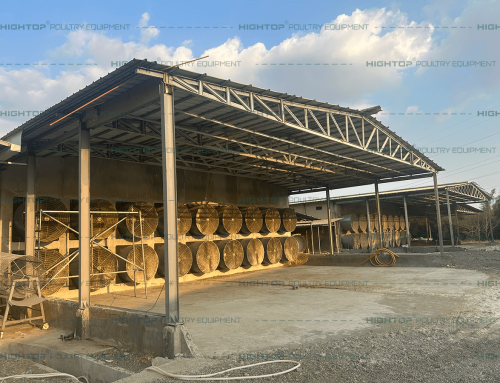
Because HIGHTOP manufactures both the steel structure chicken houses and all internal equipment, our drafts flow instantly into fabrication drawings. There is no handover gap between “designer” and “supplier.” Pre-embedded bolts, foundation loads, vent openings — everything matches perfectly from the start.
5. 4 Common Land Planning Mistakes We Help You Avoid
In over 20 years of designing farms worldwide, we’ve repeatedly corrected these costly errors. Our drafting process systematically prevents them:
- Cramped spacing to “save land”→ This leads directly to heat stress, poor ventilation, and rapid disease spread. We enforce the 2–3× building height spacing rule.
- Low house height→ A 2.5 m eaves height traps ammonia and kills birds. Our plans specify a minimum 2–3.5 m for layer houses.
- Mixed clean and dirty roads→ The number one cause of persistent farm health problems. We physically separate these roads in the layout from the very first draft.
Ignoring future expansion → We always draw a “Phase 2” reserved area on the master plan, so you can scale your operation without tearing down existing structures.
6. The HIGHTOP One-Stop Promise
When you work with HIGHTOP, land planning isn’t a separate consulting service you have to find elsewhere. It’s the first page of our turnkey solution. From an initial sketch to a fully operational farm with automated feeding, drinking, egg collection, manure removal, and climate control, HIGHTOP manages every step.
We pair professional drafting technology with 20 years of equipment manufacturing and project experience across Southeast Asia, South America, Africa, the Middle East, and beyond. Whether your land is a perfect rectangle in Saudi Arabia or an irregular hillside in Colombia, we can draw it, optimize it, equip it, and commission it.
Send us your land dimensions. We’ll give you back a farm that’s built to produce — not one that needs constant repair.